
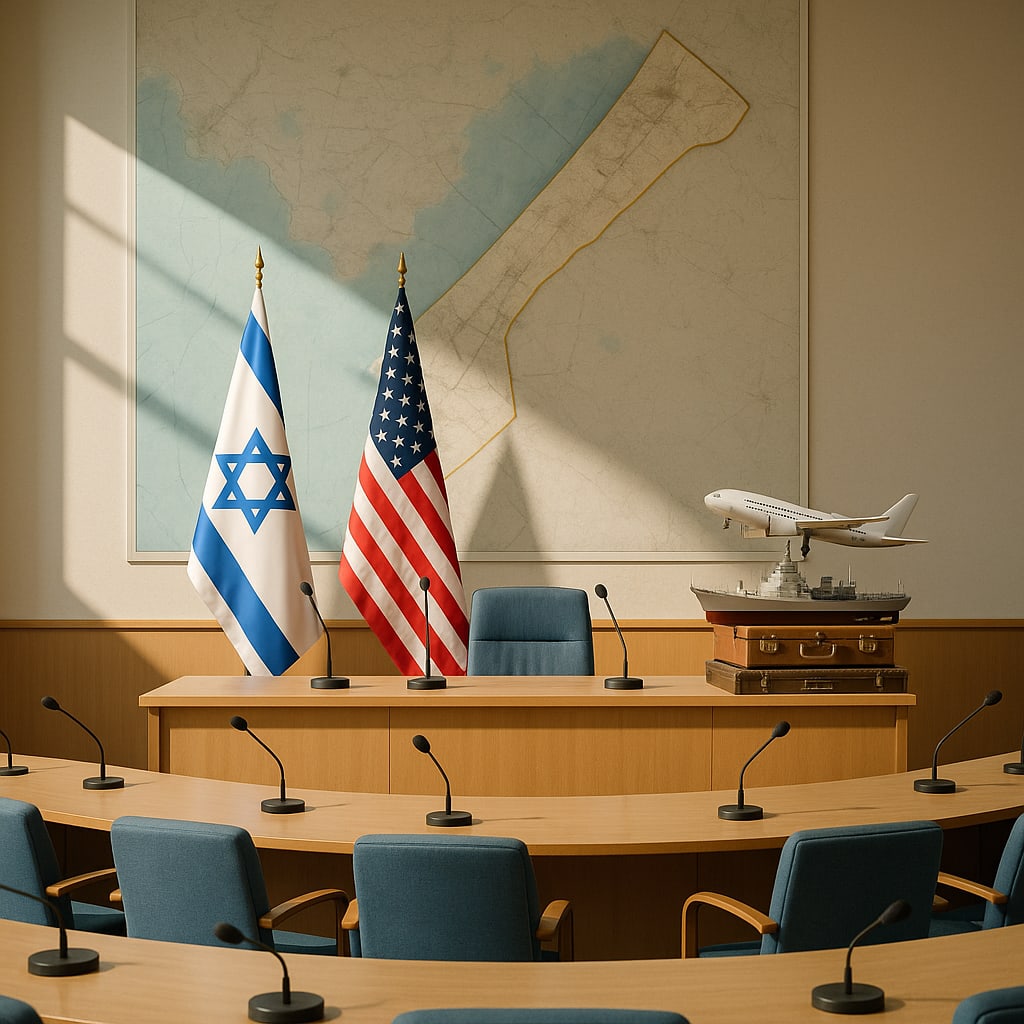
Netanyahu in Gaza vows no withdrawal as defense minister presses U.S. for green light on Gazan emigration plan
Narrative Snapshot
Across outlets, Netanyahu’s on-the-ground message is consistent: Israel will not pull back from current positions in Gaza, with emphasis on holding a defined “Yellow Line.” International and regional coverage diverges on what this posture means. State-leaning and Israeli outlets frame it as consolidation and progress toward Hamas disarmament, with TASS highlighting “successful” disarmament and The Times of Israel pairing the visit with official claims of control. Others pair the same remarks with the unfulfilled withdrawal component of a U.S.-backed plan that links Hamas disarmament to Israeli pullback; Le Monde notes Netanyahu rejected that step, while CGTN carries Hamas’s accusation of repeated ceasefire violations.
Reporting on Defense Minister Israel Katz’s “emigration” proposal is united on the core claim—that Israel is ready to move Palestinians out of Gaza and is awaiting U.S. approval—but differs in framing. The South China Morning Post stresses logistical dependence on Washington to identify destinations; The Times of Israel quotes Katz’s readiness to facilitate departures “by any means” and his assertion that most Gazans want to leave; The Guardian foregrounds legal risk, describing the plan as widely condemned as a potential war crime and saying Katz is seeking Donald Trump’s support.
A parallel set of investigations and rights-focused reporting extends the stakes beyond battlefield lines. Middle East Eye, citing Haaretz, reports on Israeli use of criminal militias inside Gaza; France 24 and MEE relay Breaking the Silence’s allegation of “retrospective incrimination” after lethal strikes; Telesur English cites claims that debris-clearing by a U.S.-created “Gaza Peace Board” risks destroying evidence; and MEE reports South Africa’s accusation at the ICJ that Israel is violating binding provisional measures. These accounts situate operational claims within a widening contest over conduct, evidence preservation, and international legal exposure.
Palestinian and resistance media add a conflicting tactical picture. Al-Quds News reports a thwarted Israeli operation with Israeli casualties and intensified shelling, contrasting with Israeli assertions of expanding control and steady disarmament progress.
What Happened
On September 2, Israeli Prime Minister Benjamin Netanyahu visited troops in the Gaza Strip and said Israel would not withdraw from its current positions along the so‑called Yellow Line, asserting continued control and ongoing operations until Hamas is disarmed and Gaza demilitarized (Middle East Eye; Al Jazeera English; Telesur English). TASS reported he held an operational meeting with senior generals, including IDF Chief of Staff Eyal Zamir, and said Hamas disarmament is progressing. Some outlets relayed Netanyahu’s claim that Israel controls around 60% of Gaza (Telesur English; Corriere della Sera). CGTN added that Israeli forces had captured Hamas’s head of internal security and noted Hamas’s charge that Israel is violating a ceasefire tied to a U.S.-backed plan linking disarmament and Israeli withdrawal; Le Monde reported Netanyahu has rejected that plan’s final withdrawal step. The same day, Defense Minister Israel Katz said Israel is prepared to facilitate Gazans’ emigration “by sea, by air, by every way possible” once the United States approves, adding that Washington must identify destinations (South China Morning Post; The Times of Israel; The Guardian).
Why It Matters
The combination of a declared no‑withdrawal stance and a ministerial push for large‑scale Gazan emigration places U.S. policy at the fulcrum. Katz’s statements portray Washington’s approval as decisive for any population movement, underscoring U.S. leverage over end‑state scenarios for Gaza reported across outlets (South China Morning Post; The Times of Israel; The Guardian). At the same time, coverage ties battlefield positions to a political architecture many sources reference: a ceasefire or peace framework that conditions Israeli withdrawal on Hamas disarmament, which Netanyahu has rejected in its final step (Le Monde; CGTN).
Legal and institutional dimensions are active. The Guardian notes the emigration plan is widely condemned as a potential war crime, while South Africa has accused Israel at the ICJ of violating binding provisional measures intended to protect Palestinians (Middle East Eye). Allegations about rules of engagement and proxy forces—Breaking the Silence’s “retrospective incrimination” and Haaretz’s findings on armed gangs reported by MEE—raise questions of accountability that intersect with Telesur English’s claims about debris clearance potentially erasing evidence. For decision-makers, these threads shape risk calculations around legitimacy, international scrutiny, and the viability of externally brokered arrangements in Gaza.
Diverging Narratives
Israeli official messaging and allied reporting emphasize operational gains and a security rationale. Netanyahu’s insistence on holding the Yellow Line, claims of majority territorial control, and an IDF meeting signaling momentum are carried by outlets such as TASS, The Times of Israel, and Corriere della Sera, with TASS characterizing disarmament as “progressing successfully.” CGTN likewise reports continued efforts to disarm and demilitarize Gaza, adding an Israeli claim of a high‑value Hamas capture.
Other coverage centers legal and humanitarian dimensions and the status of negotiated frameworks. Le Monde situates Netanyahu’s stance within a campaign context and notes his rejection of a plan tying withdrawal to disarmament. CGTN reports Hamas’s allegation of ceasefire violations. The Guardian frames Katz’s proposed removal of Palestinians as a plan seeking U.S. approval with potential war‑crime implications, while the South China Morning Post highlights Israel’s dependence on Washington to identify destinations. Rights-focused reporting further complicates the picture: Breaking the Silence’s account of “retrospective incrimination” (France 24; MEE) and MEE’s relay of a Haaretz investigation into militia use depict systematic issues in conduct of operations. Telesur English’s report that a U.S.-created “Gaza Peace Board” is funding debris removal without safeguards, potentially destroying evidence, and MEE’s coverage of South Africa’s ICJ filing, foreground international accountability concerns. On-the-ground Palestinian reporting from Al-Quds News underscores active resistance and Israeli casualties, challenging the image of uncontested control.
What Happens Next
Two linked decisions will shape trajectories. First is Washington’s stance on Katz’s emigration proposal. Katz and supporting coverage cast U.S. approval as prerequisite and seek President Trump’s backing; whether the United States identifies destinations or signals any procedural conditions will determine whether the plan advances or stalls (South China Morning Post; The Times of Israel; The Guardian). Second is Israel’s adherence to its current line versus engagement with a framework that pairs Hamas disarmament with withdrawal. Netanyahu’s rejection of the plan’s final step and his pledge to stay on the Yellow Line point to entrenchment; any shift in Israeli statements on withdrawal triggers would be a key indicator (Le Monde; Middle East Eye).
Legal and accountability tracks bear monitoring. South Africa’s ICJ initiative and any court or state responses will influence diplomatic bandwidth and constraints (Middle East Eye). Allegations about debris removal and evidence handling, and any announced safeguards or third‑party involvement, would affect future accountability processes (Telesur English). Finally, claims of disarmament progress and high‑value captures versus reports of effective resistance actions will be tested by verifiable indicators of control and compliance reported by the parties and international media (TASS; CGTN; Al-Quds News).