
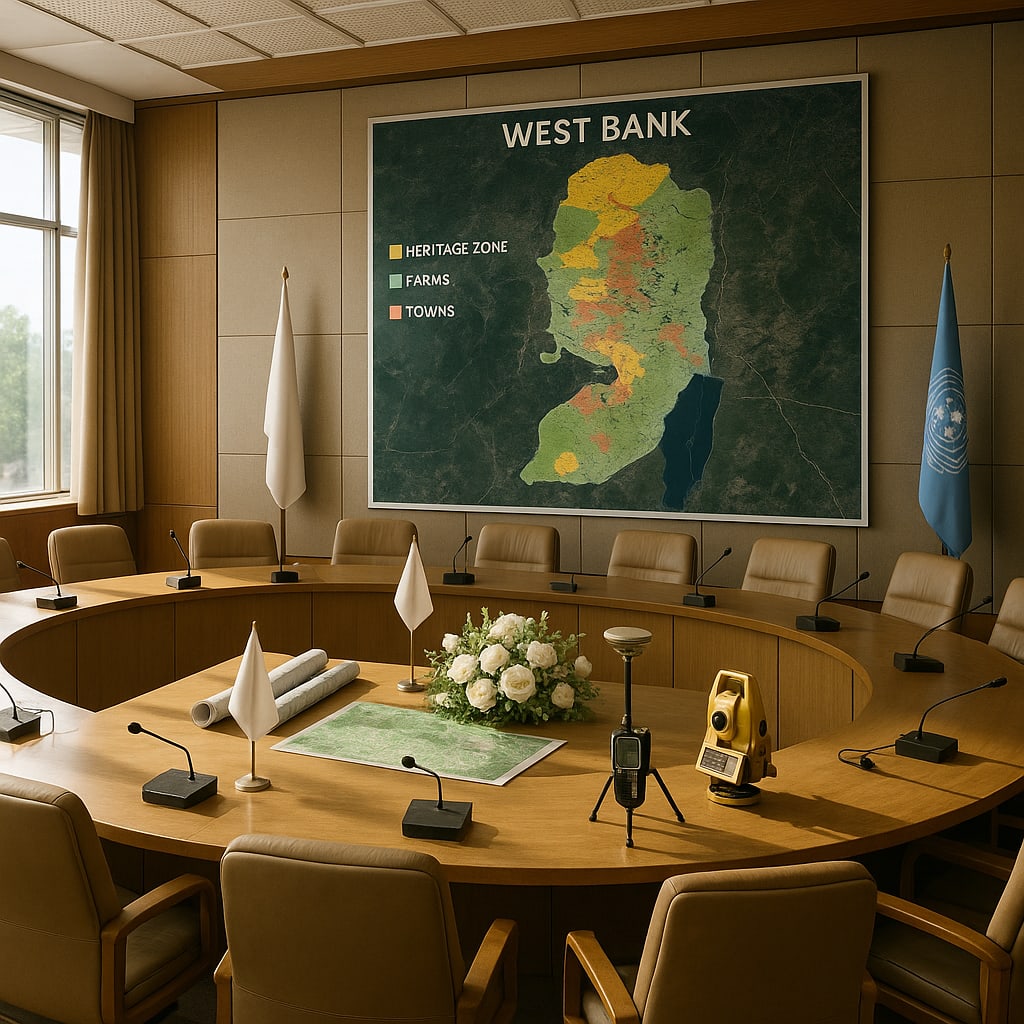
Reports detail mosque attacks, demolitions, and archaeology-linked land seizures in the West Bank
Narrative Snapshot
Across ideologically diverse outlets, the immediate picture converges on intensified pressure on Palestinian communities through settler violence, Israeli military actions, and state-backed land measures. Al Jazeera, Al-Quds News, and BBC each report incidents tied to settler activity and direct military force, including attacks on mosques and the killing of teenagers during a confrontation near Al-Mughayyir. Middle East Eye and Telesur emphasize demolition of homes, wells, and entire communities, while Haaretz traces a bureaucratic vector of land control via an expanded archaeology office.
The frames diverge on causation and intent. Israeli and Western outlets foreground official explanations and institutional mechanics—BBC includes the army’s account regarding the fatal shooting of teens, and Haaretz details the archaeology unit’s mandate and funding surge. Palestinian, Iranian, and Latin American sources amplify a narrative of systematic dispossession and violence: Telesur quotes B’Tselem’s director describing “ethnic cleansing,” and Tehran Times characterizes the pattern as a coordinated campaign documented by Palestinian rights groups.
What is most at stake, as presented across the coverage, is control over territory and civic space—religious sites, agricultural infrastructure, and archaeological zones—alongside norms governing use of force. The MEE first-person account of organized settler “hikes” in Qira reads as a grassroots lens on how informal presence precedes formalized claims, complementing Haaretz’s portrait of state instruments advancing land seizures, including in parts of Area B.
What Happened
Multiple outlets document a cluster of incidents and policy moves in late August and early September. Al Jazeera reports Israeli forces firing tear gas into one mosque after settlers set fire to and vandalized another, while Al-Quds News details an attempted arson at a mosque in Bazariya near Nablus, including extremist slogans at the site. Middle East Eye cites Wafa on the demolition of four 40-meter water wells and greenhouses in Beit Ummar, with Israeli forces citing lack of permits. Telesur, quoting B’Tselem, says Israeli forces completely demolished the Khirbet a-Taban community in the South Hebron Hills. BBC reports two Palestinian teenagers killed during a settler attack near Al-Mughayyir, with local officials and the army offering conflicting accounts. Haaretz reports the archaeology unit’s expanded funding and land seizures, including in Area B. Middle East Eye relays Breaking the Silence’s allegation that the army retrospectively justifies killings.
Why It Matters
The sources collectively point to a dual-track consolidation: ad hoc settler incursions and formal state mechanisms. Haaretz’s reporting on the archaeology office accelerating land seizures, including in Area B, places cultural heritage policy inside a contentious land-governance toolkit ahead of elections. Simultaneous demolitions of homes and water infrastructure in Hebron-area localities reported by Middle East Eye, and the complete erasure of a village noted by Telesur via B’Tselem, underscore how administrative enforcement and force protection intersect with displacement on the ground.
Casualty trends heighten the stakes. Japan Times, The Hindu, and Middle East Eye, citing B’Tselem, report 235 Palestinian children and teenagers killed in the West Bank since 7 October 2023, with five attributed to settlers, marking a sharp increase over prior years. Allegations by Breaking the Silence of “retrospective incrimination” challenge confidence in Israeli military accountability processes. For governments and multilateral bodies, the reported reach of seizures into Area B and recurrent attacks on religious sites complicate crisis management and raise questions about the durability of existing coordination frameworks.
Diverging Narratives
Outlets present conflicting causal stories for lethal incidents and land control. BBC reports that Al-Mughayyir’s council said the teenagers were trying to stop settlers stealing sheep, while the Israeli army said they threw stones at its troops—an immediate clash between civilian-defense and security-enforcement frames. Middle East Eye’s coverage of well and greenhouse demolitions includes the official rationale—absence of permits—while the same outlet’s reporting and Telesur’s account with B’Tselem highlight humanitarian impact and displacement, with B’Tselem’s director quoted as calling the broader process “ethnic cleansing.”
Haaretz anchors the mechanism of land seizures in a state office—the Staff Officer for Archaeology—now with “vast government funding,” and describes its use to seize land and displace Palestinians, including in Area B. By contrast, Tehran Times emphasizes a “coordinated campaign” of arson, land grabs, and raids by Israel and “armed settler militias,” citing Palestinian human rights documentation. A first-person piece in Middle East Eye depicts settler “hikes” through Qira as reconnaissance for expansion, encapsulated in a settler leader’s line that borders follow the hiker’s steps. Al Jazeera and Al-Quds News focus on attacks on mosques and the immediate coercive environment, while Breaking the Silence’s allegation—reported by Middle East Eye—contests the military’s claim construction after the fact, injecting skepticism about post-incident classifications.
What Happens Next
Several decision points emerge from the reporting. First, the trajectory of archaeology-linked land seizures described by Haaretz bears watching, especially any further expansion into Area B and budget signals as elections approach; continued funding and operations would indicate sustained institutionalization, while visible slowdowns or constraints would suggest political recalibration. Second, enforcement patterns around “permit” demolitions of water and agricultural assets in Hebron-area localities, as reported by Middle East Eye, and full community clearances like Khirbet a-Taban reported by Telesur via B’Tselem, are indicators of displacement dynamics; additional cases or pauses will speak to policy intent and capacity.
Third, settler presence tactics highlighted in the Qira account point to whether organized “hikes” translate into formal outposts or administrative actions; tracking subsequent land designations or protection for such groups will clarify direction. Finally, after the Al-Mughayyir fatalities and Breaking the Silence’s allegations reported by Middle East Eye, any announced investigations, rules-of-engagement clarifications, or casualty data updates from B’Tselem and official bodies will shape assessments of use-of-force standards and accountability.