
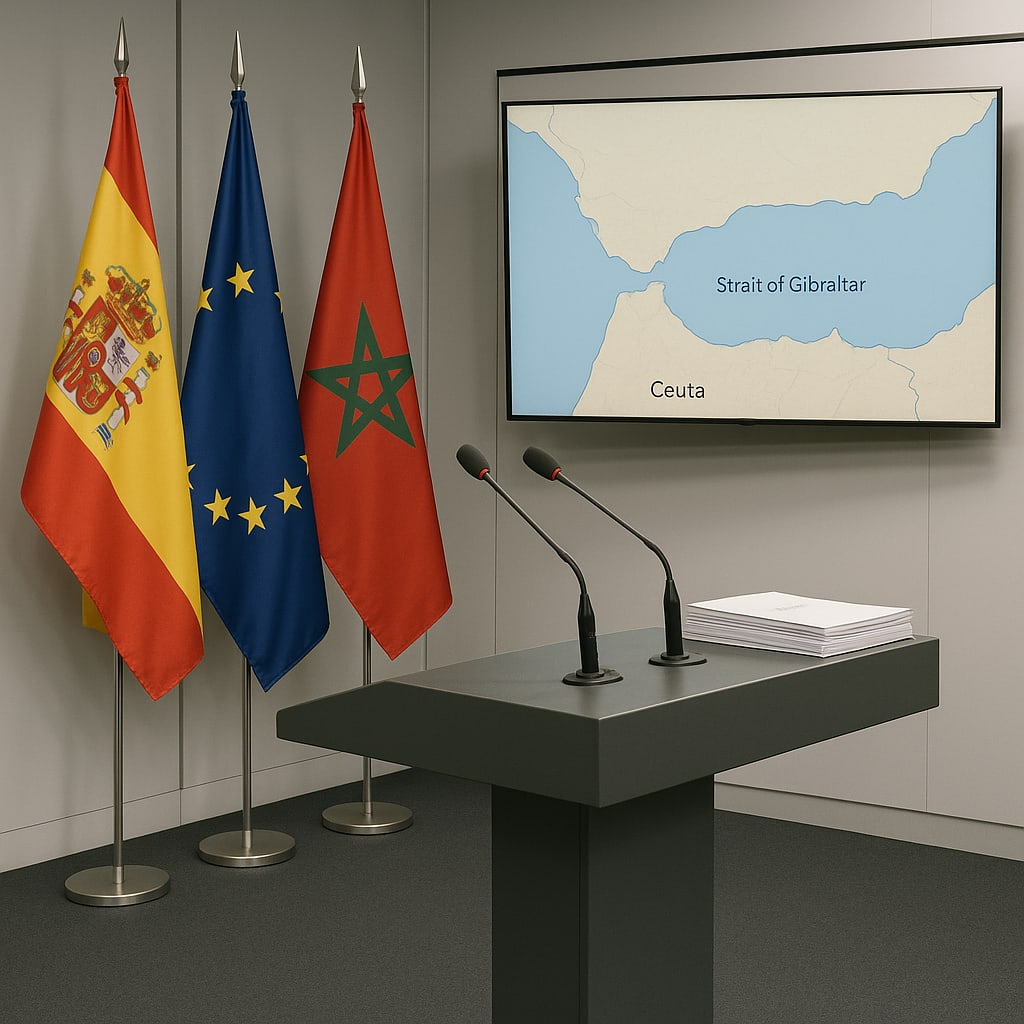
Spain’s Sánchez rejects claims Morocco orchestrated Ceuta surge, releases crisis reports as protests swell
Narrative Snapshot
Across European and international outlets, two through-lines dominate while differing emphases shape how readers understand the stakes. French and Latin American reporting foregrounds the contested attribution question: Le Monde describes a judicially commissioned police document alleging “total permissiveness” by Moroccan forces and even guidance of crossings, while Clarin amplifies that line and notes Sánchez’s effort to exclude Rabat from blame. By contrast, The Guardian, France 24, and Telesur center the prime minister’s rebuttal that there is “no solid proof,” coupled with his order to release official reports for public scrutiny.
Coverage of social order diverges in tone and framing. BBC, Deutsche Welle, and Al Jazeera chronicle large, nationwide demonstrations criticizing Madrid’s response. Sky News highlights appeals for calm in Ceuta, while Al Jazeera and RT document the destruction of migrant shelters and obstruction of aid. Fox News and RT emphasize confrontational street scenes, slogans, and the Ceuta regional leader’s framing of the episode as a breach of territorial integrity, steepening the political contrast with Madrid’s position.
EU-level context receives greatest attention in Italian outlets: La Repubblica reports Sánchez will seek a permanent Frontex presence, and Corriere della Sera relays his complaint that “solidarity” from Europe fell short. The crisis’s transnational resonance surfaces in diaspora mobilization, with Clarin reporting a solidarity rally at Spain’s Miami consulate, and in AllAfrica’s African Arguments essay probing underreported religious-semantic dimensions of hijra amid otherwise geopolitical and security-heavy narratives.
Finally, the factual baseline itself is unsettled across sources. Tallies of those who entered range from about 70,000 to 80,000; figures for those remaining span “as many as 5,000” to higher local estimates; and reported deaths vary in Fox News accounts. This quantitative variance reinforces why Sánchez’s pledge to publish reports, and the weight accorded to the contested police document, are now pivotal to policy interpretation.
What Happened
Late on 30–31 July, a mass irregular entry from Morocco into Spain’s North African enclave of Ceuta took place, with multiple outlets citing figures above 70,000 people and some placing the total closer to 80,000. BBC reporting says most returned to Morocco but as many as 5,000 remain in Ceuta. The surge set off weeks of tension: Al Jazeera and RT documented anti-migrant protesters tearing down and burning makeshift shelters and blocking aid, and Sky News reported calls for calm ahead of further demonstrations. On 2–3 September, large protests spread across Spanish cities criticizing Madrid’s handling, covered by BBC, Deutsche Welle, Al Jazeera, and Fox News. Addressing parliament, Pedro Sánchez denied receiving prior warnings and said there is no solid evidence Morocco orchestrated the crossing, countering a judicially commissioned police report described by Le Monde. He ordered the release of official reports, promised €300 million for Ceuta, criticized weak EU solidarity, and said Spain would seek a permanent Frontex presence.
Why It Matters
The episode tests the resilience of Spain’s external-border governance, its crisis coordination with Morocco, and the EU’s ability to surge collective capacity where a member state’s land frontier meets Africa. Sánchez’s twin moves—publicly defending the absence of “solid proof” against Rabat while pledging transparency by releasing official reports—aim to stabilize a sensitive bilateral channel even as a police report has entered judicial circulation. Italian coverage highlights a demand signal to Brussels: a request for permanent Frontex deployment and a complaint that EU “solidarity” fell short underscore the gap between legal responsibilities at the Schengen periphery and practical support. Domestically, sustained protests, prosecutors’ accounts of near-daily sexual assaults in Ceuta, and scenes of vigilantism spotlight administrative strain and public-order risk. Internationally, Fox News and Clarin note that Sánchez has attributed disinformation around the crisis to Russian- and Israeli-linked networks, placing an information-security lens atop an already complex border-management test.
Diverging Narratives
Attribution is the core split. Le Monde and Clarin report a police document to the judiciary alleging Moroccan permissiveness and guidance during the mass entry. The Guardian, France 24, and Telesur emphasize Sánchez’s assertion in parliament that Spain has “no solid proof” of Moroccan orchestration and his pledge to act “with all the firmness” if such proof emerges. How to characterize the event also differs: Fox News quotes Ceuta’s regional leader calling it a violation of territorial integrity rather than a migratory crisis, while BBC and Deutsche Welle frame it within migration governance and humanitarian management.
The scale and aftershocks are reported unevenly. Crossings are variously put at more than 70,000 to around 80,000, and those remaining in Ceuta at “as many as 5,000” per BBC, versus higher local figures cited by RT. Fatalities are inconsistent in Fox News reporting, ranging from at least 72 to higher tallies attributed to local authorities via Reuters. On the street, BBC, DW, and Al Jazeera stress nationwide mobilization against government handling and the search for shelter by migrants, while Al Jazeera and RT highlight attacks on camps and aid. Italian outlets prioritize EU instruments and burden-sharing, and AllAfrica’s African Arguments contribution situates the episode within debates over hijra’s religious semantics—distinct from the security- and geopolitics-led accounts elsewhere.
What Happens Next
Three decision points now shape trajectories. First, the publication of official reports, ordered by Sánchez, and any judicial handling of the police document described by Le Monde will influence whether Madrid maintains its stance that no “solid proof” implicates Morocco or pivots to a firmer posture if corroboration appears—an outcome Sánchez himself conditioned in parliament. Second, at the EU level, Spain’s stated intent to seek a permanent Frontex presence and criticism of limited solidarity put Brussels’ response in focus; watch for Commission and Frontex signals on deployments, funding, or emergency support that could recalibrate capacity in Ceuta. Third, internal stabilization hinges on protest dynamics and public safety indicators in Ceuta, including prosecutors’ reports of frequent sexual assaults and the recurrence of vigilante actions reported by Al Jazeera and RT. Appeals for calm in Ceuta, the scale of nationwide mobilizations, and diaspora activism flagged by Clarin will indicate whether political pressure on Madrid intensifies or eases.