
DR Congo Ebola cases surpass 6,000 and deaths top 3,000 as schools reopen and UN/WHO call for urgent scale-up
Narrative Snapshot
Across outlets, the data picture is broadly consistent: confirmed cases have passed 6,000 and deaths have crossed 3,000, with multiple reports describing an outbreak outpacing response capacity. International broadcasters and wire-based coverage center on epidemiological scale and velocity, repeatedly noting this is the DRC’s largest and deadliest Ebola episode and, globally, the second-largest on record. Several reports also stress acceleration, with some describing it as the fastest-spreading Ebola outbreak to date. Chinese and German outlets emphasize cross-province spread, case fatality ratios, and the number of health zones affected, while French and pan-African sources add virological detail and the status of countermeasures.
Another thread foregrounds governance and systems stress. UN officials warn that the virus is moving faster than the response amid a substantial funding gap, while domestic reporting highlights operational frictions: payment disputes with frontline responders and a school term beginning under simultaneous pressures of Ebola risk, teacher strikes, and conflict in the east. Coverage of school reopenings underscores the social and political trade-offs of maintaining public services during a health emergency, including arrangements under non-state control in parts of the east.
What Happened
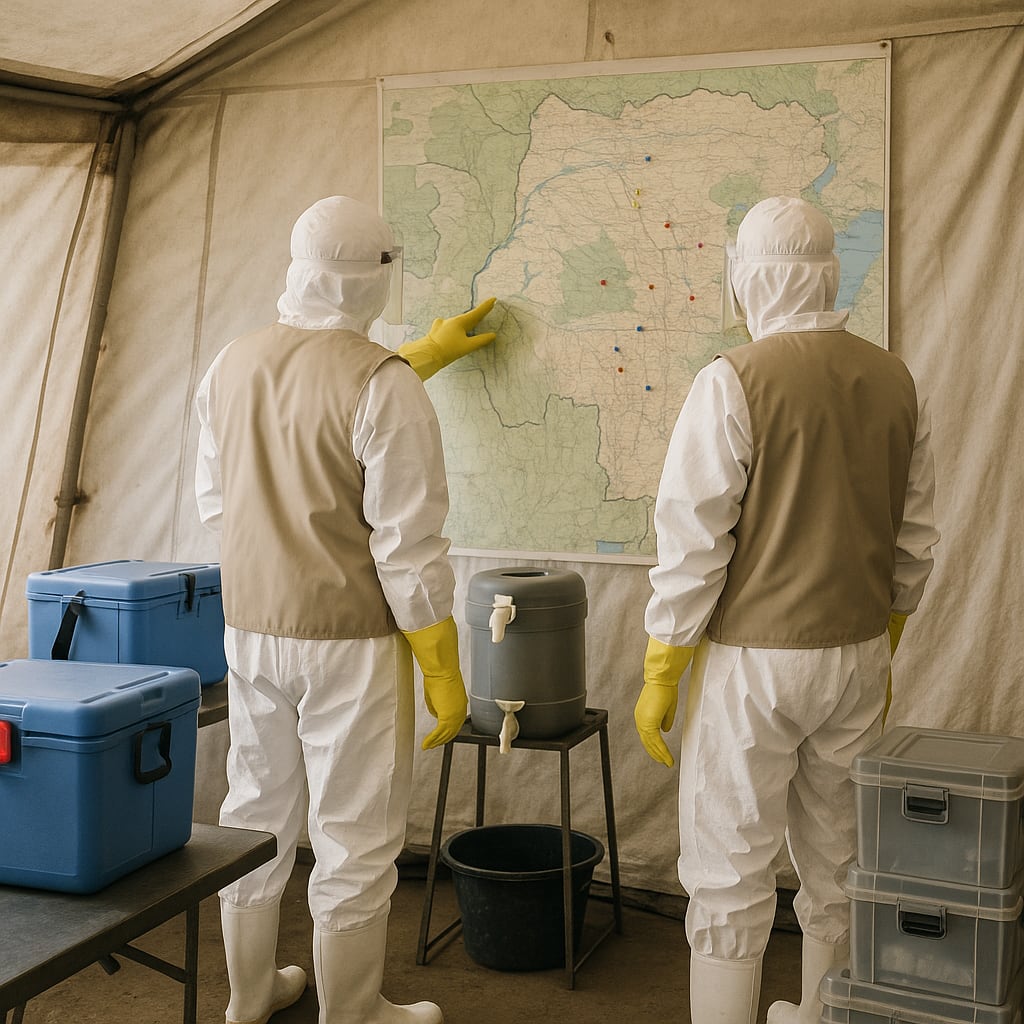
Confirmed Ebola cases in the Democratic Republic of Congo have exceeded 6,000, with fatalities now over 3,000. Reports cite figures around 6,041 confirmed cases and 2,911 deaths earlier in the week, rising to more than 6,100 cases and 3,007 deaths by midweek. Authorities and international outlets describe spread across six provinces—Ituri, North Kivu, South Kivu, Haut-Uele, Bas-Uele, and Tshopo—reaching 60 health zones, with about 1,366 recoveries and roughly 830 symptomatic individuals hospitalized or in quarantine. The outbreak, declared in May and described as the country’s largest and second-largest globally, has been termed the fastest-growing by some broadcasters. The WHO chief has warned of a regional threat and urged a ramp-up. The UN emergency relief chief flagged a roughly $1.1 billion funding gap. Despite concerns, schools reopened nationwide amid a teachers’ strike call and conflict dynamics in the east. WHO-linked reporting says vaccine trials against the strain are being prepared, while separate coverage notes payment disputes disrupting response work.
Why It Matters
The outbreak is testing the DRC’s health system and the international emergency architecture simultaneously. UN and WHO appeals for urgent scale-up against a large funding shortfall spotlight the dependence of outbreak control on timely, predictable financing. The characterization of this episode as both the deadliest in the DRC and among the largest globally places it alongside prior crises that shaped norms on surge funding, cross-border coordination, and the use of experimental medical countermeasures. The identification of the Bundibugyo variant, alongside reports that no licensed vaccine or treatment exists, frames the stakes of WHO-prepared vaccine trials and the regulatory and ethical pathways needed to deploy candidates at speed. Domestic governance frictions—payment disputes with responders and education sector pressures—intersect with conflict-affected eastern provinces, raising operational access and continuity-of-services risks that regional bodies and neighboring states must factor into health security planning.
Diverging Narratives
Outlets converge on scale and urgency but differ in emphasis. Several reports prioritize epidemiological milestones and rank the crisis as the DRC’s largest and the world’s second-largest Ebola outbreak, while others underscore acceleration, calling it the fastest-growing; both framings point to urgency but place different weight on cumulative burden versus rate of increase. French reporting centers virology, stating the Bundibugyo variant is driving the surge and that there is neither vaccine nor treatment; pan-African coverage, citing WHO, adds that trials of three potential vaccines targeting this strain are being prepared, highlighting the gap between available licensed tools and candidates entering evaluation. UN-focused stories stress a substantial funding gap and the need to outpace transmission, contrasting with domestic-facing pieces that foreground operational problems such as delayed pay for responders and the political-social choice to reopen schools despite parental and teacher concerns. Security-context reporting adds another layer, noting schooling organized under non-state control in parts of the east even as Kinshasa continues paying teachers, which differs from strictly epidemiological framing by highlighting governance fragmentation that may complicate response implementation.
What Happens Next
Three decision points will shape trajectory. First is financing: UN leadership has warned that response operations lag transmission without rapid scale-up. Watch for donor pledges, disbursement speed, and any revisions to the humanitarian appeal; failure to close the reported gap would likely constrain surveillance, isolation, and safe-burial operations. Second is countermeasures: pan-African reporting says WHO is preparing vaccine trials against the current strain. Key indicators include trial protocol approvals, site selection in affected provinces, and logistics for cold-chain and monitoring; delays would prolong reliance on non-pharmaceutical interventions. Third is operating environment: schools have reopened amid strike calls and conflict in the east, and payment disputes are reportedly disrupting frontline work. Signals to monitor are resolution of responder pay issues, Ministry of Education directives if school-linked transmission emerges, and access arrangements in contested areas; setbacks in any of these would further complicate containment efforts. The WHO’s warning of regional threat elevates cross-border coordination as an immediate watchpoint.