
At least five dead, over 80 feared lost after Gambian migrant boat drifts 27 days off Canary Islands
Narrative Snapshot
Across outlets, core facts converge on a small set of details and an unusual span of time at sea. Multiple reports place departure in The Gambia and describe a weeks-long drift before a rescue south of the Canary Islands, with 44 survivors brought ashore and five bodies left on the vessel due to rough seas. BBC News details the decision to leave the bodies behind because of weather, while Telesur English adds operational specifics: an aircraft located the boat roughly 120 km from Gran Canaria and the coast guard vessel Urania assisted at midnight. Several outlets note that a baby was among the dead, including La Repubblica and Telesur.
Where coverage diverges is how the death toll beyond the recovered bodies is characterized and attributed. BBC News, La Repubblica, and Al Jazeera English anchor “more than 80” deaths to Caminando Fronteras (Walking Borders), the Spanish NGO that has been a primary source for migrant-ship tracking. Sky News and Telesur, by contrast, say Spain’s Maritime Rescue confirmed about or more than 80 deaths. ANSA reports “forse 80 tra vittime e dispersi,” cites both Maritime Rescue and Caminando Fronteras, and departs from others on baseline figures by stating 40 rescued and 128 people initially on board. The Hindu emphasizes survivor accounts—prolonged time adrift, dwindling provisions, and sickness from drinking seawater—more than definitive tallies.
What is most at stake in these contrasts is not only the final number but the evidentiary chain behind it: whether casualty accounting rests on official confirmation, NGO analysis, or a blend of both, and how sea conditions and limited retrieval shape what can be verified at pace.
What Happened
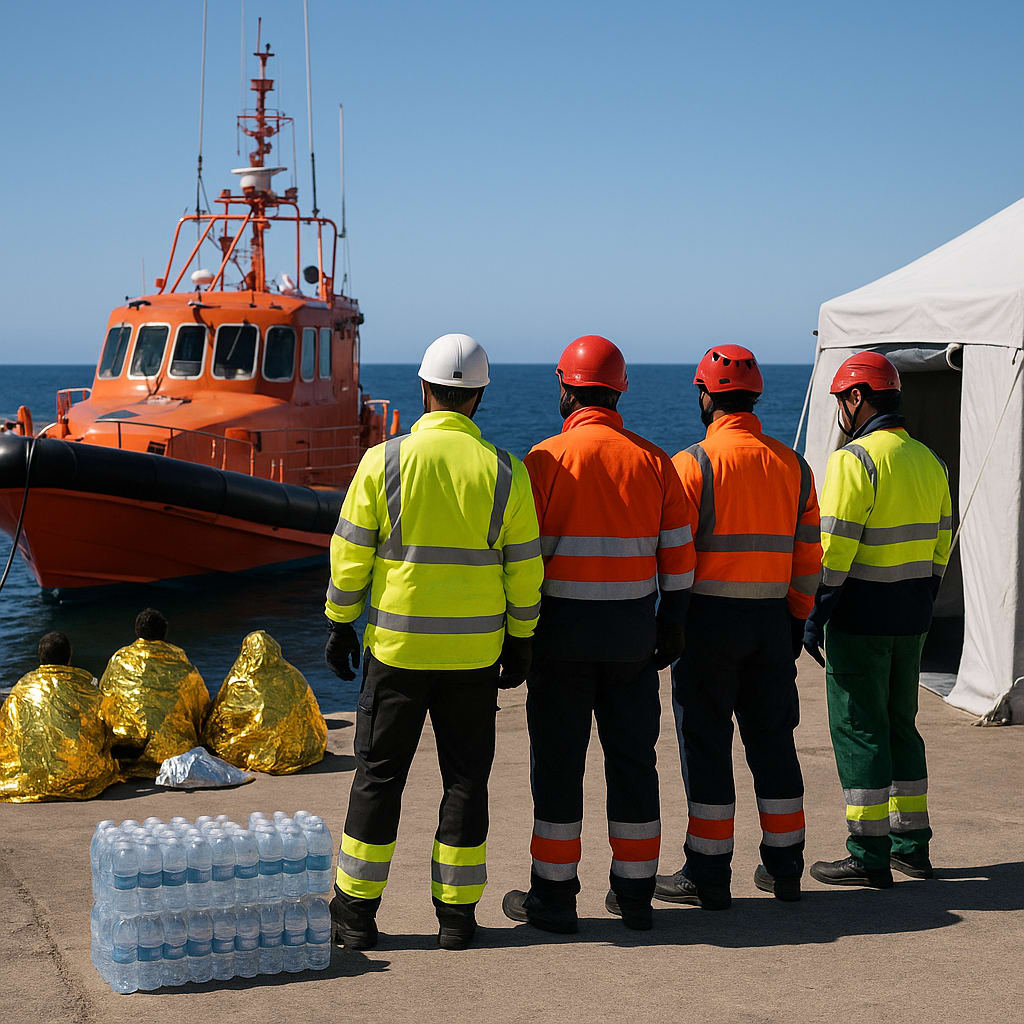
A wooden boat that departed The Gambia was located drifting south of Spain’s Canary Islands after what multiple outlets describe as nearly a month at sea. Telesur reports Spanish authorities found the vessel about 120 km from Gran Canaria, identified it by hull markings consistent with a boat that left on August 7, and assisted it with the coast guard vessel Urania. Forty-four people were rescued, according to BBC News, Telesur, and the Toronto Star/AP; ANSA cites 40. Five bodies remained on board because rough seas prevented recovery, as reported by BBC News and Telesur. La Repubblica and Telesur note a newborn was among the deceased; Telesur adds that two of the recovered bodies were women and that the survivors were all men. Initial passenger counts vary: Telesur reports 127, while ANSA cites 128. Caminando Fronteras says more than 80 people likely perished, a figure some outlets attribute to the NGO and others to Spain’s Maritime Rescue.
Why It Matters
This incident highlights the operational and information constraints that shape maritime rescue on the Atlantic route to the Canaries. Spain’s Maritime Rescue Service relied on aerial detection and a night transfer under adverse sea conditions, limiting body recovery and complicating immediate casualty verification, as reported by BBC News and Telesur. In parallel, Caminando Fronteras supplied departure data, vessel identification cues, and loss estimates referenced across outlets, underscoring the role of NGO-generated evidence in early-stage accounting when state actors face incomplete retrieval and survivor debriefs.
For decision-makers, the episode underscores three structural dynamics evident in the reporting: casualty confirmation can lag rescues when weather precludes recovery; attribution of figures to either official bodies or NGOs materially affects public framing; and survivor health and testimony, described by The Hindu, shape reconstruction of events and passenger lists. These factors bear directly on resource allocation, cross-checking protocols between authorities and NGOs, and communication practices during high-fatality maritime incidents.
Diverging Narratives
The central divergence is whether the toll beyond the five bodies on board is “confirmed” or “feared.” BBC News and Al Jazeera English frame “more than 80” as an assessment from Caminando Fronteras, emphasizing that only five deaths were physically verified and that dozens remain missing. La Repubblica similarly attributes the higher toll to the NGO and foregrounds the presence of a newborn among the victims. Sky News and Telesur, however, report that Spain’s Maritime Rescue itself confirmed about or more than 80 dead, shifting the evidentiary weight from NGO assessment to an official statement. That distinction affects the perceived certainty and immediacy of the toll.
There are also discrepancies in baseline figures. Most outlets report 44 survivors; ANSA reports 40. Telesur cites 127 people on board, while ANSA cites 128. The Hindu’s reporting foregrounds survivor accounts of running out of provisions and illness from drinking seawater, providing qualitative detail on conditions rather than adjudicating between competing tallies. All outlets agree that rough seas prevented recovery of the five bodies—an operational constraint that helps explain why death counts rely on partial retrieval, survivor testimony, and external vessel identification rather than comprehensive on-scene verification.
What Happens Next
Key uncertainties now hinge on formal confirmation and reconciliation of figures. Analysts should watch for any updated statements from Spain’s Maritime Rescue clarifying whether “about 80” deaths are officially confirmed or remain provisional, given that several outlets attribute the toll differently. Recovery conditions are pivotal: BBC News and Telesur report that rough seas prevented retrieval of five bodies, so any easing of weather that enables recovery could refine casualty accounting and inform identification.
Verification of the boat’s identity may also be further substantiated. Telesur reports that security forces told Caminando Fronteras the hull markings matched a vessel that left The Gambia on August 7; additional survivor interviews, noted by The Hindu as challenging due to fragile health, could align passenger lists with that identification. Continued updates from Caminando Fronteras and Spanish authorities on the initial manifest—whether 127 or 128—will indicate how missing-versus-dead categorizations evolve and how cross-checking between NGO sources and official records proceeds.