
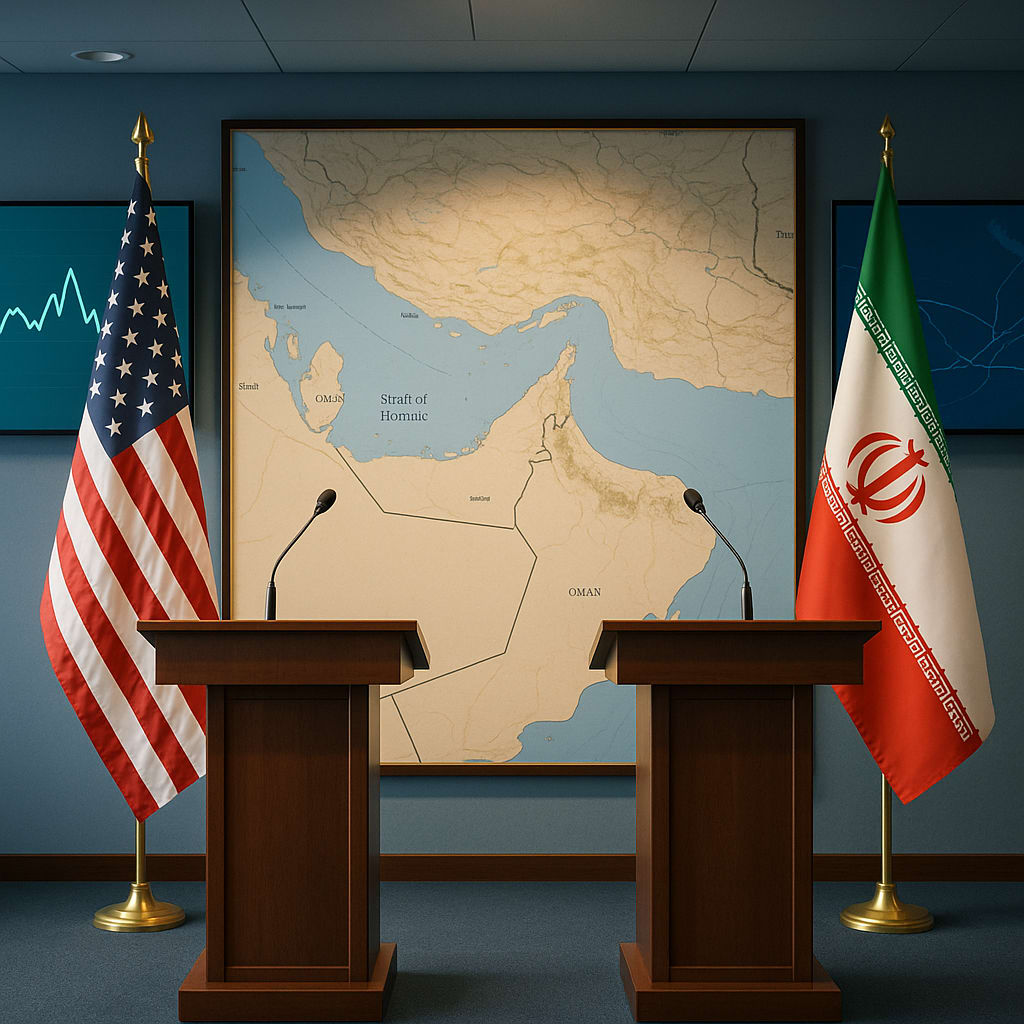
Vance Declines Timeline, Rejects ‘War’ Label as US and Iran Trade Strikes
Narrative Snapshot
Across US and international outlets, there is broad agreement on what Vice President JD Vance said at the White House podium—he would not set a timeline and he resisted the term “war”—but the framing diverges. Mainstream and global outlets emphasize the label dispute and its context: the New York Times notes Vance cast the endgame as Tehran’s choice, while Al Jazeera English, The Hindu, Bangkok Post, and Toronto Star highlight his skepticism about calling it a war and his refusal to tie it to election timing. Conservative US coverage stresses resolve and tools: Fox News underscores the pivot away from talks after a failed June memorandum and a return to economic and military pressure.
Other reporting contests the scale and cost of the conflict. CGTN details fresh US strikes and Iranian retaliation, possible future targets such as “Pickaxe Mountain” near Natanz, and casualties reported by Iran’s Health Ministry, while quoting President Trump’s minimization of the fighting. The Guardian foregrounds alleged civilian harm, citing the Iranian Red Crescent’s report of a wedding strike and domestic pushback to Vance’s language. Russia’s TASS amplifies ambiguity over timelines and casts Washington as claiming only US action can avert an energy shock, while flagging that covert operations are “on the table.”
A second through-line is institutional capacity and regional spillover. Middle East Eye and France24 document Pentagon unease and the resignation of US Army Secretary Dan Driscoll, followed by the naming of Adam Telle as acting secretary, as well as new warnings from US embassies and the State Department to Americans in the region. France24 pairs renewed exchanges with oil price gains and a wave of online misinformation; Middle East Eye and Qatar’s foreign ministry highlight phone diplomacy aimed at restoring navigation in the Strait of Hormuz.
What Happened
At the first White House press briefing since the press secretary’s departure, US Vice President JD Vance refused to set a timeline for ending hostilities with Iran and questioned whether the fighting constitutes a “war,” saying its duration depends on Tehran’s actions, as reported by Fox News, the New York Times, Al Jazeera English, Bangkok Post, and Toronto Star. His comments followed renewed exchanges: US Central Command announced strikes on Islamic Revolutionary Guard Corps targets in Iran, citing attacks on shipping and US personnel (Fox News; CGTN; Telesur). Iran responded with missile attacks on US bases and assets in multiple regional states, according to CGTN. Iranian officials and media reported civilian casualties, including a wedding in southern Iran; CENTCOM said it was reviewing those claims (CGTN; the Guardian). President Trump vowed to “hit [Iran] hard,” ruled out nuclear use, and said further strikes were possible, including near Natanz (CGTN; France24; the Times of Israel). US embassies and the State Department issued regional security alerts (Fox News; Middle East Eye). Army Secretary Dan Driscoll resigned amid reported Pentagon unease; Adam Telle was named acting secretary (Middle East Eye; France24).
Why It Matters
The exchanges concentrate risk in the Strait of Hormuz, a chokepoint where attacks on shipping and mine warfare allegations directly implicate freedom of navigation and energy security. France24 links renewed strikes to rising oil prices, while Fox News and TASS relay Vance’s view that market impacts are diminishing even as he rejects reliance on Iranian restraint. The dispute over a June memorandum—and Tehran’s call for Washington to honor it while the White House reverts to pressure—signals a retrenchment from diplomatic de-escalation mechanisms (Al Jazeera English; Fox News). Civil-military strains are salient: Middle East Eye and France24 report senior officers’ warnings about sustainability, the Army secretary’s resignation, and an acting appointment, raising questions about US institutional bandwidth for prolonged operations. Regionally, Qatar’s outreach to de-escalate and restore navigation reflects GCC and broader stakeholder interests in stability (Middle East Eye). Information integrity is an added vulnerability, with France24 documenting misattributed footage amid active operations.
Diverging Narratives
The conflict’s characterization is a core fault line. Vance’s reluctance to call it a war and Trump’s description of the fighting as “intermittent” and “small potatoes” contrast with coverage emphasizing intensity, casualties, and geographic spread (Al Jazeera English; Bangkok Post; CGTN). The Guardian highlights domestic criticism that minimizing language obscures civilian harm, citing the Iranian Red Crescent’s wedding-casualty report, while CGTN notes CENTCOM’s pledge to review the allegation. On efficacy and endgames, Fox News reports the administration has taken negotiations off the table after a failed June memorandum and is pivoting back to pressure, whereas Al Jazeera English says Iran is urging the US to honor that memorandum. TASS accentuates open-endedness and the possibility of covert operations, pairing it with a portrayal of US leaders asserting that only American action can forestall an energy crisis, while France24’s market coverage shows prices responding to escalatory signals. Strategic sustainability is also contested: Middle East Eye cites top US generals warning that prolonged major operations could degrade broader force readiness, even as CGTN quotes Trump saying the US can strike “any time we want” and floating new target sets near Natanz. The Times of Israel notes Trump’s categorical rejection of nuclear options even as he claims Tehran is “totally defeated militarily,” a claim juxtaposed against Iran’s continued retaliatory capacity reported by CGTN and Telesur.
What Happens Next
Three decision points emerge. First, target selection and strike tempo: Trump’s statements that further strikes could come “any time” and mention of “Pickaxe Mountain” near Natanz set one path of continued kinetic pressure (CGTN). Indicators include CENTCOM release patterns, choice of targets in or near sensitive nuclear-adjacent sites, and any US assertions about mine warfare along Hormuz (Fox News; CGTN; Telesur). Second, maritime enforcement and the June memorandum’s status: Iran’s parliamentary speaker warned of military response if a perceived blockade intensifies and linked navigation routes to the MoU’s terms (Telesur), while Tehran publicly urged Washington to honor that MoU (Al Jazeera English). Watch for US interdiction moves, Iranian actions against commercial traffic, and third-party facilitation attempts, including Qatar’s outreach to restore navigation (Middle East Eye). Third, US civil-military management: Driscoll’s resignation and Adam Telle’s acting appointment (Middle East Eye; France24) situate future operational posture within a constrained leadership bandwidth; further resignations or public warnings from service chiefs would signal constraints on escalation. Concurrently, State/embassy alerts and oil price responses (Middle East Eye; Fox News; France24) will reflect risk transmission beyond the battlefield.