
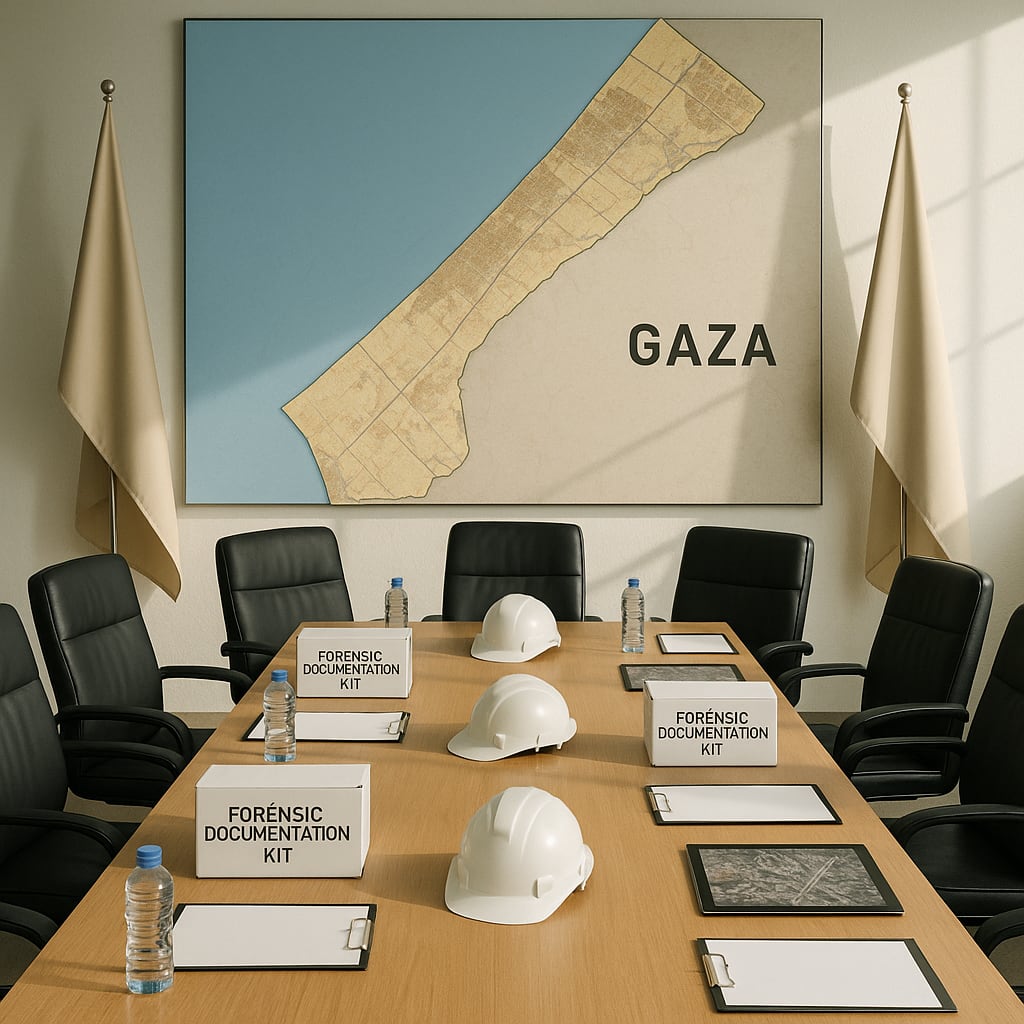
UN rapporteur warns Israeli Gaza rubble-clearing risks erasing evidence of atrocity crimes and human remains
Narrative Snapshot
Across outlets in Europe, Asia, and North America, reports converge on the same core warning from UN Special Rapporteur Francesca Albanese: large-scale removal, crushing, and relocation of rubble in areas of Gaza under Israeli control could destroy physical evidence and impede the recovery and identification of bodies. Brief dispatches from France24, Bangkok Post, and CBC relay the risk to evidence and human remains in straightforward terms, while the South China Morning Post adds Albanese’s characterization of the implications as “profound.”
Other coverage sharpens the legal and operational stakes. Al Jazeera notes that the International Court of Justice ordered Israel in 2024 to prevent the destruction of evidence related to war crimes. Le Monde adds situational metrics cited by Albanese—attributed to Palestinian authorities—that over 10,000 people remain under rubble and that access restrictions affect almost 70% of Gaza. Middle East Eye reports Albanese’s call for Palestinians to lead clearance planning, her description of rubble as a “crime scene” and “graveyard,” and her claim—without naming sources—that Israeli companies are involved. Telesur underscores her warning that states and companies participating in clearance could face international criminal responsibility if evidence is destroyed, and links the moment to broader wartime dynamics it has reported, including continued strikes and a political proposal to displace Gazans.
A separate Middle East Eye piece carries Hamas’s accusation that Israel is attempting to “obliterate evidence,” urging the UN and international courts to deploy investigation teams and forensic experts. None of the cited reports include an Israeli government response, leaving questions about the procedures and safeguards governing rubble management unaddressed in this coverage.
What Happened
UN Special Rapporteur Francesca Albanese warned that Israel’s ongoing removal, crushing, and relocation of rubble in Gaza risks erasing traces of “atrocity crimes” and obstructing the recovery and identification of human remains (France24; Bangkok Post; CBC; South China Morning Post). She urged that evidence be collected and remains identified before full-scale clearance proceeds and said Palestinians should lead any removal plans (Middle East Eye, 7 Sep). Albanese described Gaza’s rubble as a “crime scene” and “graveyard,” and stated that multiple sources confirmed Israeli company involvement, without naming those sources (Middle East Eye, 7 Sep). Al Jazeera recalled that the International Court of Justice in 2024 ordered Israel to prevent destruction of war-crimes evidence. Le Monde cited Albanese, referencing Palestinian authorities’ figures of over 10,000 people still under rubble and access restrictions covering nearly 70% of Gaza. Hamas accused Israel of attempting to “obliterate evidence” and called for international forensic deployments (Middle East Eye, 8 Sep).
Why It Matters
The warning touches core accountability processes. Destruction of rubble without forensic safeguards could compromise investigations into alleged international crimes, including genocide, as Albanese framed it (Telesur, 8 Sep). Al Jazeera’s reference to the ICJ’s 2024 order connects operational clearance decisions to ongoing judicial scrutiny, raising compliance considerations for Israeli authorities and for any actors cooperating with them. Telesur highlights potential criminal exposure for states and companies if their actions contribute to the destruction of evidence.
Operational control and access are central. Le Monde’s reporting that, according to Palestinian authorities, tens of thousands of sites remain inaccessible and many people are still under rubble underscores the scale of the forensic task and the need for safe, coordinated access. For multilateral bodies and donors, the issue intersects with mandate delivery: whether and how investigators, humanitarian teams, and forensic experts can enter, secure sites, and preserve chain-of-custody before industrial debris processing proceeds.
Diverging Narratives
Albanese’s position is technical-legal and procedural: treat rubble as potential evidence and human remains, sequence clearance after recovery and documentation, and place Palestinians at the center of planning (Middle East Eye, 7 Sep; South China Morning Post). Hamas escalates the framing, alleging an Israeli attempt to conceal “brutal crimes” and invoking the ICJ order, while urging urgent UN and court action and the deployment of forensic teams (Middle East Eye, 8 Sep). Telesur expands the legal aperture to possible criminal responsibility for participating states and firms and situates the moment alongside reports of continued strikes and a political proposal to displace Gazans (Telesur, 2 Sep; 4 Sep; 8 Sep).
The coverage also diverges in evidentiary specificity. Le Monde relays quantitative context—over 10,000 reportedly under rubble and extensive access restrictions—attributed to Palestinian authorities, while multiple outlets repeat the warning without figures. Middle East Eye notes Albanese’s assertion that Israeli companies are involved but records no supporting details. No source provides an Israeli account of clearance protocols or evidence-preservation measures. As a result, key uncertainties persist within this reporting: the exact scope of clearance operations, the safeguards in place, access for investigators, and verifiable numbers of unrecovered bodies.
What Happens Next
Several decision points follow from the reported positions. First, whether clearance proceeds at current pace and method or is restructured to prioritize recovery and documentation, as urged by Albanese; signals would include any announced pauses, revised protocols, or Palestinian-led planning arrangements (Middle East Eye, 7 Sep). Second, whether international investigative and forensic teams gain site access, as called for by Hamas; watch for UN or court-linked deployments or formal access authorizations (Middle East Eye, 8 Sep).
Third, how actors align with the ICJ’s 2024 order to prevent destruction of evidence; indicators include public guidance from Israeli authorities on evidence preservation and any court-related communications cited by outlets (Al Jazeera). Fourth, the role of companies and states in debris operations in light of Albanese’s warning about potential criminal responsibility; monitor disclosures about contractors, contractual terms, and any withdrawals or compliance commitments (Telesur, 8 Sep; Middle East Eye, 7 Sep).