
Gulf states and Iran head to Oman for Hormuz talks as Iran–Oman routing plan advances and Bahrain opts out
Narrative Snapshot
Across outlets, there is broad acknowledgment that Oman is hosting a rare regional engagement with Iran focused on the Strait of Hormuz, but accounts differ on how far the process extends beyond an Iran–Oman track and what it can deliver under current wartime conditions. Al Jazeera frames the Muscat-facilitated meeting as a confidence-building step intended to promote regional understanding, while Iranian and Omani consultations on “new maps” and a temporary corridor have been repeatedly highlighted by Iranian officials and reported by CGTN and Telesur as nearing the point of submission to the International Maritime Organization.
The sharpest divergence concerns control and conditions. Iranian officials, quoted by Middle East Eye, say any Iran–Oman agreement does not in itself reopen the strait and tie broader reopening to US commitments under an Islamabad memorandum, a line echoed in Russian agency reports that Tehran has handed Washington conditions. Middle East Eye also reports Iran’s intent to impose a restricted maritime zone and sanction vessels, while TASS and The Times of Israel relay that Tehran seeks to levy a toll and that Muscat rejects this. In contrast, Bahrain has publicly refused to attend before restoring ties with Iran and insists Hormuz must remain open “without discrimination, fees or permits,” signaling resistance to any Iranian-administered regime.
Coverage also reflects the conflict’s operational risks. Middle East Eye and Telesur carry Iranian claims of missile and maritime strikes in retaliation for US attacks, which Tehran condemned as a “war crime,” and Clarin reports a deadly attack on an Iranian merchant near Qeshm. Middle East Eye notes a marked drop in daily transits. The stakes across sources converge on who sets and enforces navigational rules at a chokepoint central to global energy flows, and whether regional arrangements can materialize amid active hostilities and extra-regional military involvement.
What Happened
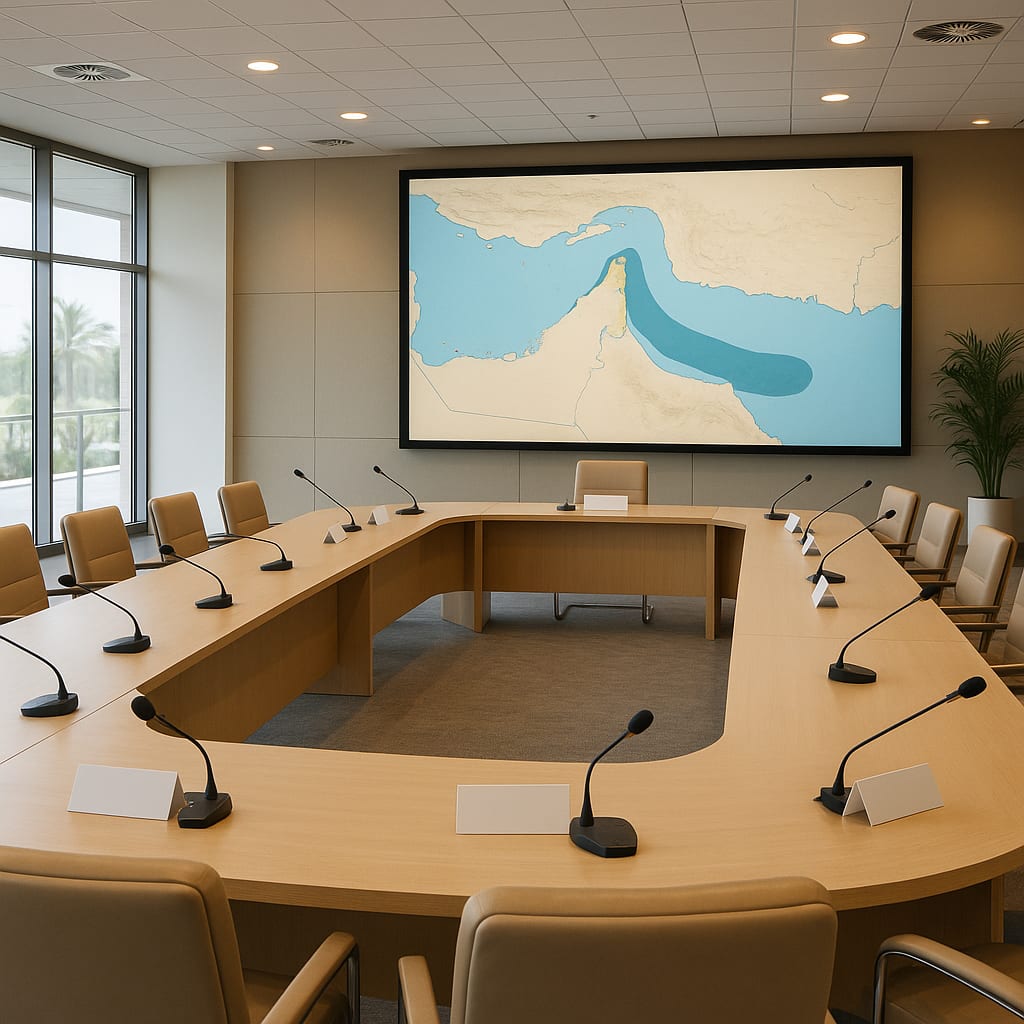
Iran and Gulf governments have agreed to meet in Oman on Monday to discuss the Strait of Hormuz, in what Argentine and Qatari outlets describe as the first such multilateral contact since the war began more than six months ago, with Iran saying the aim is to improve regional understanding. Parallel to the convening, Iranian and Omani officials have been negotiating “new maps” and a temporary safe-passage corridor, with Iranian spokesmen and CGTN saying the understanding is at a final stage and could be registered with the International Maritime Organization. Bahrain announced it will not attend any collective meeting with Iran before restoring diplomatic relations and called for Hormuz to remain open without fees or permits. Iranian officials told Middle East Eye that any Iran–Oman agreement would not reopen the strait absent US steps under an Islamabad memorandum; TASS reported Tehran gave Washington conditions and that the strait would remain closed until they are met. Amid escalating incidents, Iranian media carried IRGC claims of strikes on US assets and vessels following US attacks on Iranian commercial ships, which Tehran condemned; an Iranian merchant ship was reported attacked near Qeshm; and reported transits through Hormuz fell well below recent averages.
Why It Matters
The Oman talks test whether a regional security modality can take root around Hormuz while hostilities persist and US–Iran confrontation shapes the maritime environment. An Iran–Oman mapping arrangement submitted to the International Maritime Organization would signal an attempt to formalize routing under a regional framework, even as Iranian officials assert that comprehensive reopening remains conditional. Bahrain’s refusal to engage without prior diplomatic normalization, coupled with its rejection of any fees or permits, underscores intra-Gulf fragmentation on how to manage Iran and the strait. Iranian moves to designate a restricted zone, sanction vessels, and pivot trade toward land corridors point to a strategy of leveraging chokepoint control while reducing maritime exposure. External dynamics remain consequential: Tehran links de-escalation to US actions; South Korea is debating a support role for US operations; and Iran is positioning itself as a logistics and energy hub in forums like BRICS, indicating that shipping governance and energy security are being contested across diplomatic, military, and economic theatres.
Diverging Narratives
Iran and Oman present technical coordination on routing as advancing toward an IMO-facing framework, yet Iranian officials stress this does not equate to reopening. Middle East Eye quotes Iran’s foreign minister tying any reopening to US obligations under an Islamabad memorandum, while TASS reports a list of conditions delivered to Washington and portrays a continued closure until they are met. The Times of Israel cites an Iranian source saying Tehran seeks to charge a toll, which Muscat rejects—setting up a salient policy conflict over monetization and administrative authority that Bahrain addresses from the other side by demanding passage without discrimination, fees, or permits and by refusing to meet absent restored ties.
On scope and participation, Telesur and Al Jazeera describe a broad meeting including GCC states and Iraq, but TASS emphasizes an Iran–Oman agreement “exclusively” between the two. Where Iranian and aligned outlets frame the talks as regional self-reliance in security and blame US and Israeli actions for insecurity, Bahrain’s statement warns against “appeasement” and foregrounds attacks on Gulf infrastructure. Reporting on the ground picture is also contested: Iranian and Middle East Eye accounts describe IRGC strikes on US assets and US attacks on Iranian commercial vessels, while Clarin reports a separate deadly attack on an Iranian merchant near Qeshm and Middle East Eye notes a significant fall in vessel transits. Across these narratives, the extent to which any Oman-brokered arrangement can command acceptance beyond Iran and Oman—and function under continuing strikes—remains unresolved.
What Happens Next
Three decision points emerge from the sources. First, Oman’s meeting: Iran says it will brief attendees on new route maps; Bahrain’s absence narrows consensus, and any post-meeting statement will indicate whether GCC members align with an Oman-facilitated routing concept or maintain positions like Manama’s opposition to fees and permits. Second, institutionalization: Iranian and CGTN reports of imminent IMO registration are a concrete signal to watch; filing, and any subsequent state objections, will reveal how far a bilateral Iran–Oman scheme can travel multilaterally. Third, conditionality and enforcement: Iranian statements link reopening to US steps under an Islamabad memorandum and to conditions conveyed to Washington; absent movement, officials have flagged a restricted zone and vessel sanctions. Indicators include published exclusion parameters, reported interdictions, transit counts, and claims of strikes. Parallel diplomatic levers—Qatar’s de-escalation contacts and Bahrain’s precondition of restored ties—along with South Korea’s decision on supporting US operations, will shape whether the regional track gains or loses traction under external pressure.