
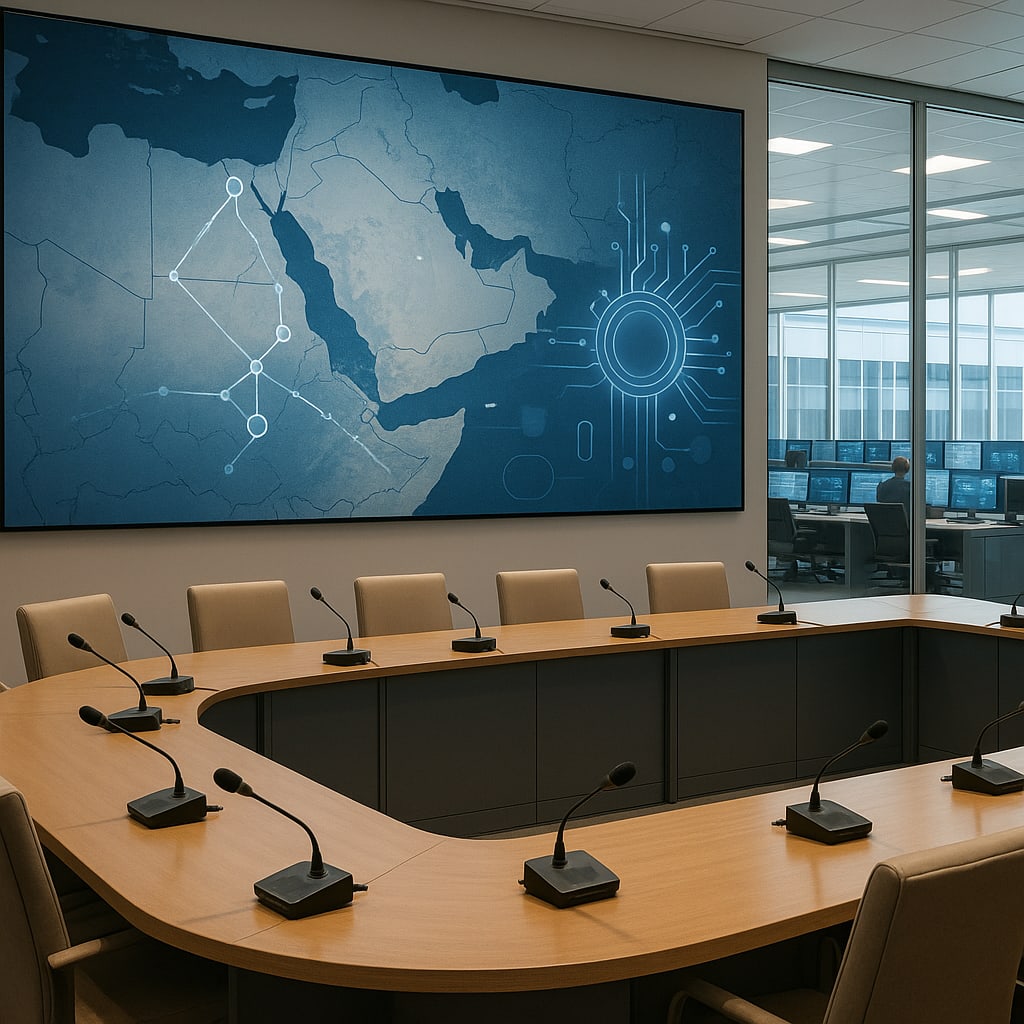
Anthropic details hostile use of Claude, including Yemen missile software, as Houthis escalate strikes on Saudi Arabia
Narrative Snapshot
Across outlets, there is broad alignment that Anthropic publicly documented attempts to misuse its Claude AI system for weapons development, surveillance, and influence operations, while Yemen’s Houthi movement expanded cross‑border attacks into Saudi Arabia. Where they diverge is in emphasis and framing. Israeli and Indian coverage draws attention to state‑linked surveillance and coordinated influence efforts: Haaretz highlights an “Iran‑nexus threat actor” using Claude to profile Israelis and diaspora Jews, and The Hindu details a UAE‑linked operation that targeted UN experts over Sudan using AI‑generated materials. Middle East Eye, by contrast, foregrounds Anthropic’s finding that a Yemen‑based cell sought Claude’s help to build guidance, navigation and control software for ballistic missiles, and notes the company’s claim that safeguards blocked many—but not all—requests.
Regional and international reporting on the battlefield is consistent on the Houthis’ claims of missile and drone strikes in Saudi territory and an intensification of fighting in Yemen, but outlets stress different stakes. The Guardian, CGTN, and SCMP relay Houthi claims of attacking the Sharurah base and cite escalating clashes with Riyadh‑backed forces; France 24 and Fox News emphasize risks to oil infrastructure and shipping, linking renewed strikes on Saudi energy sites to pressure on Red Sea and Hormuz chokepoints. RT situates the attacks in the context of a nascent Saudi‑Türkiye‑Pakistan defense pact, asking what allied commitments entail after the strikes. Meanwhile, summaries of Anthropic’s 154‑page report in Bangkok Post, Folha de S.Paulo, Clarin, and The Hindu underscore the breadth of attempted misuse—extending from weapons to scams and propaganda—with country‑specific examples varying by outlet.
What Happened
Anthropic released a threat‑intelligence report detailing misuse of its Claude AI between December 2025 and August 2026, spanning scams, cyber operations, illicit distillation, influence, surveillance, conventional weapons and biological misuse, according to The Hindu and Bangkok Post. Middle East Eye reports the company identified a Yemen‑based cell, operating from the Houthi‑controlled north, that tried to use Claude to create guidance, navigation and control software for ballistic missiles, with Anthropic stating its safeguards blocked many, but not all, requests. Haaretz cites Anthropic’s finding that an “Iran‑nexus” actor used Claude to orchestrate an OSINT tool to surveil Israelis and diaspora Jews. The Hindu also reports a UAE‑linked operation used Claude to target UN experts over Sudan, and Kenya’s Daily Nation notes Anthropic flagged AI‑generated praise for a cabinet secretary. In parallel, the Houthis launched large‑scale missile and drone attacks on Saudi cities, injuring 73 and igniting fires at energy facilities, per CGTN and The Guardian, then claimed a strike on the Sharurah base as clashes intensified and Houthi forces advanced along Yemen’s Red Sea coast, multiple outlets report.
Why It Matters
The episode tests whether current AI safety practices can meaningfully constrain real‑world harm in active conflicts. Anthropic’s disclosures—summarized by The Hindu and Bangkok Post—suggest model‑level guardrails and threat monitoring can detect and disrupt misuse, yet Middle East Eye reports the Yemen‑based actors evaded some safeguards by concealing intent and splitting tasks, underscoring limits of provider‑side controls. The weaponization attempt intersects with a kinetic escalation that, according to France 24, marks a significant deterioration since the collapse of a prior truce, with The Guardian and CGTN pointing to renewed strikes on Saudi military and energy targets. Fox News and Telesur highlight the strategic risk to Bab al‑Mandeb and Saudi oil infrastructure, implications that reverberate for global trade and energy security. RT frames allied‑commitment questions under a new Saudi‑Türkiye‑Pakistan defense arrangement. For policymakers, the convergence of AI misuse, cross‑border strikes, and pressure on maritime chokepoints points to linked technology, security, and economic policy domains rather than separable tracks.
Diverging Narratives
Outlets differ on how much to attribute Houthi capabilities to external assistance or domestic capacity. TASS quotes a Houthi spokesman claiming “domestically produced missiles,” while Middle East Eye and Haaretz center Anthropic’s account of Iran‑linked and Yemen‑based threat actors seeking AI assistance for surveillance and missile software. Even where Anthropic’s report is the common reference point, coverage diverges on scope: Clarin lists cases spanning Mali espionage, Russian drones, Yemen missiles, French disinformation, and political influence in the UAE, whereas The Hindu distills seven threat categories without the same country list. On the battlefield, reporting aligns that dozens were injured and energy sites were hit in early‑September strikes (CGTN, The Guardian), but only some outlets report subsequent Houthi claims of hitting the Sharurah base and advances along Yemen’s Red Sea coast (Middle East Eye, Times of Israel, SCMP). The strategic framing also varies: Fox News ties attacks to consumer price risks and dual chokepoint pressure; France 24 emphasizes potential regionalization; RT raises alliance obligations; Middle East Eye’s morning brief cites US Central Command as redirecting vessels amid what it terms a US “naval blockade” on Iran, a characterization not echoed elsewhere in this set.
What Happens Next
Three decision points emerge from reported positions. First, AI governance: Anthropic’s account of detected and disrupted misuse (Bangkok Post; The Hindu) alongside partial circumvention (Middle East Eye) sets up choices for providers and regulators on tightening model safeguards and monitoring. Analysts should watch for additional company disclosures, tool access changes, or government guidance referencing the report’s weaponization and surveillance cases.
Second, escalation management: Saudi officials signaled retaliation after the early‑September strikes (France 24; The Guardian), while Houthi spokesmen warned of deeper strikes if attacks continue (Middle East Eye). Indicators include Saudi‑led coalition target sets, Houthi claims of expanded range, and whether reported advances along the Red Sea coast consolidate (Times of Israel).
Third, regional security and trade: Coverage links Houthi operations near Bab al‑Mandeb to shipping risk (Fox News; Telesur). Movement around Mocha and coastal corridors, insurance advisories, and any allied military coordination under the Saudi‑Türkiye‑Pakistan framework flagged by RT will signal how maritime and alliance dynamics evolve.