
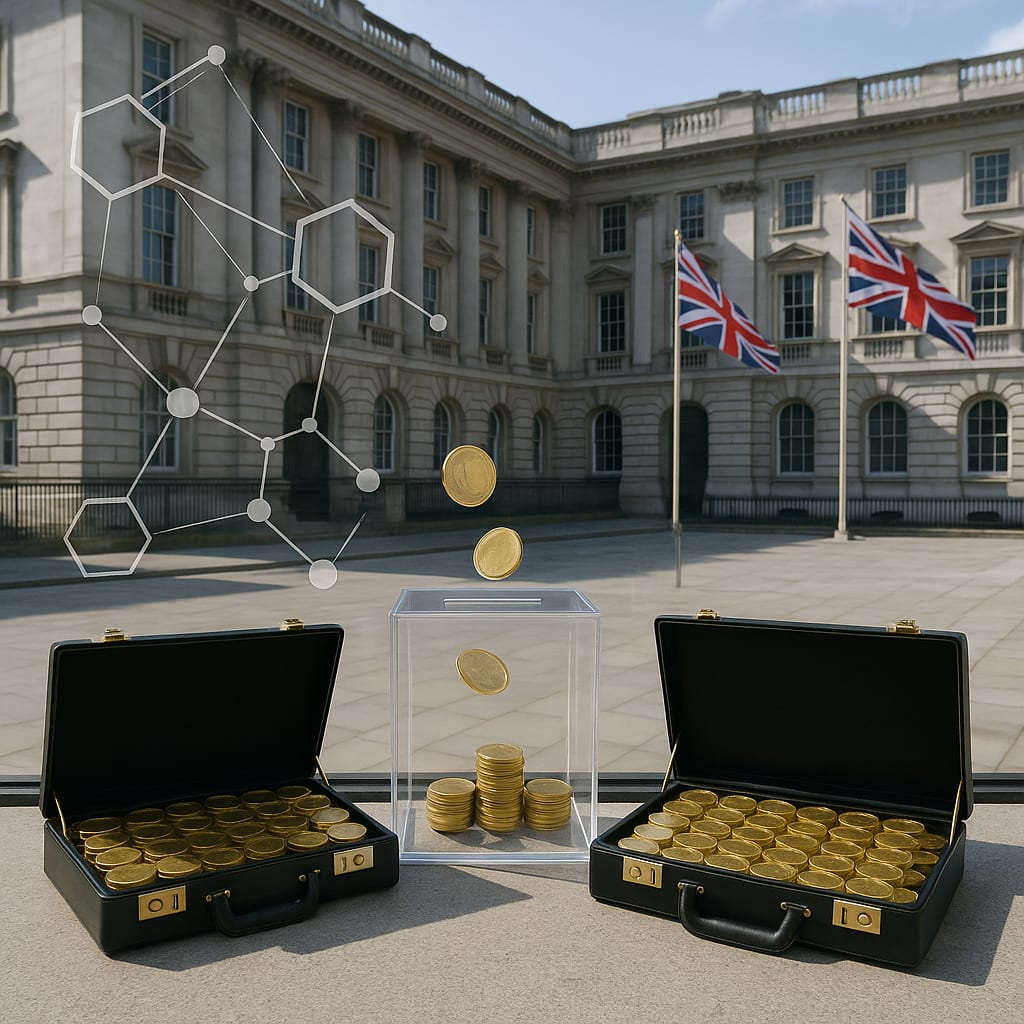
Record £72m from two crypto billionaires puts Reform UK’s funding under police scrutiny and in legislative crosshairs
Narrative Snapshot
Across international outlets there is clear agreement on the core facts: two cryptocurrency billionaires, Ben Delo and Christopher Harborne, each pledged £36 million to Nigel Farage’s Reform UK within roughly 48 hours, bringing the total to £72 million. The framing diverges in emphasis. European coverage leans into scale and scrutiny: Le Monde highlights Delo’s stated aim to fund Reform through the 2029 election while noting ongoing scandals over the party’s financing; La Repubblica underscores the magnitude by reporting the combined sum exceeds what all other UK parties raised during 2025. UK and Asian outlets pair the windfall with active investigations. The Guardian and the South China Morning Post both foreground allegations about irregularities and law-enforcement inquiries, while Japan Times anchors the donations against Channel 4’s undercover reporting on possible foreign-donation circumvention.
Regional media also differ in political characterization and policy linkage. Al Jazeera describes Reform UK as “far-right” and stresses the unprecedented size of the contributions, whereas The Guardian connects the money to Reform’s pledge for more crypto-friendly policies, reporting the cash both boosts the party and “muddies” perceptions of whose interests it serves. Canadian coverage via the Toronto Star (AP) broadens the lens to concerns about money in British politics. France24 moves beyond party finance to a public-order context, citing intensifying anti-immigration protests alongside a police criminal investigation into the £72 million, signaling the story’s intersection with social tensions as well as regulatory enforcement.
What Happened
Two record donations transformed Reform UK’s finances in mid-September. On Friday, Ben Delo committed £36 million, which he framed as ensuring a stable budget for the party through the next general election by 2029, according to Le Monde. Within about 24–48 hours, Christopher Harborne matched the sum, bringing Reform’s total from the two donors to £72 million, as reported by the South China Morning Post, Japan Times, and The Guardian. Outlets converted the figure to roughly $97–98 million, per the Toronto Star (AP) and Al Jazeera. The funding landed as scrutiny intensified. Earlier in the week, police opened and then widened a probe into alleged plans to accept foreign donations following a Channel 4 undercover report, reported by The Guardian, the Japan Times, and the SCMP. France24 then reported a separate criminal investigation into whether the £72 million itself breached foreign-donation rules. Reform denies irregularities, per SCMP reporting.
Why It Matters
The case sits at the intersection of party finance regulation, cross-border money flows, and emerging-technology lobbying. UK authorities are already investigating alleged attempts to circumvent foreign-donor prohibitions, as reported by The Guardian and Japan Times, and France24 notes a criminal probe specifically into whether the £72 million breached foreign-donation rules. The Guardian also reports that a cabinet minister suggested a new elections bill could apply retrospectively, and Labour MPs criticized the government for not moving sooner to restrict domestic donations—indicating potential recalibration of the UK’s permissive domestic funding landscape. Policy linkages are explicit: The Guardian notes Reform has pledged more crypto-friendly policies, placing the donations within a debate over regulatory posture toward digital assets. Internationally, concerns about money in politics (Toronto Star/AP) and the sheer unprecedented scale relative to recent UK party fundraising (La Repubblica) suggest broader questions about institutional capacity to police donation provenance and influence.
Diverging Narratives
Core facts are uncontested—the £72 million total, the donors’ crypto wealth, and the compressed time frame. Tensions emerge around legality, legitimacy, and policy implications. Police actions are reported along two tracks: The Guardian, Japan Times, and SCMP detail a widening investigation prompted by Channel 4’s undercover footage; France24 reports a criminal probe into the £72 million itself and links the moment to rising anti-immigration protests. Reform’s position, cited by SCMP, is categorical denial of wrongdoing, while Le Monde situates the party amid prior funding scandals and quotes Delo’s rationale about long-term budgeting to 2029.
Interpretive frames also differ. The Guardian’s live blog ties the influx to Reform’s pro-crypto policy pledges and says the money makes the party’s “prospects both rosier and riskier,” implying reputational and regulatory exposure. Al Jazeera’s labeling of Reform as “far-right” contrasts with more neutral descriptors elsewhere. The Guardian further reports that a cabinet minister floated retroactive applicability of a new elections bill, while Reform maintains confidence its funding is lawful—an unresolved legal question. Finally, financial magnitude is variably contextualized: La Repubblica benchmarks the sum against all UK parties’ 2025 totals, while Toronto Star/AP generalizes concerns about the role of big money in UK politics, and SCMP emphasizes that the party denies allegations of irregularities even as investigations expand.
What Happens Next
Two decision tracks will shape the trajectory. First is enforcement. Police inquiries reported by The Guardian, Japan Times, and SCMP into alleged foreign-funding circumvention—and France24’s reporting of a criminal investigation into the £72 million—could culminate in findings of compliance or breaches. Analysts should watch for official determinations on donor eligibility, any referrals for prosecution, and whether the separate probes consolidate or advance on distinct legal theories.
Second is legislation. The Guardian reports a cabinet minister suggested a new elections bill could apply retrospectively, and Labour MPs voiced anger over the absence of tighter domestic-donation curbs before the weekend’s gifts. Key indicators include draft bill language, government statements on retroactivity, and any moves to limit large domestic donations. Operationally, Le Monde and The Guardian note Reform intends to fund activities through the next election; monitoring spending declarations and compliance disclosures will show how the party deploys the funds under heightened scrutiny. France24’s mention of intensifying protests suggests public-order dynamics may also influence political and regulatory responses.