
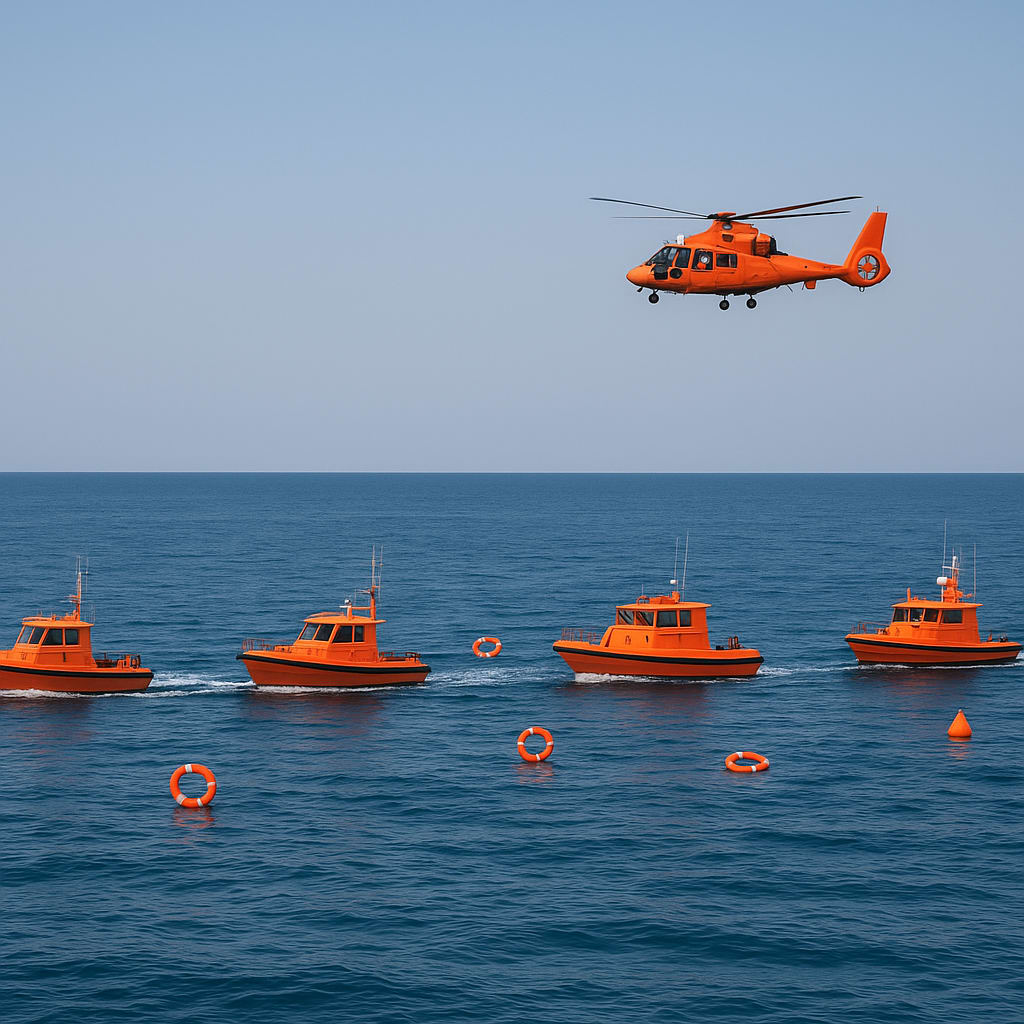
Search continues for around 130 missing after Indonesian ferry capsizes; at least six dead, 107 rescued
Narrative Snapshot
Across outlets, there is broad agreement on the vessel’s route, identity, and the trigger: the Virgo Transport 8, traveling from Surabaya in East Java to Banjarmasin in South Kalimantan, lost contact amid bad weather in the Java Sea. Early reporting framed the event as a loss of contact or communication failure (The Hindu; South China Morning Post; Toronto Star/AP; Fox News), while subsequent coverage converged on a capsize/sinking with ongoing rescues (The Guardian; BBC; Al Jazeera English; Bangkok Post; Deutsche Welle; Le Monde).
Numbers are the main point of divergence as the situation evolved in real time. Several outlets reported 102–103 rescued and one death among evacuees (Sky News; TASS; La Repubblica; The Guardian; BBC; Al Jazeera English; Bangkok Post). Later updates from multiple sources put the toll at six dead, 107 rescued, and roughly 130 missing (Deutsche Welle; Le Monde; CBC; TASS on 14 Sep; Corriere della Sera on 14 Sep), while ANSA at one point cited nine deaths. Reporting consistently linked the incident to rough seas and high waves (Corriere della Sera; Clarin).
Coverage situates the disaster alongside concurrent regional ferry emergencies, including a deadly fire off the Philippines’ Palawan with casualties rising from initial counts of five dead and dozens missing to at least 35 dead and about 50 missing in later reporting (France24; Al Jazeera English; Deutsche Welle; Le Monde), and the sinking of Vanuatu’s MV Matui with one confirmed dead and more than 30 missing (The Guardian; The Hindu; TASS; Fox News). These parallel events keep attention on search-and-rescue capacity, weather risks, and real-time information management.
What Happened
Indonesian rescuers launched operations after passenger ferry Virgo Transport 8 lost contact in the Java Sea while sailing from Surabaya to Banjarmasin (The Hindu; South China Morning Post; Toronto Star/AP). Authorities in Banjarmasin reported a communications failure and said the vessel was last tracked roughly 92 miles from a local pier (Fox News). Initial accounts emphasized the ship going missing in bad weather (Corriere della Sera; The Hindu), followed by reports of rescues at sea: 102–103 people evacuated, with one evacuee dying (Sky News; TASS; La Repubblica; The Guardian; BBC; Al Jazeera English; Bangkok Post). Subsequent updates raised the death toll to six, with 107 rescued and about 130 still missing (Deutsche Welle; Le Monde; CBC; TASS on 14 Sep; Corriere della Sera on 14 Sep). ANSA separately cited nine deaths and over 100 rescued amid high waves.
Why It Matters
This incident tests Indonesia’s search-and-rescue coordination on one of its busiest inter-island routes, with real-time casualty figures shifting as authorities reconcile communications failures and at-sea evacuations (South China Morning Post; Fox News; Deutsche Welle; Le Monde; CBC). The persistent role of bad weather and reports of strong waves highlight the operational limits SAR teams face and the importance of rapid asset deployment, including naval ships and helicopters cited in related regional searches (Clarin).
The wider regional context is consequential. In the Philippines, a ferry fire off Palawan saw casualty estimates rise markedly over several days, from five dead and dozens missing to at least 35 dead and roughly 50 missing (France24; Al Jazeera English; Deutsche Welle; Le Monde). In Vanuatu, authorities continued to search for more than 30 missing after the MV Matui sank in very rough seas (The Guardian; The Hindu; TASS; Fox News). For decision-makers, these parallel cases underscore the policy salience of weather advisories, maritime communications reliability, manifest accuracy during crises, and surge SAR capacity across archipelagic sea lanes.
Diverging Narratives
Outlets differ on the event’s characterization and tolls as updates rolled in. Early wire-driven coverage emphasized a missing vessel and communications failure (The Hindu; South China Morning Post; Toronto Star/AP; Fox News), while later reports shifted to a capsize or sinking linked to bad weather (Deutsche Welle; Le Monde; ANSA; The Guardian; Corriere della Sera). Rescue counts vary between 102 and 107, and reports of fatalities range from one among evacuees (La Repubblica; The Guardian; BBC; Al Jazeera English; Bangkok Post) to six confirmed deaths and about 130 missing (Deutsche Welle; Le Monde; CBC; TASS on 14 Sep; Corriere della Sera on 14 Sep). ANSA also cited nine deaths at one point.
Causal framing is consistent—bad weather, rough seas, and high waves feature across accounts (Corriere della Sera; The Guardian; Bangkok Post; Clarin)—but the vessel’s precise status remains unevenly described, with some reports referencing a capsize or sinking and others maintaining the initial “lost contact” language. Information pathways also differ: TASS repeatedly attributes figures to Reuters or subsequent official tallies, while Le Monde notes details from a distress signal by the ferry’s owners. The contrasts reflect rolling SAR conditions and evolving access to official briefings, rather than contending explanations of cause.
What Happens Next
Key decisions turn on search scope, asset deployment, and weather windows. Indonesian SAR authorities in Banjarmasin are the central node for updates; additional naval and aerial assets, used in comparable regional searches, would signal an expanded operational footprint (South China Morning Post; Fox News; Clarin). If weather abates, search grids can widen and dive operations intensify; continued rough seas would constrain tempo and prolong uncertainty (Corriere della Sera; Bangkok Post).
Casualty figures are likely to be revised as officials reconcile rescued counts with the ship’s reported 243 people on board and locate debris or the hull (The Guardian; Le Monde; CBC; TASS on 14 Sep). Analysts should watch for confirmation of the vessel’s status—capsize, sinking location, or drift—along with manifest verification and any official chronology of the communications failure (Fox News; South China Morning Post). Parallel updates from the Philippines and Vanuatu underscore that casualty numbers can change substantially during ongoing SAR operations (France24; Le Monde; The Guardian).