
Chile marks 53rd coup anniversary without official ceremony as civil tributes meet clashes and arrests
Narrative Snapshot
Across outlets, there is broad concurrence that the Chilean government did not stage an official commemoration for the 53rd anniversary of the 1973 coup, a departure identified as unprecedented since the return to democracy in 1990 by Folha de S.Paulo and reinforced by subsequent reporting in The Hindu and Le Monde. Coverage likewise aligns in noting large, society-led remembrances and confrontations with security forces, with arrests numbering in the hundreds.
Where emphasis differs is instructive. Telesur foregrounds the breadth of grassroots tributes and the operational constraints participants reported encountering, highlighting a marcher’s charge that obstacles reflected a “fascist government.” Al Jazeera centers on clashes between protesters and police. Le Monde quantifies turnout and detentions and anchors the day’s meaning in the known human toll of the dictatorship—over 3,200 dead or disappeared—while The Hindu similarly stresses the rupture with post-1990 practices through its arrest count. ANSA’s dispatch is succinct and institutional, noting that President José Antonio Kast kept his agenda; Clarín develops the domestic political dimension, reporting criticism within the ruling coalition and urging from the opposition that the president “governs all Chileans.”
What is most at stake, as framed by these accounts, is control over the meaning and management of public memory: the state’s decision not to mark the date, the capacity of civil society networks to organize nationwide remembrances, and the state’s public-order response. The Hindu’s separate historical explainer situates the commemorations in the origin point—Allende’s overthrow amid polarization, economic turmoil, and U.S. pressure—which remains the anchor for how different actors narrate the present.
What Happened
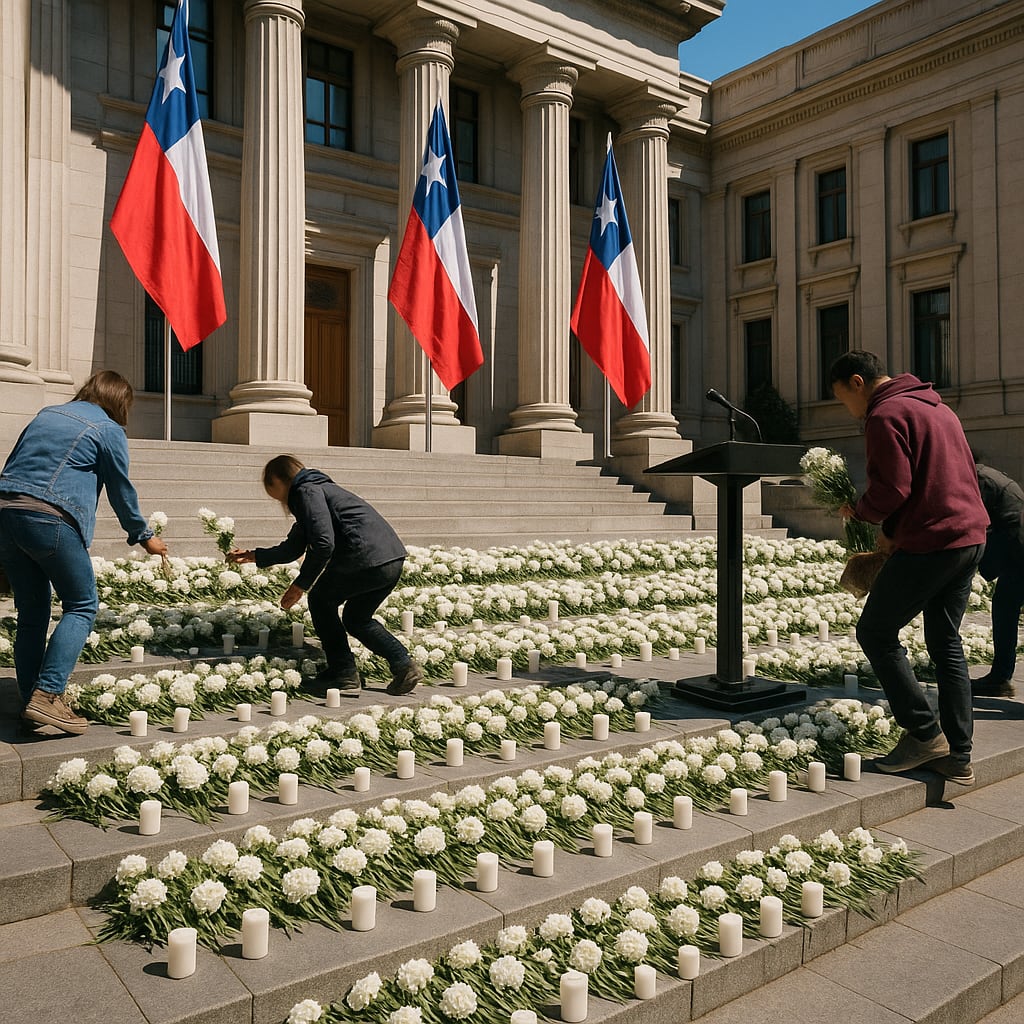
On Friday, September 11, Chile reached the 53rd anniversary of the 1973 military coup without any official ceremony, a first since the country’s democratic transition in 1990, according to Folha de S.Paulo and The Hindu. President José Antonio Kast maintained his institutional agenda, ANSA and Clarín reported. In the absence of a state-led event, social organizations held tributes from early morning, including floral offerings at Santiago’s General Cemetery and Constitution Square, and a march along Alameda Avenue toward Morandé 80, Telesur noted. Restrictions were reported by attendees, and confrontations occurred between protesters and police, Al Jazeera reported. Authorities detained 284 people, The Hindu said; Le Monde put arrests at nearly 300 across Friday and Saturday amid large turnouts condemning the dictatorship that left over 3,200 dead or missing. Clarín reported the decision not to commemorate drew criticism inside the ruling coalition and appeals from the opposition.
Why It Matters
The absence of an official ceremony breaks a three-decade pattern of state participation in memory politics since 1990, shifting commemorative authority toward civil society and local institutions. This recalibration has policy implications for how Chile manages contentious public anniversaries: policing standards, protest facilitation, and the signaling role of national institutions in framing historical accountability. The reported clashes and mass arrests indicate stress on the public order–human rights nexus that has defined Chile’s post-authoritarian governance challenges. For decision-makers, the episode tests institutional resilience around rights of assembly during high-salience dates and the state’s stance toward victims’ memory, which Le Monde quantifies against the dictatorship’s human toll. It also situates current choices within the enduring geopolitical context The Hindu describes—Allende’s ouster amid polarization, economic turmoil, and U.S. pressure—underscoring how national commemorations intersect with international narratives and expectations.
Diverging Narratives
The points of divergence lie less in facts than in framing. Telesur casts the day as one of nationwide tributes coordinated by memory and human rights collectives, spotlighting logistical obstacles and a protester’s attribution of responsibility to a “fascist government,” and linking to reports of Carabineros repressing a commemorative march. Al Jazeera emphasizes street-level confrontations between protesters and police. Le Monde and The Hindu emphasize scale and consequence—thousands in the streets, nearly 300 or 284 arrests respectively—and, in Le Monde’s case, the dictatorship’s casualty figure to anchor the commemorations’ rationale. Folha isolates the institutional novelty of the government’s silence as historically unprecedented since democratization. ANSA provides the core decision—Kast kept his agenda—without elaboration, while Clarín advances the political stakes by reporting intra-coalition criticism and opposition pressure on the presidency to adopt a unifying posture. Together, these angles place the weight either on grassroots memorialization, public order, institutional precedent, or partisan contestation.
What Happens Next
Two decision points emerge from the reporting. First is the government’s stance on future official commemorations. The choice to forgo an event this year, described as unprecedented since 1990, sets a testable marker: announcements or omissions around forthcoming anniversaries will indicate whether this is a new institutional line or a one-off. Analysts should watch for formal calendar signals from the presidency and any coalition statements, particularly given Clarín’s reporting of internal criticism and opposition appeals for inclusive governance.
Second is the policing approach to civic remembrance. Telesur’s account of restrictions and Al Jazeera’s report of clashes, alongside arrest totals reported by The Hindu and Le Monde, frame an operational question for Carabineros and interior authorities: tighten controls or facilitate marches and vigils. Indicators include protest permitting practices, public-order guidance, and the scale of detentions at subsequent gatherings organized by the National Network of Sites of Memory and allied groups noted by Telesur.