
NATO jets down drone over Lithuania after earlier false alarm; origin under review
Narrative Snapshot
Across outlets, there is broad agreement that NATO fighter jets shot down a drone over Lithuania, with uncertainty about its origin but repeated references to Belarus as the likely point of entry. The BBC, Deutsche Welle, and The Guardian cite Lithuanian media or authorities pointing to Belarus, while The Hindu notes the origin was still undetermined. Kyiv Independent strengthens the Belarus linkage by quoting President Gitanas Nausėda on regional readiness amid Russia’s aggression, whereas Sky News and TASS anchor the backdrop in an earlier misidentification episode that triggered a scramble over what proved to be birds.
Some reporting narrows to the immediate airspace breach; others situate it within a cluster of incidents on NATO’s eastern flank. The Guardian connects the Lithuanian shootdown to Polish air activity after a suspected Russian drone retrieval, while France24 and ANSA add that Denmark summoned Russia’s ambassador after a frigate fired flares near a Danish helicopter. Coverage of a separate drone-triggered airspace closure in Moldova that delayed Volodymyr Zelenskyy’s travel (NBC News, Toronto Star, New York Times) amplifies the civil-aviation angle and, per La Repubblica, the perception of gaps in Europe’s air defense. What is at stake varies by outlet: immediate threat management for Baltic and Polish airspace, civil aviation continuity in Moldova, and alliance risk management where incidents interlock across borders.
What Happened
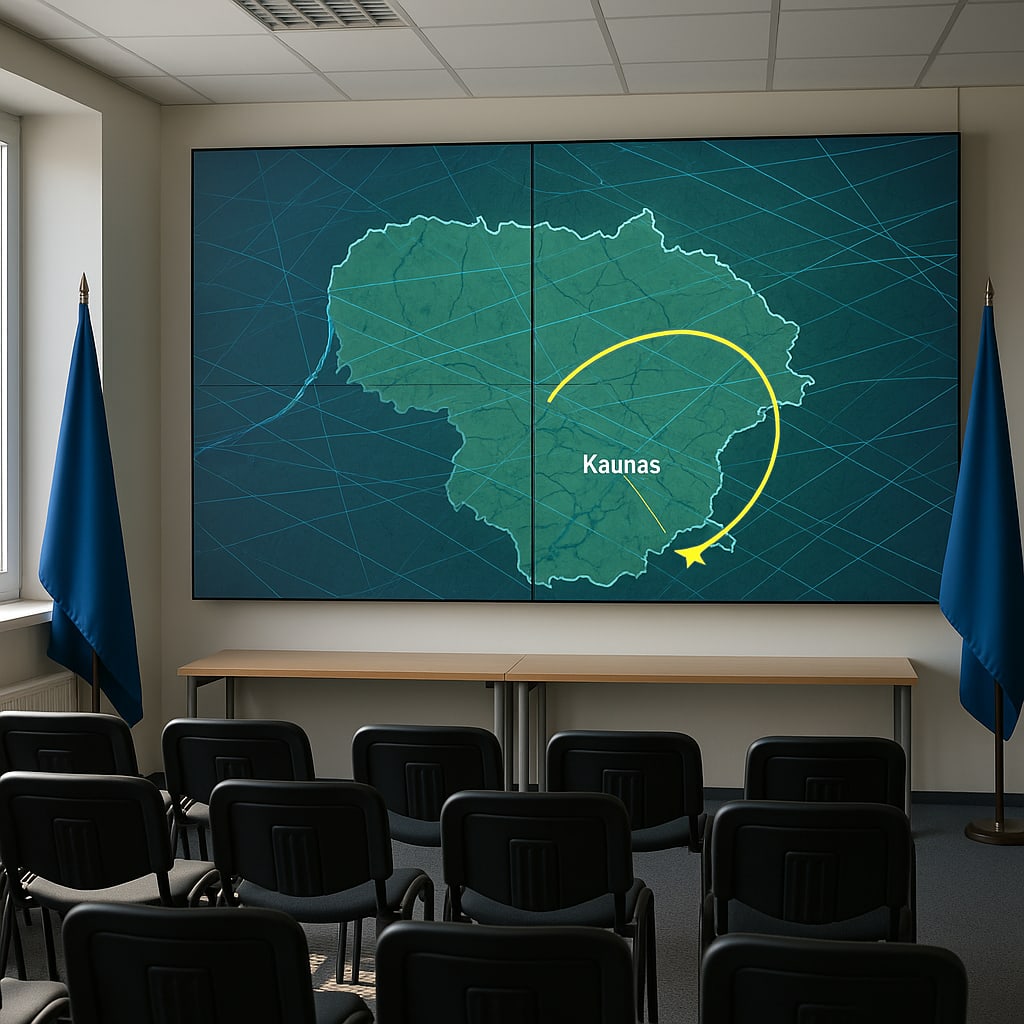
After an initial 13 September alert that proved to be a flock of birds, which briefly suspended Vilnius Airport operations for 38 minutes according to a Reuters-cited report carried by TASS and noted by Sky News, NATO jets subsequently shot down a drone over Lithuania. The action followed an alert in Vilnius and the surrounding region, as reported by The Hindu and The Guardian. The drone was downed near Pratkunai, outside Kaunas, according to The Guardian, with France24 adding that the intercept occurred overnight. Multiple outlets reported uncertainty over the drone’s origin; the BBC and Deutsche Welle said authorities and Lithuanian media believed it likely entered from Belarus, while Kyiv Independent quoted President Gitanas Nausėda emphasizing readiness with allies. In parallel regional developments, The Guardian highlighted Polish fighter activity after a suspected Russian drone was retrieved, and France24 and ANSA reported Denmark summoned Russia’s ambassador after a frigate fired flares at a Danish helicopter.
Why It Matters
The incident tests NATO’s capacity to manage low-altitude, low-signature aerial intrusions along the alliance’s eastern flank in real time while containing spillover risks from the war in Ukraine. France24 links repeated incursions to concerns about conflict crossing NATO borders, while Deutsche Welle characterizes such drone events in Lithuania as frequent since Moscow’s invasion. The Moldova airspace closure that delayed Zelenskyy’s travel (NBC News, Toronto Star) and the New York Times’ caution about unconfirmed near-collision claims underscore both civil aviation exposure and the premium on verified attribution. La Repubblica frames these episodes as exposing gaps in Europe’s air defenses. For decision-makers, the through-line is operational: calibrating scramble-and-shootdown protocols that can distinguish birds from drones, maintaining cross-border coordination when objects transit from Belarus, and aligning diplomatic responses, as illustrated by Denmark’s summons following the Russian frigate flare incident reported by France24 and ANSA.
Diverging Narratives
The clearest divergence lies in attribution. The Hindu reports the origin as undetermined, while the BBC and Deutsche Welle say authorities and Lithuanian media suggest the drone likely entered from Belarus, and Kyiv Independent presents it as having flown in from Belarus. The Guardian also cites Lithuania’s crisis management center, via LRT, saying the drone came from Belarus and was heading west. A second difference concerns operational authorship: most outlets refer generically to “NATO fighter jets,” whereas ANSA specifies Italian fighters conducted the shootdown, a detail not echoed elsewhere in the provided coverage. Outlets further differ in framing scope. Sky News and TASS emphasize the earlier misidentification and associated airport disruption, highlighting detection challenges. By contrast, The Guardian, France24, and Deutsche Welle integrate the Lithuanian intercept into a wider security pattern encompassing Polish fighter activity, the Danish helicopter–Russian frigate encounter, and broader eastern-flank tensions. Finally, language varies on certainty and scale, with references to “jet” versus “jets” and to “reportedly” or “likely” entry points, reflecting caution in the absence of confirmed forensic attribution.
What Happens Next
Three decision points emerge. First, attribution: if Lithuanian authorities publicly confirm a Belarus route, as several outlets suggest, expect corresponding diplomatic steps and potentially tighter cross-border alerting with neighbors; if attribution remains undetermined, focus may shift to refining detection and identification protocols highlighted by the bird misidentification reported by Sky News and TASS. Second, operational transparency: if NATO or a member state confirms national responsibility for the engagement, as ANSA implies with Italian fighters, that could clarify rotational readiness and burden-sharing; if not, coverage may continue to reference NATO generically, limiting external insight into posture. Third, regional escalation management: Denmark’s summoning of Russia’s ambassador over the frigate flare incident (France24, ANSA) and Poland’s response after retrieving a suspected Russian drone (The Guardian) indicate ongoing risk management; watch for further summons, incident logs, or adjusted flight advisories. Key indicators include debris analysis disclosures, official communiqués on origin, and changes to airspace procedures after the Moldova closure episodes (NBC News, Toronto Star, New York Times).