
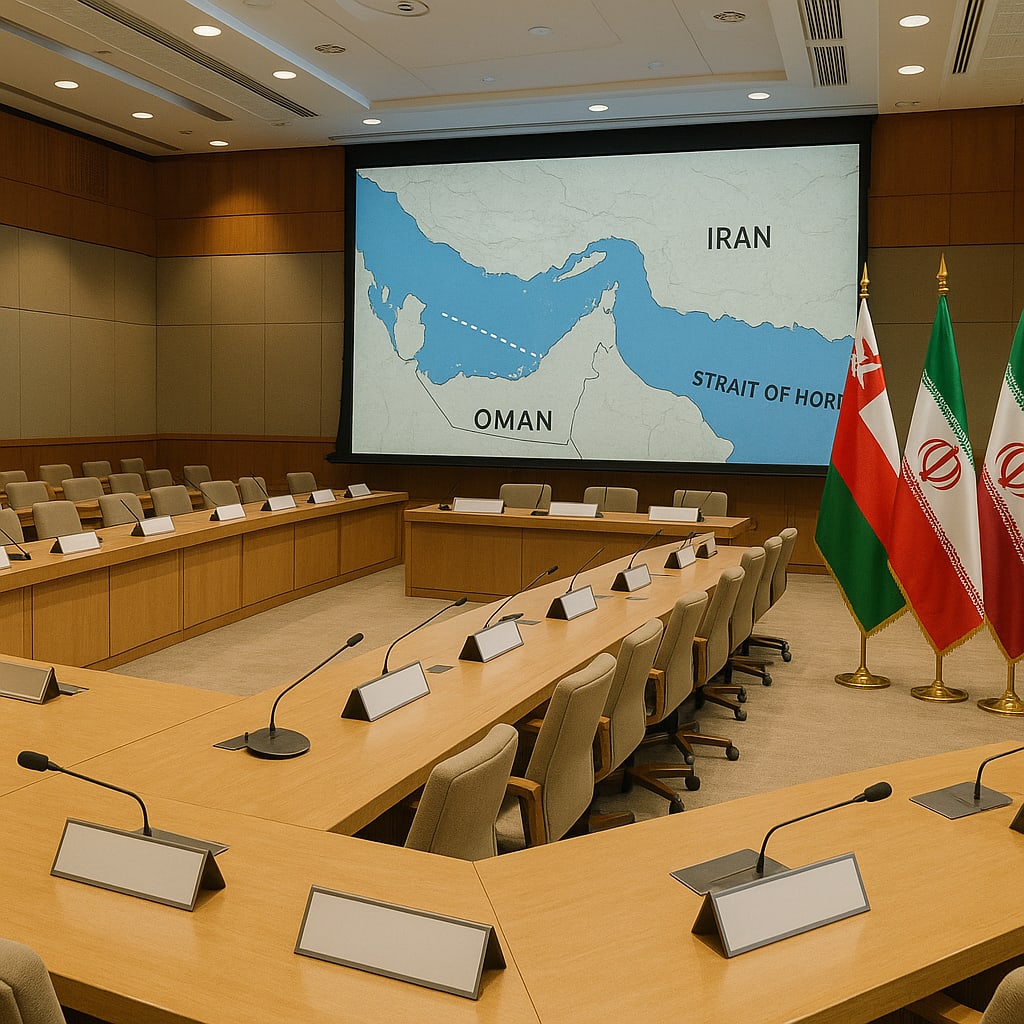
Oman postpones Gulf–Iran talks on Hormuz as Tehran touts a finalized Iran–Oman shipping understanding
Narrative Snapshot
Across regional and international outlets there is broad agreement that Oman postponed the planned ministerial gathering on the Strait of Hormuz, with Muscat publicly citing the “interests of consensus.” Coverage diverges on attribution and stakes. Iranian state media emphasize that Tehran and Muscat have already finalized a bilateral understanding on maritime routes and portray the delay as externally driven, while Omani, Indian, and Russian reports hew closely to the official postponement line without assigning responsibility.
Outlets differ on what was on the table. Reporting from Hong Kong highlighted Iran’s plan to unveil a temporary shipping lane and noted follow-on negotiations over operational details such as fees, framed against rare, high-level contacts between Tehran and Abu Dhabi. UK reporting, citing an earlier Financial Times account, situated the initiative within a bid by Iran and Oman to secure GCC buy-in and leverage that toward easing a U.S. blockade on Iranian ports, while GCC states sought strict temporariness and assured access. Some European and Middle Eastern coverage explicitly linked the talks’ postponement to the broader U.S.–Israel war against Iran, whereas Latin American and Israeli outlets emphasized either stabilizing dialogue or the diplomatic stumble.
What Happened
Oman announced on Sunday that a regional ministerial meeting set for Monday in Salalah to discuss arrangements for commercial navigation through the Strait of Hormuz had been postponed “in the interests of consensus,” according to Foreign Minister Badr al-Busaidi’s public statement. The meeting had been trailed as a rare multilateral encounter between Iran and Gulf Cooperation Council states to consider a temporary framework for shipping, with prior reporting indicating Tehran intended to present an Iran–Oman–negotiated temporary lane and defer negotiations over fees and other specifics. Following the postponement, Iranian outlets said Iran and Oman had finalized their bilateral understanding and would decide how to announce it, while an Iranian official quoted by Venezuelan media stated several regional countries requested the delay and called it a joint Muscat–Tehran decision. Earlier reports noted intensified contacts, including a rare Tehran–Abu Dhabi engagement ahead of the planned session.
Why It Matters
The outcome will shape near-term governance of the Strait of Hormuz, a critical energy corridor where tensions and attacks have already fed into higher oil prices, and where navigation arrangements have security, economic, and legal dimensions. Oman’s facilitation underscores Muscat’s enduring role as a regional broker, but the postponement highlights the premium Gulf capitals place on consensus for any collective maritime scheme, especially one explicitly labeled temporary. Reporting ahead of the meeting indicated Iran and Oman sought GCC endorsement to strengthen their hand in engaging Washington on sanctions and port access, while GCC states prioritized temporariness and guaranteed passage—an alignment problem with direct implications for coalition management and deconfliction. For policymakers, the episode reflects constraints on regional institutional capacity to operationalize crisis-time maritime frameworks and illustrates how extra-regional sanctions and wartime dynamics intersect with Gulf collective decision-making.
Diverging Narratives
There is no single account of why the meeting was postponed. Oman publicly cited “the interests of consensus,” a line mirrored in Indian and Russian coverage. Iranian state media attributed the cancellation to a Saudi request and simultaneously emphasized that the Iran–Oman understanding on routes was already complete. Another Iranian official, quoted by Venezuelan media, said several regional states had sought a delay and framed the decision as jointly made by Muscat and Tehran. One Italian outlet reported that a U.S. veto scuppered the summit, a claim not echoed elsewhere in the provided sources.
Assessments also diverge on the status and sufficiency of the Iran–Oman track. Iranian outlets assert a finalized bilateral understanding, yet a Hong Kong report indicated operational elements, including potential fees, still required negotiation. An earlier Iranian headline cautioned that an Oman understanding alone would not suffice to reopen shipping, signaling Tehran’s own acknowledgment that wider regional buy-in is necessary. UK reporting, citing an FT account, placed the initiative within an effort to secure GCC endorsement to influence U.S. policy on Iranian port access, while GCC preferences were described as tightly circumscribed and temporary. Some outlets, including Qatari and UK-based ones, explicitly connected the postponement to the ongoing war involving the U.S. and Israel against Iran; others avoided that framing, focusing instead on immediate diplomatic process.
What Happens Next
Two decision points are explicit in the record. First is whether and when the ministerial meeting will be rescheduled. Oman says it remains committed to dialogue, and an Iranian official reported that Muscat and Tehran would agree a new date, making public announcements by Oman and Iran a key signal to watch. Second is how, and under what conditions, the Iran–Oman understanding is presented to or adopted by regional states. Iranian reporting says the bilateral framework is finalized; UK and Hong Kong coverage underscores GCC concerns about temporariness and access and points to unresolved operational details such as fees. Analysts should monitor Riyadh’s stance given Iranian claims of a Saudi role in the postponement, observe any further Iran–UAE contacts, and look for text or terms of the proposed temporary lane. Any linkage made by Gulf states to U.S. sanctions or port access, as previously reported, will indicate whether external constraints are being folded into regional maritime arrangements.