
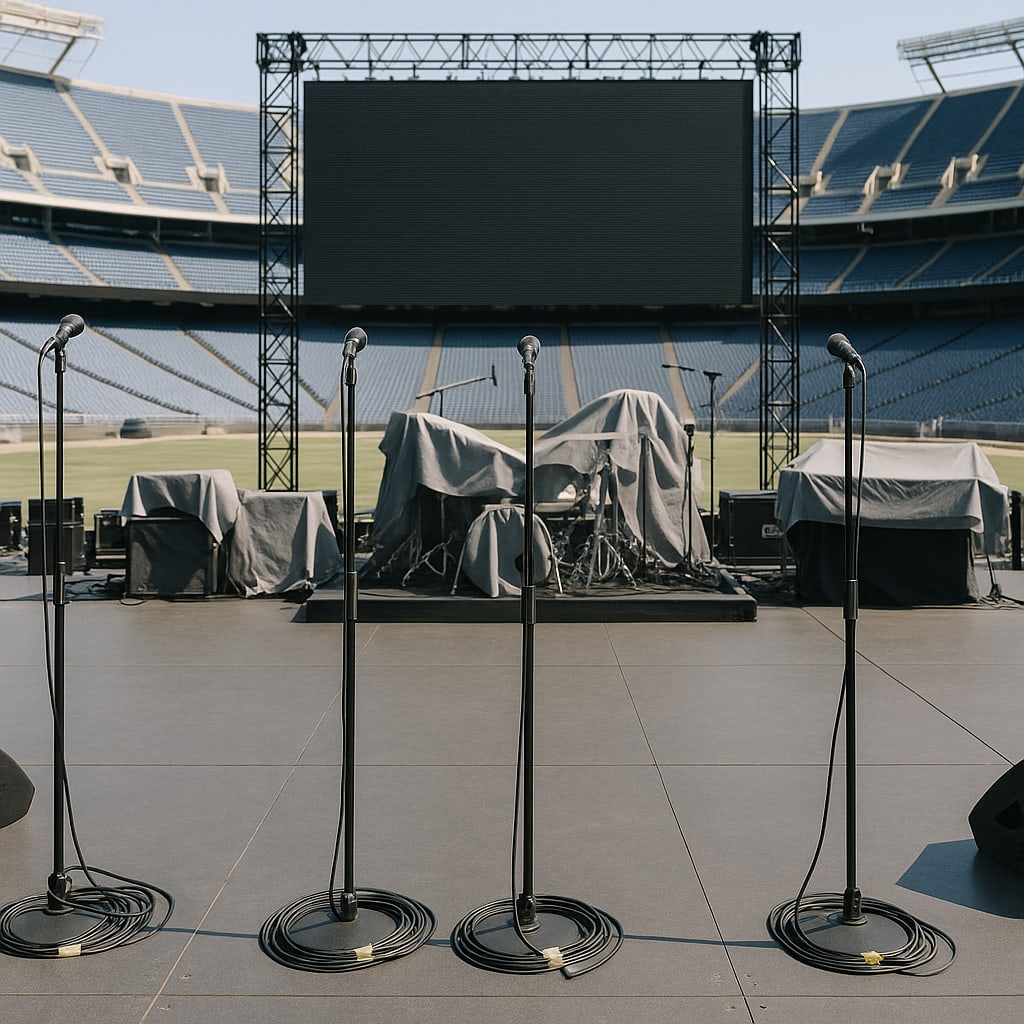
All four supporting acts quit Ed Sheeran’s Americas tour after Macklemore’s removal
Narrative Snapshot
Across outlets, there is broad agreement that four support acts—Finneas, Aaron Rowe, Beoga, and Lukas Graham—announced they were leaving Ed Sheeran’s upcoming North and South American dates in solidarity with Macklemore, who was dropped after making onstage pro-Palestinian remarks (The Guardian; South China Morning Post; France24; The Times of Israel; Middle East Eye; Folha de S.Paulo). Several reports also stress Sheeran’s claim that it was not his decision, attributing the move to tour promoters and, per one account, pressure from venue owners (The Guardian; Deutsche Welle; La Repubblica; SCMP).
Coverage diverges most on framing and causality. Middle East Eye centers artist speech and solidarity with Palestinians, quoting Finneas’s line that “Artists must not be silenced when they speak up for the oppressed,” and relaying Beoga’s charge of “silencing… by zionist lobbies.” The Times of Israel characterizes Macklemore’s remarks as “against Israel,” while Deutsche Welle notes that the episode unfolded “amid accusations of antisemitism.” Italian and French outlets foreground operational disruption and Sheeran’s denial of agency, while ANSA highlights political spillover in the United States by noting criticism from Rep. Alexandria Ocasio-Cortez. Fox News extends the celebrity backlash angle and reports Macklemore’s claim that Sheeran told him New England Patriots owner Robert Kraft had mobilized stadium owners against his participation, situating the dispute within U.S. venue-ownership networks.
What Happened
Macklemore was removed from Ed Sheeran’s tour after making pro-Palestinian comments during shows at New Jersey’s MetLife Stadium, a decision Sheeran attributed to his promoters and, according to The Guardian, to pressure from venue owners. In response, all four scheduled supporting acts—Finneas, Irish artists Aaron Rowe and Beoga, and Danish band Lukas Graham—announced they were withdrawing in solidarity, with statements posted within hours of Sheeran’s explanation (The Guardian; SCMP; France24; Times of Israel; Folha de S.Paulo). Middle East Eye quoted Finneas defending artists who “speak up for the oppressed” and relayed Beoga’s post alleging “silencing… by zionist lobbies.” Deutsche Welle reported the backdrop of accusations of antisemitism against Macklemore. Italian coverage emphasized Sheeran’s assertion that “It wasn’t my choice” and tied the row to the Gaza war context (La Repubblica; ANSA). Fox News documented additional celebrity criticism of Sheeran and cited Macklemore’s claim implicating stadium owner Robert Kraft.
Why It Matters
The episode exposes how private gatekeepers—promoters and stadium owners—can shape the boundaries of political expression on global entertainment platforms. Multiple outlets report Sheeran’s position that the removal decision was driven by promoters and venue owners (The Guardian; DW; SCMP; La Repubblica), indicating concentrated leverage within venue networks that can override headline artists’ preferences. This dynamic intersects with polarized narratives on Israel–Palestine: some coverage stresses free speech and solidarity with Palestinians (Middle East Eye), others emphasize language “against Israel” and antisemitism accusations (Times of Israel; DW). For policymakers and institutions monitoring civic space and cultural diplomacy, the case illustrates how political contention can disrupt cross-border cultural commerce—here spanning North and South America (France24; SCMP)—and draw in elected officials and high-profile influencers (ANSA; Fox News). It also highlights the reputational and operational risks facing promoters and venue operators when artist speech triggers organized pressure from opposing constituencies.
Diverging Narratives
Outlets disagree on agency and motivation. Sheeran publicly distanced himself from the decision, saying promoters and—per The Guardian—venue owners drove the move; several European reports foreground that denial of agency (The Guardian; DW; La Repubblica; SCMP). In contrast, the support acts frame their exit as a protest against censorship and in solidarity with Palestinians, with Finneas’s statement carried by Middle East Eye and Folha de S.Paulo, and Beoga explicitly blaming “zionist lobbies” in MEE’s account. The underlying conduct is described variously as “pro-Palestinian” or “free Palestine” remarks (The Guardian; SCMP; France24; MEE) and as comments “against Israel” (Times of Israel), while DW notes the context of antisemitism accusations.
There are also unresolved questions about who applied pressure. The Guardian reports venue-owner pressure; Fox News relays Macklemore’s claim that Ed Sheeran told him Robert Kraft rallied stadium owners to oppose his appearance—an allegation not corroborated in other cited coverage. Political and celebrity reactions are present but unevenly sourced: ANSA references criticism from Rep. Alexandria Ocasio-Cortez, while Fox News highlights a public rebuke by actor Hannah Einbinder. None of the reports provide a clear path to resolution or detail the promoters’ internal deliberations.
What Happens Next
Key decisions now rest with promoters and venue owners identified in reports as central to Macklemore’s removal. If they reaffirm the decision, Sheeran faces immediate operational choices about replacing four supporting acts or restructuring set formats across the Americas dates described as destabilized (The Guardian; France24; SCMP). A reversal would require public signaling from promoters or venues, which analysts should watch for in official statements, booking updates, or venue-level announcements referenced by Sheeran (The Guardian; DW).
Attention should also focus on whether any stadium owners respond to the allegation reported by Fox News naming Robert Kraft, which, if addressed, could clarify the locus of pressure. Additional indicators include whether Sheeran issues further statements beyond “it wasn’t my choice” (La Repubblica), whether lawmakers continue to engage as noted by ANSA, and whether departing acts maintain or escalate their advocacy, as seen in Middle East Eye’s documentation of their statements.