
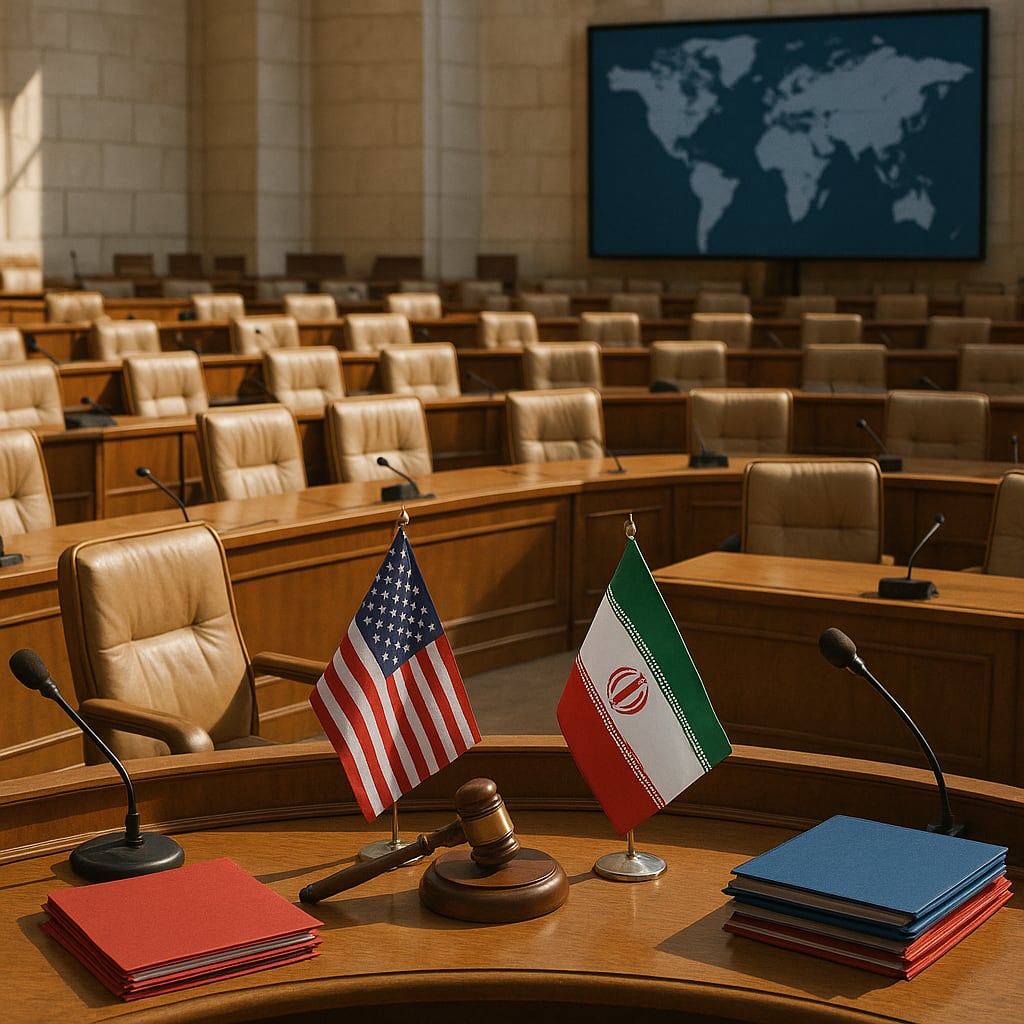
US House passes nonbinding resolution to curb Trump’s Iran war powers, with seven Republicans in favor
Narrative Snapshot
Across outlets, there is consensus that the House adopted a war powers resolution aimed at halting President Donald Trump’s ability to continue military action in Iran absent congressional approval, with seven Republicans joining Democrats to pass the measure 220–204 (Fox News; Al Jazeera English, Sept. 16; Toronto Star, Sept. 16). Coverage diverges on how often Congress has taken such steps: several outlets call this the third House vote on the issue (Toronto Star; Al Jazeera English, Sept. 16; The Guardian, Sept. 16), while the New York Times frames it as the fifth time a chamber of the Republican-controlled Congress has voted to rein in Trump’s war powers. Multiple sources underscore the resolution’s limited legal effect, describing it as nonbinding or symbolic (TASS, Sept. 16; The Guardian, Sept. 16), but note its political weight amid voter discontent (New York Times, Sept. 16) and on the eve of midterms (The Guardian, Sept. 16).
The White House narrative is contested within the president’s circle. While Trump has repeatedly said the war will end “immediately after” the November midterm elections and claimed the United States is “nearing the end” of the conflict with direct talks underway (TASS, Sept. 10; Al Jazeera English, Sept. 17), reporting based on U.S. officials indicates senior advisers, including the vice president and secretary of state, warned him the conflict could stretch through the remainder of his term and beyond January 2029 (The Times of Israel; Middle East Eye). Trump has also linked the conflict to post-9/11 counterterrorism narratives (The Hindu).
Regional diplomacy is depicted as both engaged and fragile. Iran’s president met the UAE’s crown prince at the BRICS summit for their highest-level talks since the war began (Al Jazeera English, Sept. 12). The New York Times reported plans for Iran to meet Gulf Arab states, but The Guardian said those talks were postponed amid Saudi anger and intensified Houthi strikes on Saudi infrastructure (New York Times, Sept. 13; The Guardian, Sept. 14). Reporting highlights Houthi claims and regional spillover risks, including a claimed shoot-down of a Saudi jet (ANSA) and 17 missile strikes on Dubai’s airports with no fatalities (TASS, Sept. 10), while Haaretz argues Tehran is exploiting a divided Gulf architecture.
What Happened
The U.S. House passed a war powers resolution to limit President Trump’s ability to continue military action in Iran without congressional approval, with seven Republicans joining all voting Democrats to approve the measure 220–204 (Fox News). Outlets described it as the third such House vote, and as nonbinding or symbolic (Toronto Star; Al Jazeera English, Sept. 16; TASS, Sept. 16; The Guardian, Sept. 16). The move came amid what the New York Times called growing voter discontent with the conflict (Sept. 16), even as Trump has said the war would end shortly after the midterm elections and that direct talks with Tehran are occurring (TASS, Sept. 10; Al Jazeera English, Sept. 17). Separately, a Congressional Budget Office estimate put Pentagon costs at roughly $38 billion over the first five months, cautioning monthly outlays could rise by $2–3 billion if fighting continues (RT).
Why It Matters
Repeated House votes to constrain hostilities with Iran test the durability of post-1973 war powers norms and congressional leverage over the use of force. While the latest resolution is nonbinding, it signals cross-party unease and potential for sustained oversight as costs mount and midterm politics intrude (TASS, Sept. 16; Fox News; New York Times, Sept. 16). A CBO estimate of $38 billion over five months, with uncertain and potentially rising monthly costs, raises fiscal and munitions-replenishment implications for U.S. force posture (RT).
Regionally, diplomacy is active but brittle: Iran’s outreach to the UAE at BRICS and planned Iran–Gulf talks coexisted with a postponement over Saudi objections and intensified Houthi strikes (Al Jazeera English, Sept. 12; New York Times, Sept. 13; The Guardian, Sept. 14). Pakistan reports limited willingness by Washington and Tehran to resolve the conflict (TASS, Sept. 11), while a UN secretary-general candidate has prioritized a comprehensive agreement (TASS, Sept. 15). These signals point to contested pathways for de-escalation within a fragmented Gulf security architecture (Haaretz).
Diverging Narratives
Outlets differ on the vote’s significance and frequency. U.S. and international wires describe a third House attempt and emphasize the 220–204 bipartisan tally (Toronto Star; Al Jazeera English, Sept. 16; Fox News). The New York Times situates it as the fifth time a chamber of a Republican-controlled Congress has moved to curb Trump’s war powers amid voter discontent (Sept. 16). TASS underscores the resolution’s nonbinding character (Sept. 16), and The Guardian calls it symbolic and likely the last House vote before midterms (Sept. 16), framing limited immediate legal effect against political signaling.
Assessments of trajectory also diverge. Trump asserts the conflict will end around the midterms and claims direct talks (TASS, Sept. 10; Al Jazeera English, Sept. 17), while reporting based on U.S. officials says top advisers warned the conflict could outlast his presidency (The Times of Israel; Middle East Eye). Iranian messaging is mixed: Tehran’s defense chief says Iran is fully prepared to confront new threats (Tehran Times), even as the foreign ministry says Iran wants to return to a peaceful solution and is not interested in continuing the conflict (TASS, Sept. 16). Diplomacy is portrayed both as imminent and stalling—NYT flagged expected Iran–Gulf talks, then The Guardian reported a postponement tied to Saudi anger and Houthi attacks (New York Times, Sept. 13; The Guardian, Sept. 14). On costs, RT relays a CBO estimate but notes high uncertainty given limited Pentagon data, injecting caution into budgetary interpretations.
What Happens Next
Key decisions now hinge on executive-legislative interaction and diplomacy. The administration can either adjust operations to align with congressional intent or proceed unchanged, citing the resolution’s nonbinding status; indicators include any recalibration of operational tempo, new notifications under the War Powers framework, or further House or Senate actions as The Guardian projects no additional House votes before midterms (TASS, Sept. 16; The Guardian, Sept. 16; Fox News).
On de-escalation, watch for confirmation of direct U.S.–Iran contacts and whether Iran’s stated desire to return to a peaceful solution translates into a concrete channel, potentially via interlocutors such as Pakistan or forums where Iran and Gulf states engage (Al Jazeera English, Sept. 17; TASS, Sept. 11 and Sept. 16; Al Jazeera English, Sept. 12). Regionally, rescheduling of Gulf talks on the Strait of Hormuz, the intensity of Houthi strikes, and further spillover incidents like the Dubai airport attacks will signal whether fragmentation persists (New York Times, Sept. 13; The Guardian, Sept. 14; TASS, Sept. 10). Budgetarily, the CBO’s projected $2–3 billion in additional monthly costs if fighting continues provides a benchmark to track against future outlays (RT).