
Protests Expected for Netanyahu’s UN Visit as Israeli Debate Over Oct. 7 Warnings and Settler Policy Intensifies
Narrative Snapshot
Israeli and international outlets converge on a moment in which street mobilization, institutional warnings, and accountability claims intersect. Israeli press covers both the logistical and political fronts: one outlet flags planned protests around Benjamin Netanyahu’s UN trip alongside an official push to counter antisemitism, while another advances investigative and opinion work assigning responsibility to leadership decisions preceding 7 October. Foreign reporting amplifies and refracts these debates: Russian, Palestinian, and British outlets foreground allegations that top warnings went unheeded and extend the focus to settler violence and the information domain.
Coverage also widens to external theaters. Reporting from Latin America casts Israel’s outreach through security and religious networks as a growing pillar of its global strategy, while U.S. political reporting highlights domestic forums in which the Israel–Hamas conflict is a live point of contention. What is most at stake across these strands is not a single policy choice but the linkage between Israel’s internal decision-making, its management of violence beyond the Green Line, and its capacity to shape narratives and partnerships abroad.
What Happened
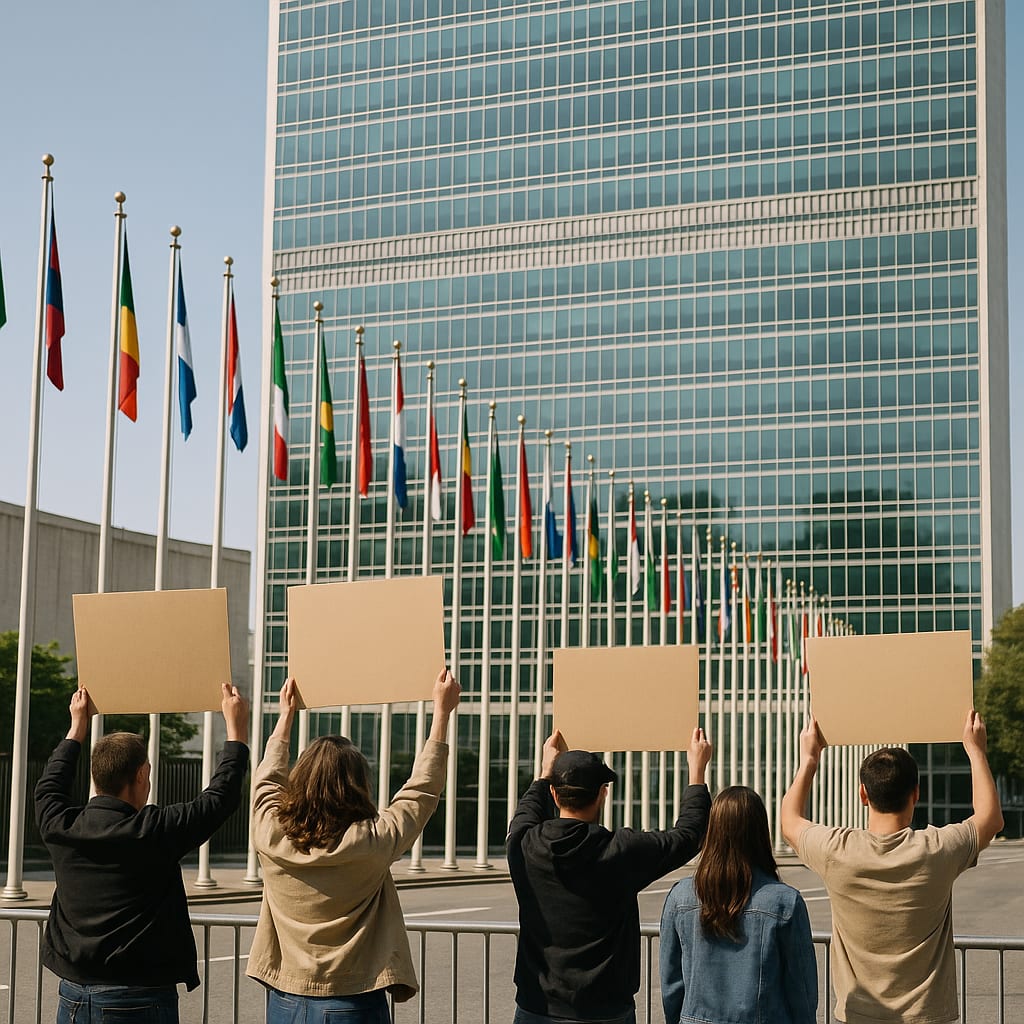
An Israeli outlet reported that authorities anticipate “intense” protests around Benjamin Netanyahu’s trip to the United Nations, noting calls for rallies by lawmaker Zohran Mamdani and an Israeli ambassador’s rebuke of the city’s mayor alongside the launch of an antisemitism task force (The Times of Israel, Sept. 13). Haaretz advanced findings that Netanyahu did not brief senior defense officials about a warning tied to Yahya Sinwar before 7 October (Haaretz, Sept. 13) and published a sharply critical assessment of his bid for another term (Haaretz, Sept. 14). RT relayed ex-IDF chief Dan Halutz’s claim that Netanyahu concealed a separate warning reportedly conveyed by the UAE’s president—an allegation Netanyahu’s office denied, with no confirmation or denial from the UAE (RT, Sept. 14). Families of victims released a dossier arguing Netanyahu-era policies enabled Hamas’s rise (RT, Sept. 16). The INSS issued a rare alert that settler terror is “directed from above,” with spillover risks (Haaretz, Sept. 15). Ofer Cassif warned of threats to an Arab town inside Israel (Middle East Eye, Sept. 14). Parallel pieces traced Israel’s influence and security partnerships in Latin America (Telesur, Sept. 11; Middle East Eye, Sept. 14). U.S. coverage described an Islamic conference critical of U.S. policy, while a Palestinian outlet highlighted a poll claiming American empathy has shifted toward Palestinians (Fox News, Sept. 10; Al-Quds News, Sept. 13).
Why It Matters
The convergence of anticipated protests, institutional warnings, and leadership-culpability claims lands as Israel seeks to project policy coherence at the UN. Allegations that warnings before 7 October were not properly handled—advanced by Haaretz and amplified via RT with counter-denials—intersect with a victims’ dossier and could intensify domestic demands for accountability, shaping Israel’s security doctrine and political succession debates (Haaretz, Sept. 13; RT, Sept. 16). INSS’s alert that settler terror reflects policy “directed from above” raises questions about command responsibility and the state’s capacity to constrain violence with regional repercussions (Haaretz, Sept. 15).
Externally, reporting on Israel’s cybersecurity expansion and cultivation of evangelical allies in Latin America underscores a strategy of deepening non-Western alignments and security markets (Middle East Eye, Sept. 14; Telesur, Sept. 11). U.S. domestic mobilization and polling claims—protest calls and a report of shifting empathy—signal a contested political environment that could bear on legislative and diplomatic bandwidth (The Times of Israel, Sept. 13; Al-Quds News, Sept. 13; Fox News, Sept. 10).
Diverging Narratives
The sharpest factual dispute centers on pre–7 October warnings. Haaretz reported a failure to brief defense chiefs about a warning tied to Yahya Sinwar (Haaretz, Sept. 13), while RT cited a separate Haaretz-based claim that the UAE’s leader warned Netanyahu—an assertion denied by the prime minister’s office and neither confirmed nor denied by the UAE (RT, Sept. 14). RT also relayed a victims’ dossier arguing that Netanyahu-era policies deliberately preserved Hamas rule; these are accusers’ claims, not judicial findings (RT, Sept. 16). Al-Quds News reported that a former Israeli military official described Netanyahu being personally warned of rising war risks but not acting, reinforcing this line of critique (Al-Quds News, Sept. 14).
On internal violence, the INSS’s assessment that settler terror is “directed from above” (Haaretz, Sept. 15) resonates with Ofer Cassif’s depiction of “creeping transfer” and police-enabled land takeovers in an Arab town inside Israel, including references to “apartheid laws” and “Kahanist” actors (Middle East Eye, Sept. 14). These accounts foreground state responsibility; the sources provided do not include a government rebuttal. On the information front, an opinion piece argued Israel’s “billion-dollar” influence push is failing and cited a record toll on journalists (Middle East Eye, Sept. 14), while an Israeli ambassador’s new antisemitism task force reflects an official counter to hostile narratives (The Times of Israel, Sept. 13). U.S. media depictions diverge as well: one Palestinian outlet reported a poll showing empathy shifting toward Palestinians (Al-Quds News, Sept. 13), while Fox News highlighted a conference where speakers were broadly critical of U.S. policy and discussed Israel–Hamas dynamics (Fox News, Sept. 10).
What Happens Next
Three decision points emerge. First, protest management and messaging around the UN trip: officials have signaled preparedness and announced an antisemitism task force; observable indicators include protest scale, policing posture, and whether the task force produces concrete measures or remains symbolic (The Times of Israel, Sept. 13). Second, state response to violence beyond the West Bank: the INSS warning and Cassif’s claims place pressure on authorities to curb settler and vigilante activity; watch for enforcement actions, policy directives, or legal interventions that signal whether leadership treats this as policy or aberration (Haaretz, Sept. 15; Middle East Eye, Sept. 14). Third, accountability over 7 October: denials persist, but public claims by a former IDF chief and victims’ families sustain demands for inquiries; indicators include new official statements, investigative steps, or additional document releases (RT, Sept. 14; RT, Sept. 16; Haaretz, Sept. 13). Internationally, monitor further Latin American security agreements or outreach to evangelical networks as markers of Israel’s external strategy (Middle East Eye, Sept. 14; Telesur, Sept. 11).