
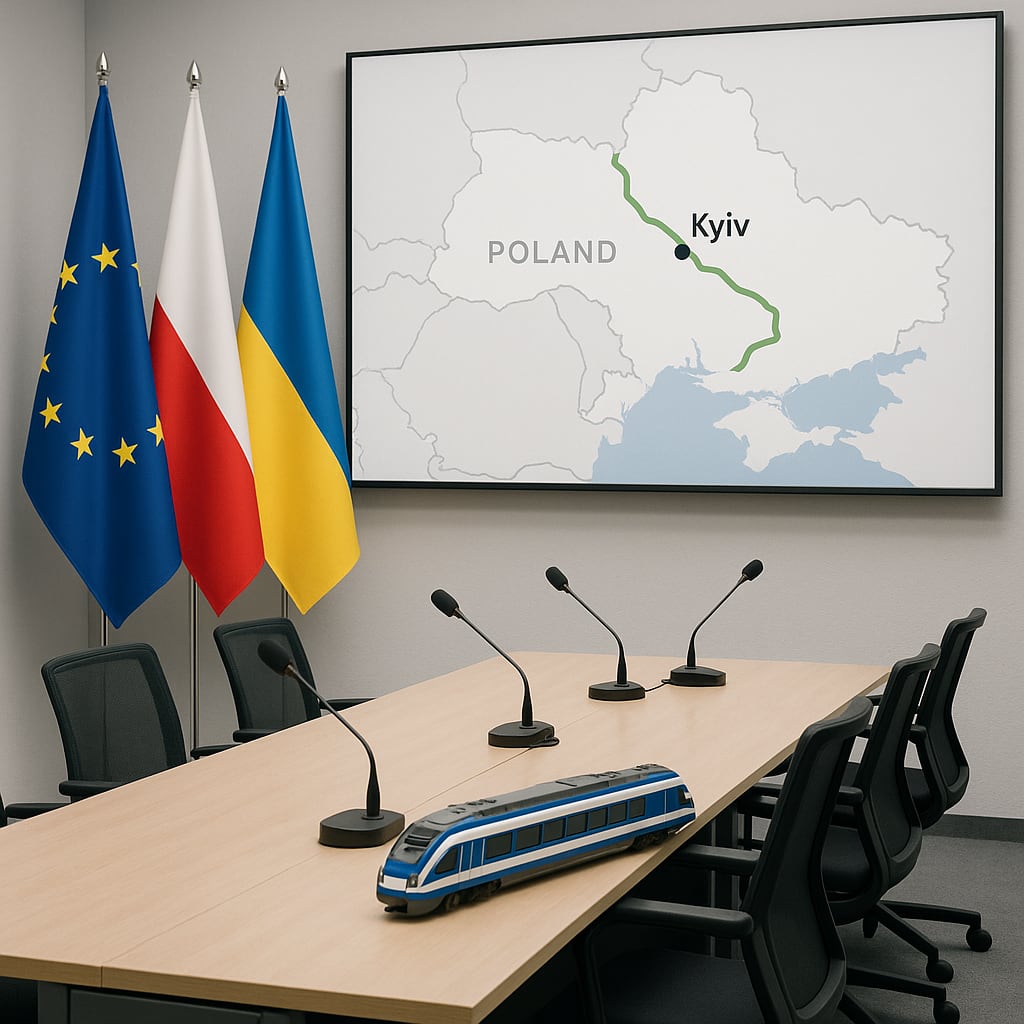
Russian drone strikes passenger train near Ukraine–Poland border as Warsaw convenes emergency security meeting
Narrative Snapshot
Across outlets, consensus holds on three anchors: the strike hit a passenger train locomotive inside Ukraine roughly two kilometres from Poland, there were no reported casualties, and senior Western figures had just transited the same corridor. Where coverage diverges is in framing intent and consequence. Italian outlets emphasise proximity to a high-level European convoy, with La Repubblica describing the incident as a “warning,” and Corriere della Sera amplifying an Italian national security adviser’s view that the attackers “knew exactly who was traveling where.” Anglo‑French reporting hews to the escalatory risk and alliance implications but keeps attribution cautious: the BBC flags that it “could mark an escalation,” while Le Monde foregrounds the scale of Russia’s drone campaign and Poland’s institutional response.
Other reporting stresses operational and diplomatic continuity. The Hindu highlights that a train carrying EU security advisers left Yahodyn early by design and that no injuries were recorded, while CBC situates the line as one routinely used by delegations returning from Kyiv. Al Jazeera gives political valence to the moment—Poland and Ukraine publicly calling it an “escalation”—and France 24 juxtaposes the EU’s claim that the strike was meant to “scare” Kyiv’s backers with the Kremlin’s assertion it will keep hitting targets “across the whole of Ukraine.” Latin American outlets centre the disruption to dignitaries, with Clarín and Folha de S.Paulo noting evacuations and delays at the Jagodyn–Dorohusk crossing.
What Happened
A Russian drone struck the locomotive of a passenger train inside Ukraine close to the Polish border on September 13, with no reported casualties, according to multiple outlets. Ukrainian and French reporting place the impact roughly two kilometres from Poland, and Canada’s CBC notes the route is frequently used by foreign delegations returning from Kyiv. Western officials, including former UK prime minister Boris Johnson, had passed through shortly beforehand; The Hindu says a diplomatic train with EU security advisers left Yahodyn ahead of schedule, and Clarín reports precautionary evacuations of Johnson and former Swedish prime minister Carl Bildt. Poland’s prime minister convened an emergency meeting of interior, defence, and security services, Ukrinform and Le Monde report. Le Monde adds Ukraine claimed to have intercepted 310 of 323 Russian drones that day. France 24 cites the Kremlin as vowing to keep striking across “the whole” of Ukraine.
Why It Matters
The incident tests the security and political resilience of the primary overland corridor linking Kyiv to the European Union through a NATO member. CBC underscores the line’s routine use by foreign delegations, while Le Monde and Ukrinform highlight Poland’s rapid institutional response—an emergency security meeting—underscoring alliance risk management near NATO territory. The episode also intersects with a high‑volume Russian drone campaign; Le Monde’s tally of 323 launches in a single day and France 24’s report of a Kremlin pledge to strike “across the whole of Ukraine” point to sustained pressure on critical infrastructure. EU‑facing narratives matter for deterrence and cohesion: France 24 quotes the EU’s top diplomat calling the strikes a bid to “scare” Kyiv’s backers, while Al Jazeera reports Poland and Ukraine labelling the episode an “escalation.” How governments balance secure access to Kyiv with credible risk mitigation will shape diplomatic engagement, logistics, and air‑defence prioritisation along EU–Ukraine frontiers.
Diverging Narratives
One axis of difference is intent. Italian coverage foregrounds targeted signaling: La Repubblica characterises the near‑miss as a “warning,” and Corriere della Sera quotes Giorgia Meloni’s national security adviser, who travelled on a train just ahead of the one struck, asserting the attackers “knew exactly who was traveling where” and meant to convey “we can hit you.” France 24 carries a similar interpretation from the EU’s top diplomat—that the strikes were designed to “scare” supporters of Kyiv. By contrast, the Kremlin, cited by France 24, frames its actions as a nationwide campaign against targets “across the whole of Ukraine,” not a tailored message tied to foreign dignitaries.
A second fault line is escalation. The BBC says the strike “could mark an escalation,” and Al Jazeera reports Poland and Ukraine using that term, whereas The Hindu emphasizes the absence of casualties and pre‑emptive schedule changes for the diplomatic train, tempering immediate crisis narratives. Le Monde situates the episode within a large drone salvo that Ukraine mostly intercepted, and CBC stresses the routine nature of the route, suggesting continuity amid disruption. These framings leave open whether the incident reflects a deliberate bid to intimidate Western visitors, an operational strike on rail infrastructure that coincided with high‑profile transit, or both.
What Happens Next
Several decision points are explicit in the reporting. First, Poland’s emergency meeting, noted by Ukrinform and Le Monde, will determine how Warsaw adjusts security posture along the border rail corridor; analysts should watch for announcements on protective measures or operational changes affecting cross‑border traffic. Second, diplomatic travel protocols are already adaptive: The Hindu reports a purposeful early departure from Yahodyn, and CBC notes the route’s regular use by delegations. Any sustained changes in timing, routing, or protective layers would signal how European governments are internalising risk. Third, the operational tempo bears monitoring. Le Monde’s figures on large‑scale Russian drone launches and France 24’s citation of the Kremlin’s intent to keep striking across Ukraine set expectations for continued pressure; whether subsequent attacks cluster near EU borders will shape allied threat assessments. Finally, public framing—“escalation,” “warning,” or routine strike—will inform deterrence messaging and support decisions reported by Al Jazeera, France 24, and the BBC.