
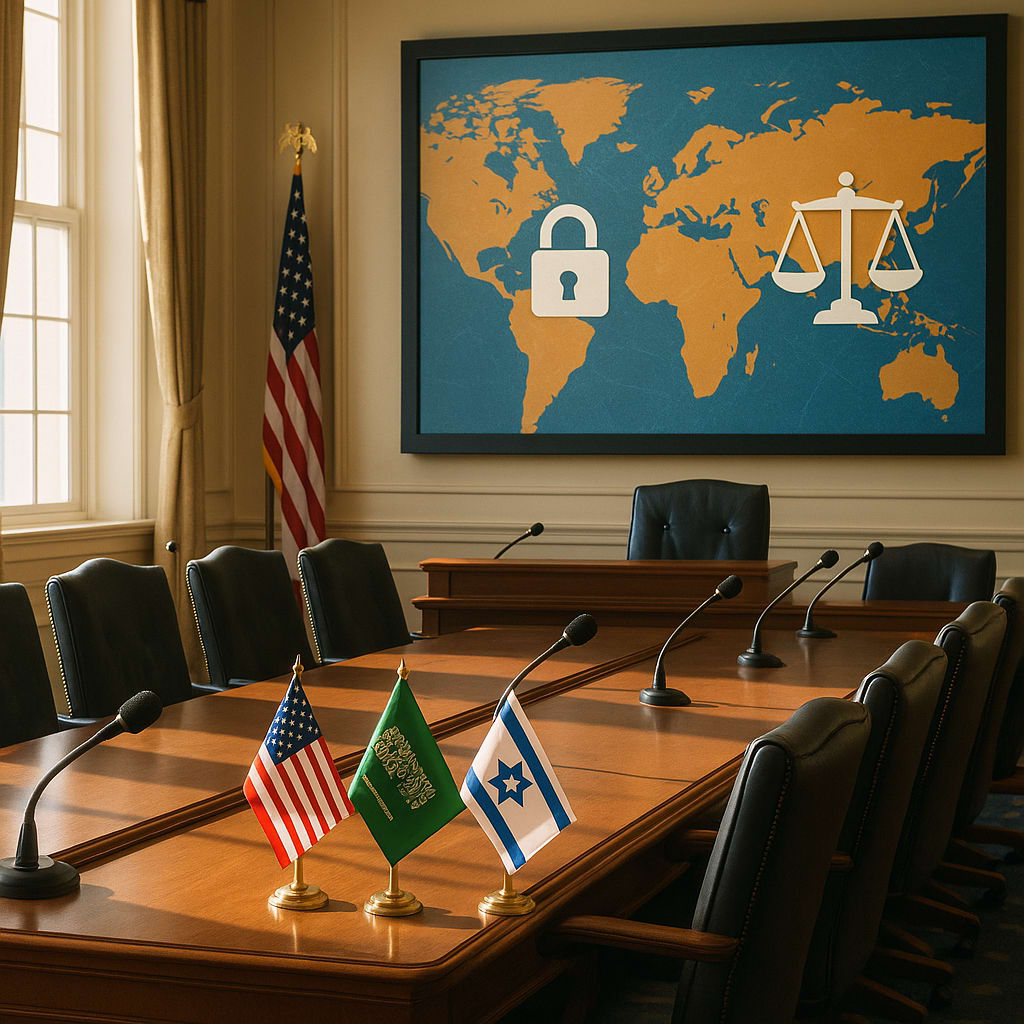
U.S. notifies Congress of proposed $24.3bn F-35 sale to Saudi Arabia
Narrative Snapshot
Coverage aligns on the procedural posture: the State Department has formally notified Congress and the sale requires lawmakers’ approval, as reported by The Hindu, Al Jazeera English, and Le Monde. Middle East Eye quantifies the package at $24.3bn and underscores that it would be the first time an Arab state receives the US fifth‑generation fighter, while The Times of Israel highlights the State Department’s assertion that the sale would not alter the regional military balance, a reference to the longstanding US policy of maintaining Israel’s qualitative military edge.
Outlets diverge on risk framing and context. The New York Times and Le Monde foreground US intelligence and observer concerns that China could acquire or steal technology if F‑35s go to Saudi Arabia due to Riyadh’s partnerships. Al Jazeera English and Middle East Eye situate the move within Saudi Arabia’s war against Yemen’s Houthis, emphasizing the operational demand signal. In parallel, Fox News and Middle East Eye report a separate, large US munitions transfer proposal to Israel that has already triggered opposition from Democratic lawmakers, adding a domestic political lens to US arms decisions in the region.
What Happened
The US State Department notified Congress that it plans to sell Saudi Arabia up to 48 F‑35 fighter jets in a package valued at $24.3bn, according to Middle East Eye and The Times of Israel. The Hindu and Al Jazeera English report the proposal requires congressional approval. Middle East Eye notes it would be the first time an Arab state obtains the US fifth‑generation fighter and that the administration argued the deal supports a major non‑NATO ally and Gulf stability. The Times of Israel adds the State Department’s position that the sale would not alter the regional military balance, invoking US policy to ensure Israel’s military edge. The New York Times reports US intelligence agencies have warned internally that China could acquire or steal technology if the jets are sent to Saudi Arabia, a concern Le Monde echoes. In parallel, Fox News and Middle East Eye report an informally notified $2.8bn US munitions package to Israel facing pushback from Democratic lawmakers.
Why It Matters
The proposal tests multiple US policy pillars at once. The Times of Israel links the sale to the statutory commitment to maintain Israel’s qualitative military edge; certifying that the transfer does not erode that edge is central to congressional review. Middle East Eye’s framing that this would be the first Arab F‑35 sale underscores the precedent and the regional signaling such access would carry. At the same time, the New York Times and Le Monde spotlight technology‑security concerns—specifically, that China could gain access through Saudi partnerships—placing export‑control and counterintelligence considerations alongside alliance management. Fox News and Middle East Eye’s reporting on a separate, contested US bomb package for Israel shows how regional arming decisions are moving on parallel tracks through the same congressional gatekeepers. For decision‑makers, the intersection of QME, tech‑security assurances, and legislative scrutiny will shape transfer conditions, timelines, and potentially the architecture of regional force modernization.
Diverging Narratives
The State Department’s justification emphasizes bolstering a major non‑NATO ally and Gulf stability, as cited by Middle East Eye, while The Times of Israel reports assurances that Israel’s military edge would be preserved. That stance sits alongside Middle East Eye’s note that Israel has widely opposed the move and that it would mark the first Arab access to the F‑35, underscoring the sensitivity of capability diffusion even amid US assurances on the regional balance.
Risk assessments vary in prominence. The New York Times reports US intelligence warnings that China could acquire or steal sensitive technology if the aircraft are sent to Saudi Arabia, a concern Le Monde shares through reference to Riyadh’s partnerships. Other outlets focus less on this vector and more on operational context: Al Jazeera English and Middle East Eye link the timing to Saudi Arabia’s war with Yemen’s Houthis, framing the sale as responsive to ongoing conflict needs.
Domestic US dynamics are more explicit around the separate Israel munitions package. Fox News details Democratic opposition to that $2.8bn transfer, while Middle East Eye underscores the taxpayer‑funded nature of the proposal. By contrast, reporting on the Saudi F‑35 sale centers on the notification and required congressional approval without enumerating specific lawmaker positions.
What Happens Next
Congressional review is the immediate inflection point for the Saudi F‑35 sale. The proposal must clear the committees that oversee major US arms transfers, a process Fox News notes in relation to the Israel munitions package. Outcomes include approval, rejection, or conditions; approval would, as Middle East Eye reports, mark first‑time Arab access to the F‑35, while rejection would halt the transfer. Analysts should watch for formal statements from key committee leaders, the State Department’s certification language on preserving Israel’s military edge referenced by The Times of Israel, and any disclosed technology‑security measures addressing the China‑related concerns raised by the New York Times and Le Monde. In parallel, the trajectory of the Israel munitions package—already meeting Democratic resistance per Fox News and Middle East Eye—will signal congressional tolerance for large near‑term transfers and may shape the broader political environment for the Saudi proposal.