
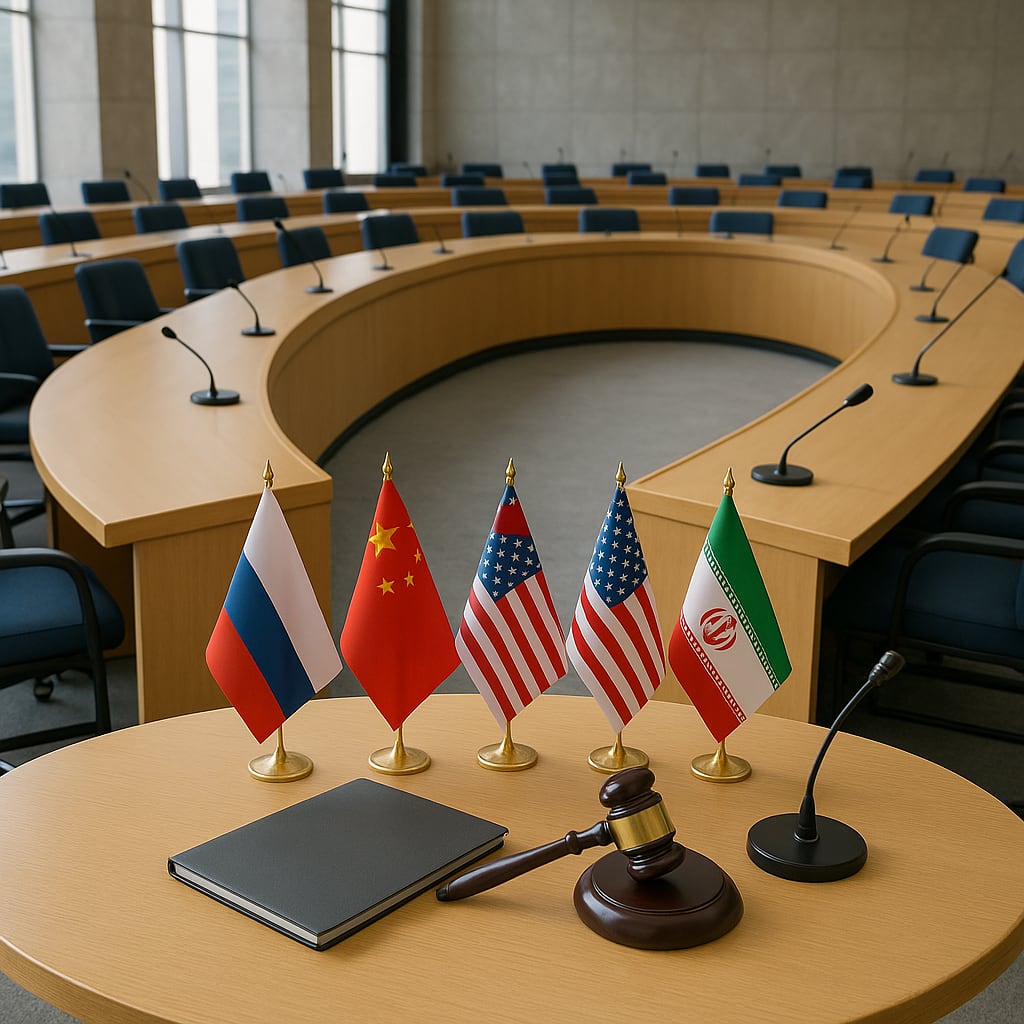
Russia and China veto U.S. bid to renew U.N. Iran sanctions monitoring panel
Narrative Snapshot
Coverage converges on the same institutional outcome but parts ways on framing and consequence. Multiple outlets describe a straight procedural fight over extending the mandate of the Panel of Experts attached to the 1737 Committee that monitors U.N. sanctions on Iran, with the veto ending the panel’s work, per Al Jazeera English and the Japan Times. Iran-focused and sympathetic outlets emphasize intent and legitimacy: IRNA calls the text “anti-Iran,” while Tehran Times casts the vetoes as a blow to a U.S. sanctions push and evidence of an “end of the ‘unipolar order.’” Iran’s U.N. mission publicly thanked Moscow and Beijing, language carried by Middle East Eye and The Hindu, and, via TASS, extended thanks to Somalia and Pakistan for abstaining.
U.S. and Israeli reporting foreground geopolitics and enforcement signals. The New York Times situates the clash in a wider rift over Washington’s “pressure campaign on Iran,” while Haaretz judges the immediate practical impact “limited” but reads the veto as a marker that Russia and China will not cooperate with enforcing sanctions against Tehran. Fox News stitches the vote to nuclear risk perceptions, amplifying new commercial satellite analysis around a deeply buried site near Natanz and noting warnings from former President Donald Trump.
There is a notable divergence over what the defeated draft sought to do. Several outlets describe it as a renewal of independent monitoring, whereas Middle East Eye frames it as a U.S. move “seeking to reimpose international sanctions,” even as it quotes Iran’s mission depicting a bid to “revive the mandate” of the panel. The differing emphases point to what is at stake for each audience: oversight capacity and Council cohesion for some; political intent and normative legitimacy for others.
What Happened
Russia and China vetoed a U.S.-drafted resolution at the U.N. Security Council that would have extended the mandate of the Expert Panel supporting the 1737 Committee, which oversees U.N. sanctions on Iran (IRNA; New York Times; Haaretz). Iran’s mission to the U.N. publicly thanked both countries and characterized the U.S. initiative as “politically motivated” and the 1737 architecture as “illegitimate,” a message carried by Middle East Eye and The Hindu. According to TASS, Iranian diplomats also thanked Somalia and Pakistan for abstaining. With the veto, the Security Council’s Iran sanctions watchdog panel ceases operating, as reported by Al Jazeera English and the Japan Times. The New York Times framed the showdown as evidence of a widening gap among major powers over Washington’s pressure track on Iran.
Why It Matters
Ending the panel removes an institutional mechanism for independent, Council-mandated reporting on Iran sanctions implementation. Al Jazeera and the Japan Times both underscore that the veto terminates the monitoring mandate; Haaretz adds that while the move may have “limited practical significance,” it signals that Moscow and Beijing do not intend to cooperate with enforcement efforts against Tehran. The New York Times’ emphasis on a widening rift over the U.S. “pressure campaign” situates the vote within broader great-power dynamics. Tehran Times’ framing of the vetoes as a setback to a U.S. sanctions drive and a rebuke to “unipolar” impulses illustrates how the outcome is being leveraged in an ongoing narrative contest. The Japan Times’ note that U.N. sanctions were reimposed a year earlier after accusations of violations of the 2015 nuclear deal highlights the structural implication: any such sanctions regime now lacks the U.N. panel’s independent oversight.
Diverging Narratives
Iranian and sympathetic outlets center legitimacy and intent. IRNA labels the U.S. text “anti-Iran,” and Tehran Times elevates the decision as a strategic setback for Washington and a marker of shifting global order. Middle East Eye and The Hindu quote Iran’s mission calling the draft “politically motivated,” praising Russia and China for “defence of the UN Charter,” and deeming the 1737 Committee “illegitimate.”
By contrast, several outlets treat the issue as institutional oversight. Al Jazeera English and the Japan Times focus on the termination of the panel’s mandate. The New York Times stresses the broader geopolitical distance over U.S. pressure on Iran. Haaretz minimizes immediate operational impact but reads the veto as a clear signal on future non-cooperation with sanctions enforcement.
There is also a concrete discrepancy in how the draft’s purpose is described. Middle East Eye characterizes it as an attempt to “reimpose international sanctions,” even as it cites Iran’s mission referring to reviving the panel’s mandate; other outlets consistently frame the text as extending independent monitoring of existing U.N. sanctions. Fox News introduces a different axis of concern by pairing the Council vote with new satellite-based assessments of hardened tunnel entrances at a nuclear-linked site near Natanz and with Trump’s warning to Iran, linking the oversight debate to on-the-ground nuclear risk perceptions.
What Happens Next
With the panel ended, there will be no new expert reports to the Council on Iran sanctions implementation, as noted by Al Jazeera English. Analysts should watch whether Washington brings revised proposals to revive or replace monitoring and how Moscow and Beijing react, given the New York Times’ depiction of a widening rift and Haaretz’s assessment that they do not intend to cooperate with enforcement. Council voting behavior bears watching, including whether abstention patterns like those cited by TASS for Somalia and Pakistan recur or shift on future Iran-related texts. Outside the Council, Fox News’ reporting on the Natanz-area “Pickaxe Mountain” site—drawing on the Institute for Science and International Security—points to open-source imagery as a likely reference point in lieu of U.N. panel findings; monitoring how states cite such sources could indicate how enforcement narratives evolve.