
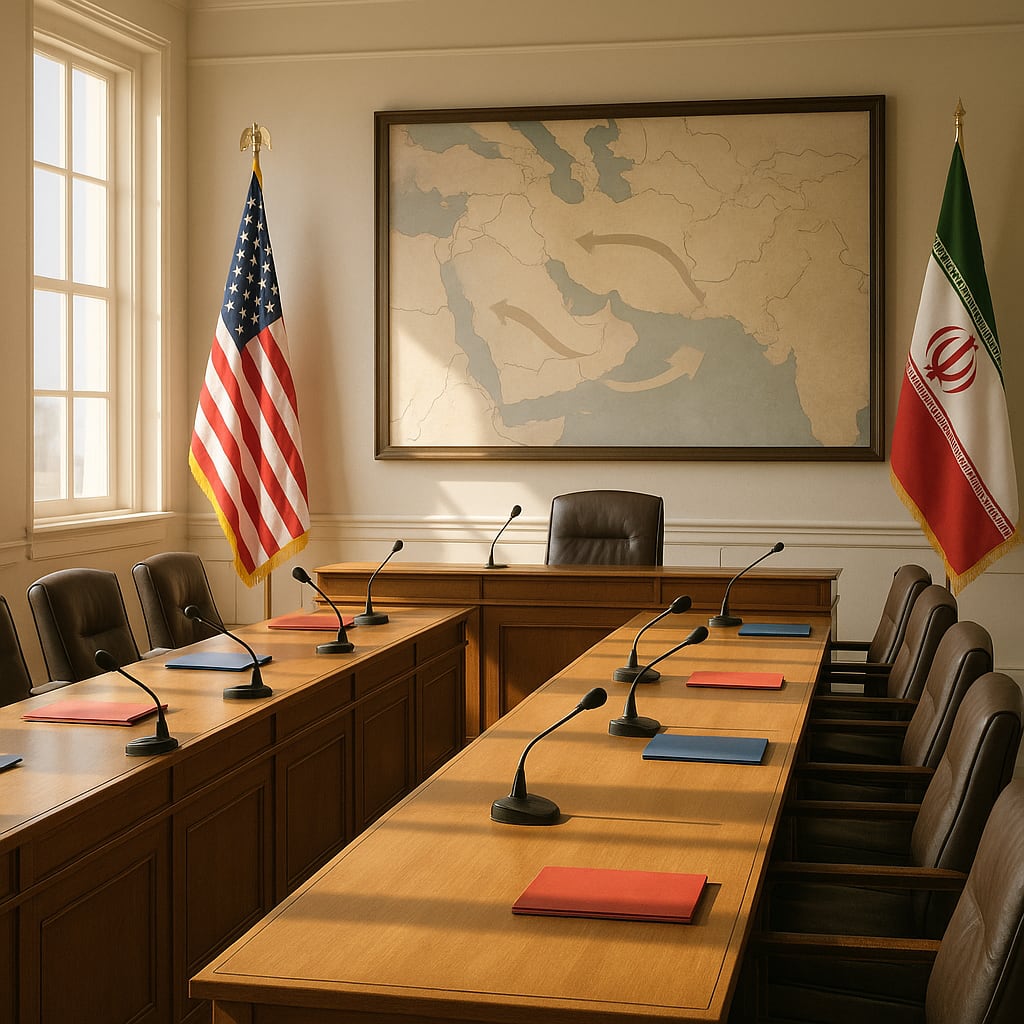
House orders halt to Iran war with GOP support; Iraq pullout and nuclear tensions set the frame
Narrative Snapshot
Across outlets, the through-line is congressional pushback converging with electoral headwinds. Several reports emphasize Republican defections in closely fought districts, with the Toronto Star highlighting two Iowa Republicans switching on the latest war powers vote and the Guardian noting that three GOP members who had not backed prior efforts crossed over as midterms approach. A Fox News poll amplifies the political pressure, finding 71% of voters think the administration lacks a clear strategy to end the war and 60% say military action was the wrong decision.
Coverage splits on whether the Pentagon’s operational posture signals de‑escalation. TASS reports U.S. forces starting to dismantle air defenses in northern Iraq ahead of withdrawal, consistent with The Hindu’s account that remaining troops will leave by September 30. In parallel, Al Jazeera cites President Trump claiming the war is “nearing the end” with purported direct talks, while Middle East Eye and the Times of Israel, citing the Wall Street Journal, report senior advisers have warned him privately the conflict could extend through his term.
Regional reporting spotlights nuclear risk as a second front. Tehran Times says 130 Iranian lawmakers urged steps toward withdrawing from the NPT; IRNA counters that Iran’s nuclear policy is unchanged and debate about deterrence follows attacks on its facilities. The South China Morning Post situates this within broader regional proliferation dynamics, noting Saudi and Turkish interest in enrichment and fresh U.S.-Israeli threats of further strikes on Iran’s nuclear sites. ANSA adds Beijing’s statement that it is ready to safeguard Tehran’s rights.
On institutional stakes, the New York Times frames the vote as the fifth instance of a Republican-controlled chamber curbing the president’s war powers, while TASS underscores the resolution’s non-binding character. Fox News details the seven Republican votes that carried the measure, rooted in a constitutional argument about Congress’s authority. The Guardian adds a separate move by a Republican lawmaker to seek impeachment of Defense Secretary Pete Hegseth, signaling intraparty conflict over war management.
What Happened
The U.S. House passed another Iran war powers resolution directing President Trump to halt hostilities or obtain congressional approval. Fox News reports seven Republicans joined Democrats in the 220–204 vote, and the Toronto Star highlights two Republicans from battleground Iowa districts reversing prior positions. The Guardian describes three GOP members breaking ranks after not supporting earlier efforts, while the New York Times characterizes it as the fifth time a chamber has voted to limit the president’s war powers; Al Jazeera notes it is the third House approval. TASS stresses the resolution is advisory. A Fox News poll finds 71% of voters see no clear strategy to end the war and 60% view the initial action as wrong. RT, citing the CBO, pegs five‑month Pentagon costs at about $38 billion. TASS and The Hindu report U.S. forces dismantling air defenses and preparing full withdrawal from northern Iraq by September 30. Al Jazeera quotes Trump saying the war is nearing its end, while Middle East Eye and the Times of Israel report advisers warned it could last through his term.
Why It Matters
The vote tests the practical leverage of congressional war powers over ongoing hostilities without formal authorization, setting precedent in a Republican‑led Congress repeatedly moving to constrain a Republican president (per the New York Times), even as resolutions remain non-binding (per TASS). Mounting costs documented by the CBO, cited by RT, and adverse public opinion captured by Fox News narrow the administration’s political and fiscal room for maneuver. Regionally, the Iraq drawdown reported by The Hindu and TASS intersects with unresolved militia disarmament flagged by the Times of Israel, shaping post‑withdrawal security dynamics. Nuclear risks now overlap the kinetic conflict: Tehran Times reports a parliamentary push toward NPT withdrawal, countered by IRNA’s assertion of continuity, while the South China Morning Post details parallel Saudi and Turkish enrichment trajectories and threats of further strikes on Iran’s facilities. ANSA’s note on Beijing’s stance adds a major‑power vector with implications for nonproliferation diplomacy and IAEA engagement.
Diverging Narratives
Signals about the war’s trajectory conflict. Al Jazeera reports Trump claiming the conflict is “nearing the end” with direct talks, whereas Middle East Eye and the Times of Israel cite the Wall Street Journal that senior advisers—including the vice president and secretary of state—have privately warned him the war could continue through his presidency. Assessments of congressional action also diverge: the New York Times emphasizes an accumulating pattern of institutional constraint, while TASS foregrounds the resolution’s lack of legal force. Domestic political framing varies, with the Guardian tying Republican defections to midterm calculations and Fox News polling showing broad skepticism about strategy, including among independents and a share of Republicans.
On the ground, de‑escalation cues—U.S. equipment withdrawals in northern Iraq per TASS and a timetable to depart by September 30 per The Hindu—coexist with uncertainty about the security vacuum as pro‑Iran militias intend to retain arms, according to the Times of Israel. Nuclear narratives are also bifurcated: Tehran Times highlights 130 lawmakers urging steps toward NPT withdrawal, while IRNA maintains nuclear policy is unchanged and debate is a response to attacks. The South China Morning Post’s reporting on prospective enrichment in Saudi Arabia and Turkey, alongside U.S.-Israeli strike threats, underscores the stakes if Iran’s posture shifts.
What Happens Next
Key decisions will hinge on executive-legislative interaction and operational timelines. With the House vote non-binding (TASS), watch whether the White House ignores the directive, seeks explicit authorization, or signals de-escalation via force posture changes; tangible indicators include further withdrawals or public engagement with congressional leaders. In Iraq, The Hindu’s September 30 deadline and TASS’s report of dismantled air defenses set near‑term markers; the militias’ refusal to disarm noted by the Times of Israel will shape whether a security gap emerges post‑departure. On the nuclear file, monitor whether Iran’s parliament advances the NPT measure reported by Tehran Times or sustains IRNA’s line of continuity; concurrent U.S.-Israeli strike threats highlighted by the South China Morning Post raise escalation risks around nuclear sites. Domestically, track additional Republican defections or procedural moves such as the impeachment bid against Defense Secretary Hegseth reported by the Guardian, alongside polling trends captured by Fox News that could alter congressional calculus.