
German state votes in Berlin and Mecklenburg–Western Pomerania test Merz as AfD seeks fresh gains
Narrative Snapshot
Across French, British, Brazilian, Argentine, and Thai coverage, the elections in Berlin and Mecklenburg–Western Pomerania are framed as a high-stakes assessment of Chancellor Friedrich Merz’s authority, with the AfD’s surge since Saxony-Anhalt setting the backdrop for potential further advances. France24, Le Monde, the Guardian, Clarín, Folha de S.Paulo, and the Bangkok Post all foreground the AfD’s momentum and the implications for Merz’s standing. German outlets take a different tack: Deutsche Welle emphasizes the final campaign push and issue salience in the east, and separately scrutinizes the information environment by debunking a false viral video alleging ballot destruction.
There is also a split in emphasis on drivers and risk vectors. DW’s state-focused reporting centers on economic concerns in Mecklenburg–Western Pomerania, while the Guardian highlights the AfD’s ideological profile, and the Bangkok Post alone flags potential gains by both far-right and far-left parties as destabilizing. RT places Merz’s vulnerability at the center of the narrative with new polling on his approval and tenure expectations.
What Happened
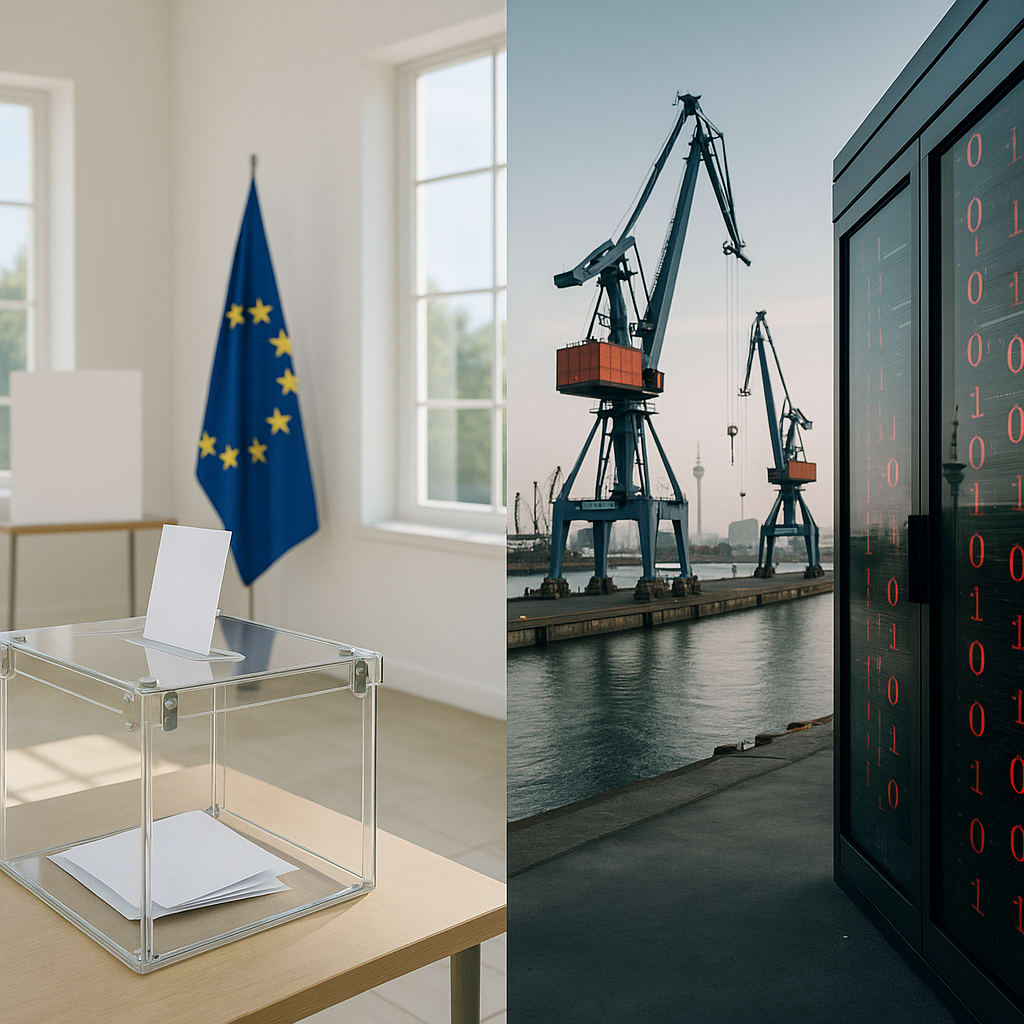
Parties concluded their campaigns on September 19 ahead of September 20 votes in Berlin and in Mecklenburg–Western Pomerania, where the Social Democrats and the AfD are running neck and neck and economic issues loom large (Deutsche Welle). The elections come two weeks after the AfD’s strongest-ever regional showing in Saxony-Anhalt, with international outlets anticipating fresh gains for the party and attendant pressure on Chancellor Friedrich Merz (Le Monde; France24; the Guardian). RT reported a YouGov survey indicating 48% of respondents expect Merz to leave office before the end of 2026, alongside record-low approval findings in other polls. DW’s Fact Check unit debunked a viral video alleging destruction of AfD postal ballots ahead of the Berlin vote. Separately, an association responsible for German sea ports warned of high risks from cyberattacks and sabotage (DW).
Why It Matters
These votes function as a referendum on governing capacity in Berlin and signal the balance of forces shaping Germany’s policy agenda. RT links Merz’s slide in approval to economic stagnation, stalled reforms, and coalition friction, framing the stakes as federal leadership stability. France24 and Folha de S.Paulo underscore that outcomes could determine Merz’s political survivability. The Guardian’s characterization of the AfD as anti-immigration and pro-Kremlin points to potential implications for Germany’s orientation on migration and external policy if the party extends its reach. DW’s focus on economic grievances in Mecklenburg–Western Pomerania highlights structural east–west disparities as an electoral driver. DW’s debunking of ballot-destruction claims and the sea ports’ cyber-risk warning underscore institutional stress points—information integrity and critical-infrastructure security—around which authorities’ credibility and resilience will be judged.
Diverging Narratives
RT’s coverage centers measurable vulnerability: a YouGov finding that nearly half of respondents expect Merz’s tenure to end by year’s close, coupled with record-low approval numbers and references to coalition frictions. Most international outlets instead cast the elections primarily as a test via the AfD’s rise: France24 and Le Monde point to the party’s breakthrough in Saxony-Anhalt and anticipated gains; the Guardian says the AfD is expected to drain CDU support and explicitly labels it anti-immigration and pro-Kremlin. DW’s state-level lens emphasizes policy stakes—economic concerns in Mecklenburg–Western Pomerania—and process integrity through a targeted debunk of a viral ballot-destruction video in Berlin, which other outlets do not foreground. The Bangkok Post introduces an additional axis, warning that both far-right and far-left gains could send shock waves to Berlin, a theme not prominent elsewhere. Collectively, coverage varies between portraying a leadership crisis, a far-right surge, and the integrity and issue salience of the electoral process.
What Happens Next
Key decision points cluster around three signals. First, the scale and geography of AfD gains: should the party achieve the “sweeping gains” it seeks, as reported by France24, international outlets anticipate intensified pressure on Merz; a more modest showing would temper that narrative. Second, Mecklenburg–Western Pomerania’s outcome, where DW reports SPD–AfD parity: which party secures a plurality will indicate whether economic grievances outweighed incumbent appeals. Third, the response environment: DW’s fact check suggests continued scrutiny of disinformation claims around Berlin’s vote; watch whether authorities, media, and parties sustain rapid debunks to maintain trust. RT’s polling vignette creates a barometer for intra-CDU dynamics—public expectations of Merz’s tenure will shape how party actors interpret the results. Separately, DW’s reporting on cyber risks to sea ports sets a security backdrop; any incidents or credible alerts would influence the risk calculus around critical infrastructure during a politically sensitive period.