
AI-linked intelligence error nearly prompted U.S. move to board Chinese vessel near Hormuz, outlets report
Narrative Snapshot
Coverage across regions converges on a CNN-sourced account that a faulty, AI-influenced intelligence assessment pushed U.S. forces to the brink of an interdiction, but it varies in how close the episode came to kinetic action and how it characterizes the role of AI. The Times of Israel, relaying CNN, stresses imminence, saying warplanes were already airborne and quoting a source that it “almost started a war,” a framing echoed by ANSA’s summary that U.S. jets were ready to act in the Middle East. Japan Times and Clarin emphasize the analytical failure mode, reporting that an analyst’s use of an AI chatbot misidentified the ship’s cargo and that the planned operation was halted after review.
European reporting extends the stakes beyond a single operational scare. Le Monde situates the episode in two ways: geographically, near the Strait of Hormuz, and politically, describing an administration unsettled by an “AI surge” ahead of a visit by China’s Xi Jinping, while also noting the U.S. military and intelligence services are accelerating AI integration from analysis to target selection. A Brazilian perspective from Folha de S.Paulo adds a policy lens: U.S. and Chinese security experts argue that nuclear-sector risk-management rules are relevant to AI because machine-driven interference in command-and-control could compress leaders’ decision time to mere minutes.
What Happened
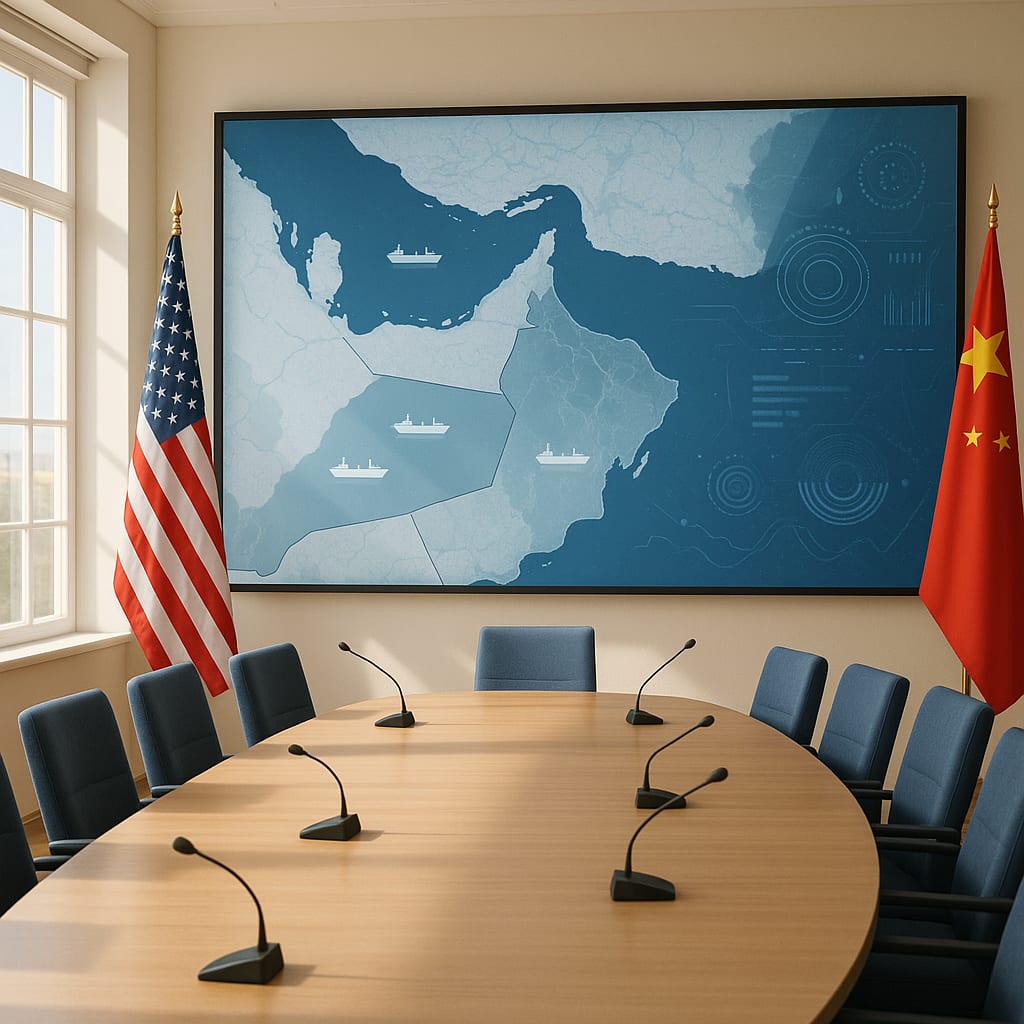
Multiple outlets citing CNN report that U.S. forces readied an operation to board a Chinese vessel in the Middle East after intelligence indicated it carried nuclear weapons-related components (The Hindu), with some reporting the suspected cargo was for Iran (The Times of Israel). Le Monde places the incident near the Strait of Hormuz. The intervention was called off when officials determined the underlying assessment had been influenced by erroneous AI outputs: Japan Times says an analyst’s use of a chatbot misidentified the ship’s cargo, while Le Monde reports the document was partly drafted by AI. The Times of Israel and ANSA underscore the operation’s proximity to action, saying U.S. warplanes were already in the air or ready to intervene. Clarin notes the review that reversed the decision and adds that military AI use remains under scrutiny. All accounts attribute the initial details to CNN’s reporting.
Why It Matters
Le Monde reports the U.S. military and intelligence services are accelerating AI integration across functions, including target selection, even as this episode shows how AI-linked errors can migrate into time-sensitive operational decisions. Folha de S.Paulo’s separate reporting on U.S. and Chinese experts urging nuclear-sector-style rules for AI underscores a governance challenge: machine-augmented analysis and operations can compress detection-to-decision timelines and amplify misattribution risks in crises involving major powers. The Hormuz setting and the Chinese flag add a strategic layer with potential consequences for U.S.–China relations and regional security architectures. Le Monde also links the episode to a broader domestic context, noting U.S. political unease about AI’s economic and policy trajectory ahead of high-level diplomacy with Beijing. For governments and multilateral bodies, the case tests whether emerging AI doctrines can incorporate verification, accountability, and escalation controls without stalling promised operational gains.
Diverging Narratives
Outlets align on the core elements—AI-influenced misidentification, a prepared but aborted interdiction, and CNN as the originating account—yet they differ on proximity to confrontation and the technical contours of the failure. The Times of Israel, quoting CNN, stresses maximal imminence, asserting jets were airborne and citing a source that the incident “almost started a war,” a tone mirrored in ANSA’s summary. Japan Times and Clarin focus on the analytic chain, attributing the error to a chatbot’s misclassification and emphasizing the corrective review that stopped the operation. There is also variance in how the cargo is described: Le Monde and Clarin reference “nuclear material” suspicion, while The Hindu specifies “nuclear weapons-related components,” and The Times of Israel adds the Iran vector. Le Monde’s political framing—an administration unsettled by AI’s surge before Xi’s visit—broadens the lens, while Folha de S.Paulo injects a policy debate about importing nuclear-governance principles into AI—points that are absent from the more operationally focused accounts.
What Happens Next
Two decision tracks emerge from the reporting. First is implementation: Le Monde’s note that U.S. defense and intelligence are accelerating AI adoption, contrasted with Clarin’s reminder that military AI remains under scrutiny, sets up a near-term choice between continued rollout versus the insertion of additional verification layers before intelligence informs interdictions or targeting. Analysts should watch for formal guidance on when and how AI-generated content can enter operational workflows and the thresholds for human review. Second is risk reduction with China: Folha de S.Paulo’s account of U.S. and Chinese experts advocating nuclear-sector rules for AI highlights proposals for guardrails designed for compressed timelines and attribution ambiguity. Signals to track include whether official channels reference such frameworks and whether the incident shapes messaging around high-level U.S.–China engagements that Le Monde places on the calendar.