
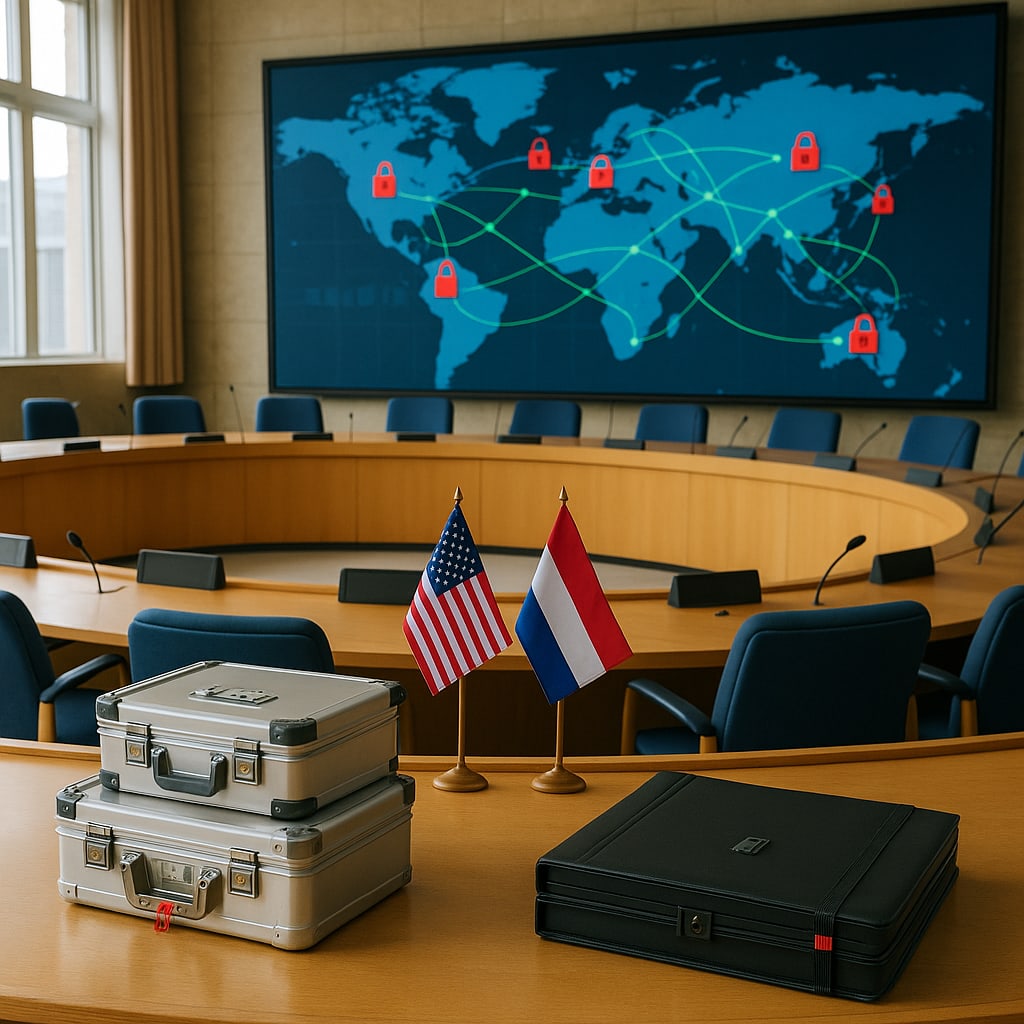
US set to impose sweeping sanctions on the ICC; the Netherlands readies measures to keep the court functioning
Narrative Snapshot
Across outlets, there is broad alignment that Washington is preparing expansive sanctions aimed at the ICC’s institutional operations, with reporting converging on the likelihood of severe restrictions on the court’s access to financial channels. Middle East Eye and The Times of Israel emphasize the link to the ICC’s 2024 arrest warrant for Israeli leaders, including Prime Minister Benjamin Netanyahu, and describe an unprecedented move against the court, potentially unveiled during UN General Assembly week. TASS underscores the scale of the prospective measures, warning they could affect most financial transactions and “paralyze” the court, while separately noting the ICC’s refusal to withdraw warrants.
Coverage from Canada and India centers on the host state’s operational concerns: the Netherlands is preparing to sustain payroll, witness protection payments, and detention security. Telesur adds design details—broad prohibitions on international financial dealings, narrow exceptions for essential telecommunications, and a six-to-seven-month transition—situating the move within a campaign that already includes asset freezes and visa bans.
What Happened
The Trump administration is preparing sweeping sanctions against the International Criminal Court that could be finalized as early as this week, during the UN General Assembly, according to Middle East Eye and The Times of Israel. The measures would target the institution after earlier U.S. actions against ICC personnel; Middle East Eye reports prior sanctions hit half of the court’s 18 judges and most of its leadership, while the Toronto Star notes Washington has already sanctioned more than a dozen ICC figures. TASS reports the United States warned the Netherlands that large-scale restrictions could affect the majority of financial transactions with the court and potentially paralyze operations. Telesur says U.S. officials describe prohibitions on most international financial transactions with exceptions for essential telecommunications, phased in over six to seven months and building on February 6, 2025 asset freezes and visa revocations. The Hindu reports the Netherlands is seeking to keep staff and protected-witness payments flowing and maintain detention-facility security. A separate TASS report notes the ICC has not revoked warrants for Netanyahu and Defense Minister Yoav Gallant, citing the acting prosecutor’s statement that the office is guided by law and evidence.
Why It Matters
The reported sanctions aim at the ICC’s institutional lifelines—payments, banking access, and the global financial rails—rather than only individual officials, testing the resilience of an international judicial body to extraterritorial financial pressure. Multiple outlets describe measures that could sever the court from much of the global financial system or affect a majority of its transactions, raising immediate concerns for core functions: staff compensation, protected-witness support, detention security, and continuity of investigations. The Netherlands’ preparations underscore the host state’s central role in operational continuity under stress.
This episode also reflects a longer-running confrontation over accountability issues involving Israeli officials and U.S. personnel, with Telesur referencing Afghanistan-related investigations and Middle East Eye linking the move to warrants for Israeli leaders. If implemented at the scope described, the sanctions would extend the use of U.S. financial tools against a multilateral judicial institution, with implications for international legal cooperation and the practical independence of global accountability mechanisms.
Diverging Narratives
Outlets differ most in emphasis and granularity. Middle East Eye and The Times of Israel foreground the Israel angle and the timing around UNGA, calling the institutional targeting unprecedented and linking it to the ICC’s Netanyahu warrant. Telesur broadens the motive frame to include pressure over Afghanistan-related probes, lays out a six-to-seven-month transition and a narrow exception for essential telecommunications, and situates the move as an escalation from 2025 asset freezes and visa bans. TASS focuses on the prospective operational paralysis by constraining most financial transactions and, in a separate piece, highlights the ICC acting prosecutor’s insistence that warrants remain in force and decisions are anchored in law and evidence.
Reporting also diverges on the scope of prior designations: Middle East Eye cites sanctions against half of the ICC’s judges and most of its leadership, while the Toronto Star describes “more than a dozen” sanctioned individuals. Canadian and Indian coverage centers on The Hague’s practical mitigation steps, with The Hindu detailing Dutch efforts to keep salaries, witness protections, and detention security intact—an operational frame distinct from the geopolitical drivers emphasized elsewhere.
What Happens Next
Key decision points are clustered around scope, implementation, and mitigation. First, whether Washington finalizes the institutional sanctions during UNGA week, as reported by Middle East Eye and The Times of Israel, and the precise contours Treasury adopts—TASS points to restrictions on the majority of transactions, while Telesur describes prohibitions on most international financial dealings with limited exceptions and a six-to-seven-month phase-in. Second, how the Netherlands operationalizes workarounds to preserve staff pay, protected-witness disbursements, and detention security, per The Hindu; signals would include alternative payment channels or host-state support mechanisms.
Third, the response of banks and service providers to any designation—Middle East Eye warns of potential severance from the global financial system; monitoring compliance behavior will indicate the sanctions’ practical reach. Finally, the ICC’s casework posture: TASS reports the prosecutor’s office is maintaining warrants based on law and evidence; analysts should watch for any stated delays or resource impacts on investigations.