
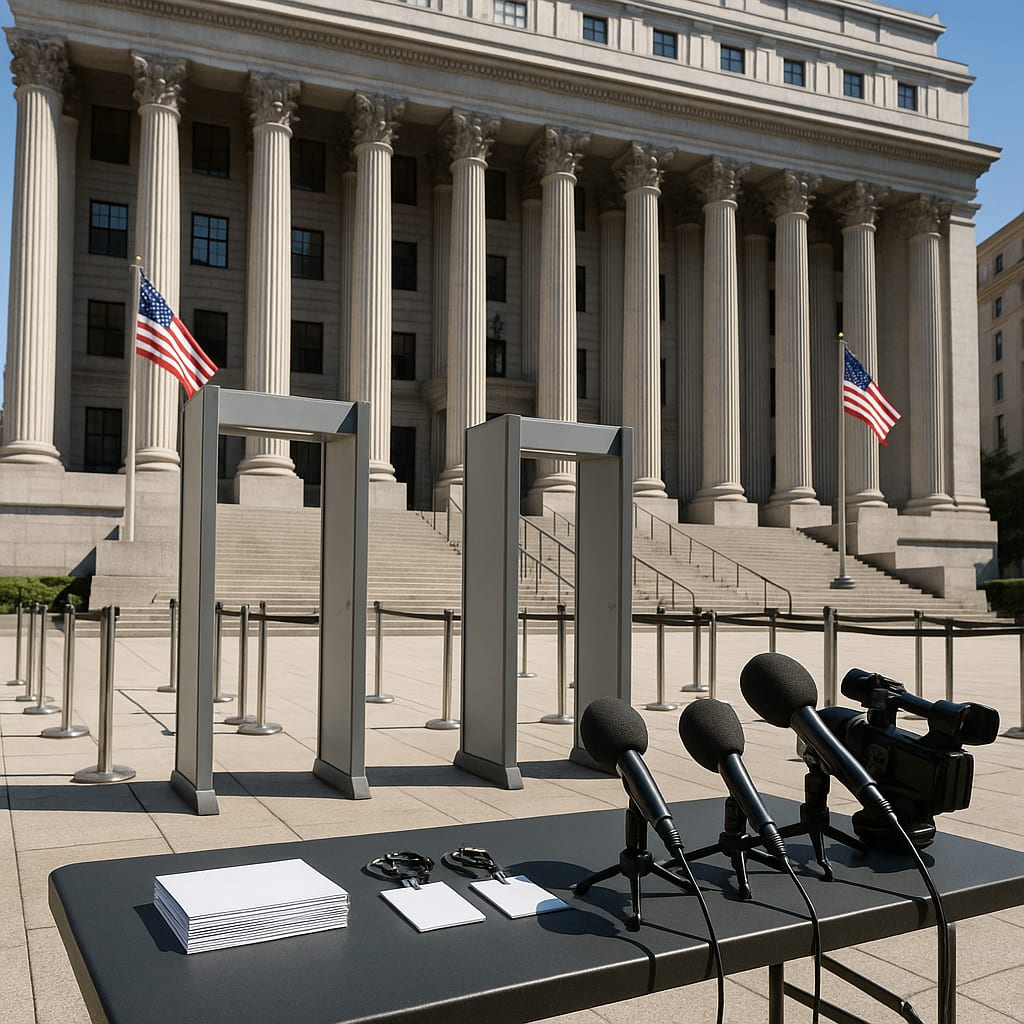
CNN, MS NOW and Politico sue Trump administration over White House access ban
Narrative Snapshot
Across U.S. and international outlets, reporting converges on the plaintiffs’ stated rationale: the suit seeks to protect First Amendment rights and the principle that government does not decide what the press reports or publishes, as summarized by the New York Times, BBC, The Hindu, CBC News, and the Toronto Star. Italian wires and dailies similarly center the First Amendment basis and note rapid judicial timelines, with ANSA and La Repubblica reporting hearings expected this week.
Coverage diverges most clearly in how the ban itself is framed. France24 and Deutsche Welle cast it as an escalation in a years-long assault on U.S. press freedoms, while Le Monde emphasizes President Trump’s allegation that the outlets write “false stories all the time.” Al Jazeera and the Bangkok Post foreground the White House’s justification that “fake news” is a threat to national security, with the Bangkok Post quoting Trump calling critical media a “Cancer.”
Procedural features receive distinct attention in several reports. The Guardian and BBC describe reporters’ badges being confiscated by the Secret Service the morning after the announcement. The outlets’ joint statement, carried by CGTN, alleges credentials were revoked “without notice or process.” The South China Morning Post reports the case was filed in the U.S. District Court for the District of Columbia, with emergency hearings possible this week.
Expectations for the courtroom are reported unevenly. Fox News quotes a First Amendment advocacy attorney at FIRE predicting the administration will not fare well, even as the White House told Fox it is “not backing down.” Clarin reports Trump questioning the judge’s impartiality and signaling an appeal; the Times of Israel notes expectations of appellate action from the media side. Together, these accounts point to a prepared, protracted legal dispute rather than a quick political accommodation.
What Happened
President Donald Trump announced on Friday that journalists from CNN, MS NOW, and Politico were banned from the White House grounds for reporting “fake news,” with some outlets highlighting his claims that such coverage threatened national security and was a “Cancer” (Al Jazeera English; Bangkok Post; Folha de S.Paulo; Le Monde). On Saturday, reporters were denied entry and had press badges confiscated by the Secret Service, according to BBC News and the Guardian. On Monday, the three outlets said they notified the administration they were filing suit in the U.S. District Court for the District of Columbia, asserting First Amendment violations and the principle that government cannot dictate news content (New York Times; The Hindu; Toronto Star; CBC News; South China Morning Post). Their joint statement, published by CGTN, alleges credentials were revoked without notice or process and names senior officials as defendants. Several outlets report emergency hearings could occur this week (ANSA; La Repubblica; South China Morning Post). Fox News reports the White House will not back down.
Why It Matters
The dispute tests the boundary between executive control over access to the White House and constitutional protections against viewpoint-based exclusion. Multiple outlets report the plaintiffs’ First Amendment framing, and Fox News cites a First Amendment advocacy attorney referencing settled precedent once the White House “opens its doors to the press.” International reporting repeatedly links the episode to norms of press freedom, with France24 describing an escalation in a years-long pattern and Deutsche Welle and Clarin highlighting broader concerns raised by journalists’ groups and rights advocates. Folha de S.Paulo notes the president left open the possibility of further bans, and Telesur English characterizes the move as part of an ongoing friction with the press. For governments and multilateral organizations monitoring media freedom, the outcome will signal the durability of institutional checks on retaliatory credentialing and the extent to which national security rhetoric is deployed to justify restrictions on accredited media.
Diverging Narratives
The litigants present the case as a straightforward First Amendment conflict: their joint statement asserts the government cannot decide what the press reports or publishes, and that revocation of access occurred without notice or process (New York Times; BBC News; The Hindu; CGTN). Several international outlets echo this emphasis, describing threats to independent journalism and the public’s right to information (Deutsche Welle; France24).
The administration’s publicly reported justification centers on labeling coverage as “fake news,” with some reports relaying Trump’s characterization of critical media as a national security threat and a “Cancer” (Al Jazeera English; Bangkok Post; Le Monde). Fox News reports the White House is not backing down. Clarin adds that Trump has questioned the judge’s impartiality and announced plans to appeal an adverse ruling, while the Times of Israel notes expectations of appeals from the media side, underscoring an adversarial posture on both sides.
There is also a procedural split in emphasis. The Guardian and BBC highlight immediate enforcement through badge confiscations by the Secret Service, while CGTN details defendants beyond the president, including senior communications and security officials, suggesting that credentialing and gatekeeping processes themselves are at issue. What remains unresolved, across all accounts, is how swiftly the courts will act in emergency proceedings and whether any relief will address both access and process.
What Happens Next
Emergency proceedings in the U.S. District Court for the District of Columbia are the immediate pivot point, with multiple outlets reporting hearings could occur this week (ANSA; La Repubblica; South China Morning Post). If the court grants immediate relief, access for CNN, MS NOW, and Politico could be restored pending litigation; if relief is denied or narrowed, the ban remains in force while the case proceeds, a scenario consistent with the White House’s stance that it will not back down (Fox News). Clarin reports Trump intends to appeal an unfavorable ruling, and the Times of Israel notes expectations of appellate action from the media side, pointing to a likely multi-stage judicial path. Analysts should watch for any formal invocation of national security rationales in court filings, given the administration’s public framing (Al Jazeera English; Bangkok Post), and for any official guidance on credentialing from named defendants in communications and the Secret Service (CGTN). Folha de S.Paulo and Telesur English report the president left open the possibility of additional bans, making any expansion a key signal of the dispute’s trajectory.