
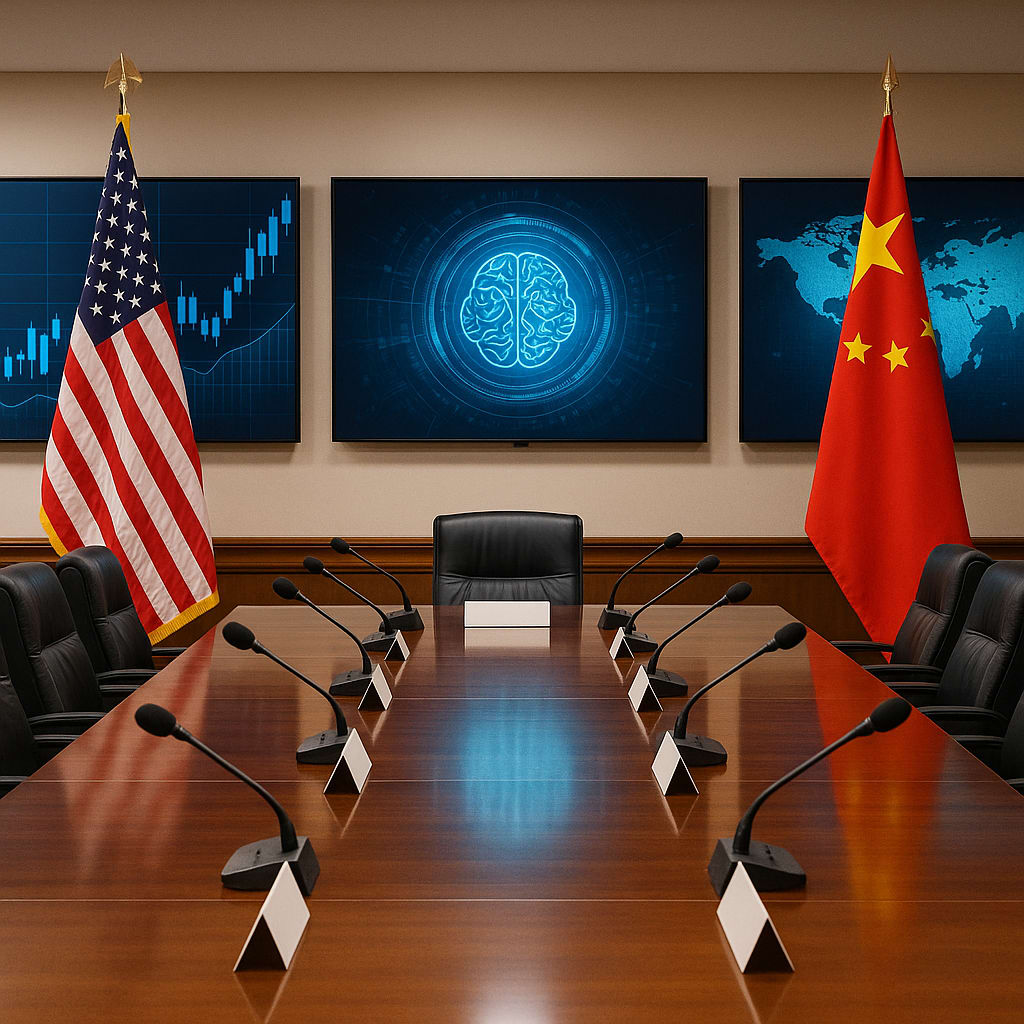
Xi’s Washington state visit tests “strategic stability” framing as trade, Taiwan and security frictions converge
Narrative Snapshot
Chinese official and state-adjacent outlets frame the moment as an exercise in stabilizing great-power ties through leader-level diplomacy and economic pragmatism. Beijing confirmed Xi Jinping’s Sept. 23–25 state visit and emphasized “strategic guidance” and stability, while related coverage from the Xiangshan security forum cast China as an “engine of world peace” within the Global Security Initiative and highlighted third-party calls for diplomacy on Middle East crises (CGTN; Telesur English). CGTN also underscored recent “balanced and positive” economic steps since May, including new trade and investment boards and reciprocal tariff reductions, situating the summit inside a managed economic process.
Across U.S. and regional reporting, the guardrails are more explicit. The New York Times describes Xi seeking to extend a tactical truce with a U.S. president constrained by war and domestic politics. The South China Morning Post highlights political constraints around Taiwan, with Senator Jeanne Shaheen warning against any perceived retreat, and notes how Xi’s Washington visit looms over Trump’s separate meeting with Japan’s Prime Minister Sanae Takaichi. European and Latin American outlets widen the agenda: Corriere della Sera reports that Trump needs Beijing’s help on Iran as China asks for concessions on Taiwan and trade; Folha de S.Paulo contrasts China’s recent trade momentum with Trump’s weaker approval; Clarín lists Taiwan, Iran, Ukraine, non-proliferation, tariffs, rare earths and AI.
Conservative U.S. coverage concentrates on hard-security risk. Fox News elevates a warning from Gordon Chang that Xi is preparing Chinese society and forces “for battle,” tying his remarks to reports of Chinese assistance to Iran in attacks that killed three U.S. troops in Jordan earlier in the summer, and separately amplifies a CSIS finding of expanded Chinese eavesdropping capabilities near the U.S. base in Djibouti as a potential pre-summit irritant. This security-centric lens contrasts sharply with Beijing’s stabilization narrative but tracks with congressional caution cited elsewhere.
What Happened
Beijing and multiple international outlets confirmed that Xi Jinping will pay a state visit to the United States from Sept. 23 to 25, with a summit in Washington expected on Thursday; it is Xi’s first U.S. state visit in over a decade, and Trump plans to greet him at the airport (CGTN; ANSA; Bangkok Post; South China Morning Post; Toronto Star). The agenda spans trade and AI, with China’s vice premier He Lifeng leading pre-summit economic consultations in the U.S. from Sept. 19–23 amid recent steps such as new trade and investment boards and reciprocal tariff reductions reported by CGTN (Fox News; CGTN). Other issues flagged across coverage include Taiwan, Iran, Ukraine, and non-proliferation, alongside tariffs and rare earths (Clarín; Corriere della Sera). Senator Jeanne Shaheen urged Trump not to signal any retreat on Taiwan, and The Diplomat called on him to raise China’s “ethnic unity” law directly with Xi (South China Morning Post; The Diplomat). The New York Times reported Xi may seek to extend a tactical truce.
Why It Matters
The visit is a test of whether high-level engagement can operationalize the “constructive strategic stability” that Chinese and international participants at the Xiangshan Forum said is necessary despite persistent distrust (South China Morning Post). If leaders can codify recent economic channels—trade and investment boards and a tariff-reduction pathway—both sides would reinforce institutional mechanisms to manage disputes even as technology and security frictions persist (CGTN). Alliance and partner signaling is also at stake: Tokyo’s parallel diplomacy with Washington and Senate warnings on Taiwan indicate that reassurance to U.S. allies and consistent Taiwan messaging will be scrutinized in Asia (South China Morning Post). The Middle East dimension—where Trump is portrayed as seeking help on Iran and third-country voices emphasize diplomacy—could test whether Beijing and Washington can compartmentalize regional crises from bilateral stabilization efforts (Corriere della Sera; CGTN).
Diverging Narratives
Beijing-centric coverage promotes head-of-state diplomacy as an “irreplaceable” stabilizer oriented to peace and development, embedding the summit in a broader Chinese-led security discourse and recent pragmatic trade steps (Telesur English; CGTN). U.S. and allied reporting sets sharper conditions: the New York Times frames Xi’s aim as extending a truce with a politically constrained U.S. president, while the South China Morning Post surfaces congressional red lines on Taiwan and regional sensitivities as Japan meets Trump days earlier (New York Times; South China Morning Post). European and Latin American outlets couple strategic and economic bargaining—help on Iran, concessions on Taiwan and trade, and sectoral issues like rare earths and AI—suggesting cross-issue linkages will be probed (Corriere della Sera; Clarín). Security-focused Fox News coverage, citing Gordon Chang and a CSIS study on Djibouti, foregrounds risk escalation—from alleged Chinese assistance to Iran-linked attacks to expanded eavesdropping capacity—although CSIS could not determine whether active interception is occurring, underscoring residual uncertainty (Fox News).
What Happens Next
Several decision points will shape trajectories. First, Taiwan signaling: if Trump publicly reiterates support consistent with Shaheen’s warning, U.S. deterrence messaging holds; any language read as concession would validate Beijing’s asks reported in European coverage and unsettle regional partners (South China Morning Post; Corriere della Sera). Second, economic guardrails: watch for joint references to the trade and investment boards and reciprocal tariff reductions; affirmations would extend the “truce” logic, while silence or rollback would suggest renewed friction (CGTN; New York Times). Third, cross-issue bargaining over Iran: explicit U.S. requests for Chinese leverage and any Chinese linkage to trade or Taiwan will indicate the feasibility of compartmentalization (Corriere della Sera). Finally, security frictions: observe whether official readouts acknowledge espionage concerns tied to Djibouti or alleged China-Iran cooperation; inclusion would complicate stabilization, omission would imply deliberate fence-building around the summit (Fox News).