
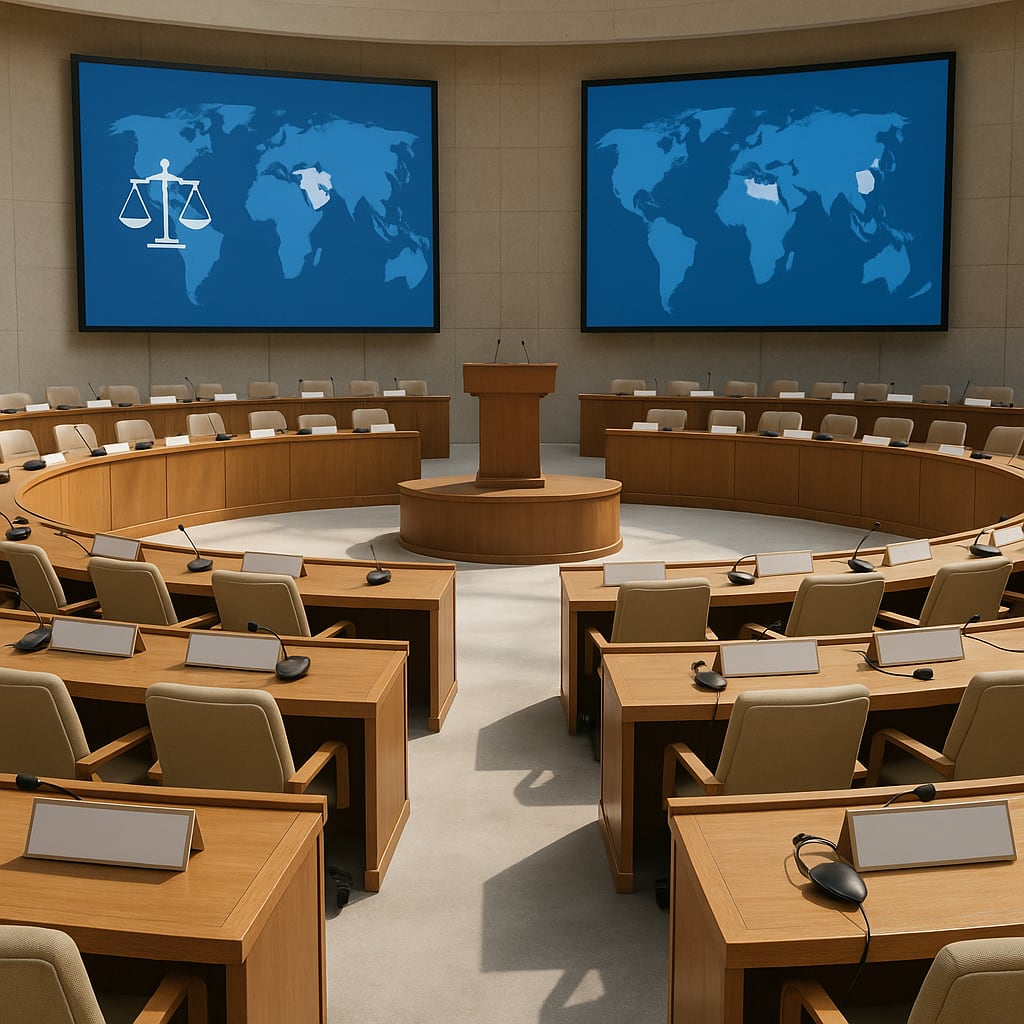
Gaza and UN Reform Dominate UN General Assembly as Leaders Recast Multilateral Fault Lines
Narrative Snapshot
Across outlets, the center of gravity is clear: Gaza and the architecture of multilateralism are being treated as linked tests of international order. European leaders’ rhetoric converges on accountability and law—Spain’s Pedro Sánchez explicitly using “genocide,” France’s Emmanuel Macron calling Gaza a “spectacle that shames us all,” and the UK’s Andy Burnham tying violence and settlement expansion to the viability of two states—while the UN Secretary-General urges compliance with court orders but stops short of the genocide label. Coverage from Middle East Eye and Telesur English amplifies the charge sheet against Israel and the consequences for the UN system; Al Jazeera English spotlights Sánchez’s warning about far-right currents undermining norms.
A second thread tracks how states propose to make multilateralism usable: China calls for “enhanced multilateralism,” Russia’s Sergey Lavrov denounces Western interventionism and backs Global South representation, and a cluster of “middle power” initiatives surface around UN reform, from the Partners for Multilateralism to a cross-regional manifesto. Indian, Brazilian, and European sources present this as coalition-building for structural change rather than rhetorical positioning.
Coverage diverges sharply on US positioning. Middle East Eye reports Donald Trump’s call for UN members to quit the ICC alongside unsubstantiated casualty figures for Iran and Gaza, while Le Monde and Macron’s own UN remarks cast a direct defense of law and institutions. Telesur English underscores visible dissent in the hall toward Israel’s leadership, while Middle East Eye foregrounds escalatory Israeli signaling and legal frictions around alleged war crimes, tying them to India’s own multilateral law discourse.
What Happened
At the 81st UN General Assembly, leaders concentrated on Gaza and the terms of multilateral governance. Spain’s Pedro Sánchez condemned “a genocide” in Gaza, cited opposition to wars of aggression, and said Madrid would impose an arms embargo on Israel and block use of Spanish territory for unlawful aggression, while backing sanctions on Russia (Middle East Eye). France’s Emmanuel Macron called Gaza a “spectacle that shames us all” and pledged support for the International Court of Justice (Middle East Eye). UK Prime Minister Andy Burnham warned settlement expansion and Gaza violence risk a “point of no return” for two states, following UK, France, and Canada sanctions on settlement goods and Israeli retaliation against the UK’s East Jerusalem consulate (Middle East Eye). Qatar’s emir labeled events in Gaza “genocide” (Telesur English). Antonio Guterres urged respect for court orders and warned of ethnic cleansing risks (Telesur English). Middle East Eye reported Donald Trump urged states to leave the ICC and used unsubstantiated figures; Telesur English reported boos and walkouts during Benjamin Netanyahu’s speech. China called for enhanced multilateralism (CGTN). Russia’s Sergey Lavrov condemned Western interventionism and backed Global South representation (Telesur English). India co-chaired the new Partners for Multilateralism and pressed for reformed multilateralism (South China Morning Post; The Hindu; Japan Times). Middle East Eye reported Israel’s defense minister threatened mass evacuation in Gaza and noted an Israeli soldier left India after a war-crimes complaint.
Why It Matters
The session exposed how Gaza has become a stress test for the credibility of international law and the UN’s ability to enforce it. European leaders’ explicit invocations of accountability, including support for the ICJ and sanctions on settlement-linked goods, meet a UN leadership appeal for compliance with court orders, while the United States’ head of state position—per Middle East Eye—rejects engagement with the ICC. This foregrounds a structural contest over which legal instruments and venues carry political weight.
Simultaneously, coalitions pushing UN reform coalesced across regions. India’s Partners for Multilateralism, a manifesto involving Brazil, Canada, the EU and Kenya, and Latin American dialogues on multilateralism and AI governance point to middle-power organizing outside formal UN organs (South China Morning Post; Folha de S.Paulo; Japan Times; Telesur English). China’s call for enhanced multilateralism and Russia’s Global South framing align with Mail & Guardian’s assessment that reform debates mask a deeper geopolitical shift. For decision-makers, the convergence of legal exposure, sanctions policy, and coalition-building signals a recalibration of costs and venues for action on conflicts like Gaza.
Diverging Narratives
Language around Gaza differs by source and actor. Spain’s Sánchez and Qatar’s emir use “genocide,” and Macron emphasizes shame and ICJ support (Middle East Eye; Telesur English). Antonio Guterres warns of ethnic cleansing risks and urges respect for court orders without adopting the genocide label (Telesur English). Middle East Eye reports Israeli Defense Minister Israel Katz threatening to evacuate roughly a million Gazans south if kidnappings occur, noting a pattern of “increasingly genocidal statements,” while Telesur English depicts Netanyahu as facing boos and walkouts in the Assembly hall. The former centers escalatory signaling; the latter stresses visible diplomatic dissent.
Multilateralism itself is framed in competing ways. China, Russia, and several Global South and middle-power initiatives present reform as necessary to balance power and representation (CGTN; Telesur English; South China Morning Post; Japan Times; Folha de S.Paulo). European leaders cast it as a defense of law and institutions, with Macron contrasting his stance to that of the United States (Le Monde). Middle East Eye reports Trump urging UN members to leave the ICC and relying on unsubstantiated figures regarding Iran and Gaza, underscoring a US narrative skeptical of international courts. India’s External Affairs Minister calls for scrupulous observance of international law even as Middle East Eye highlights domestic criticism over non-pursuit of complaints against visiting Israeli soldiers—revealing tensions between stated principles and enforcement pathways.
What Happens Next
Several decision points emerge. On accountability and coercive measures, watch whether Spain operationalizes an arms embargo on Israel and whether European settlement-goods sanctions expand beyond the UK, France, and Canada; Israeli retaliation against UK diplomatic presence, as reported by Middle East Eye, suggests reciprocal moves are immediate indicators. On legal venues, monitor state conduct in relation to “court orders” referenced by the UN Secretary-General and whether more leaders publicly align with Macron’s pledge to support the ICJ or with the US stance reported by Middle East Eye regarding the ICC.
On UN reform, track the membership, agenda, and deliverables of the Partners for Multilateralism and any follow-on to the cross-regional manifesto cited by Folha de S.Paulo; India’s and Brazil’s roles will signal middle-power leverage. On conflict dynamics, pay attention to Israeli leadership statements like Katz’s threat reported by Middle East Eye and the policy salience of two-state viability raised by Burnham; these will shape whether diplomatic initiatives focus on immediate de-escalation, sanctions design, or longer-term status negotiations.