
Iran’s president says US must choose to end war; Tehran outlines conditions via Qatar on Hormuz access and sanctions
Narrative Snapshot
Across outlets, the center of gravity is Pezeshkian’s message delivered on a US platform during UN week, with concise wire-style pieces emphasizing the headline claim and location. Regional and specialized coverage stretches the frame: Middle East Eye adds Tehran’s attribution of “instigations” to Israel and references to a collapsed bilateral memorandum with Washington; Clarin highlights denials of control over the Houthis alongside an asserted openness to talks and criticism of Israeli influence. US coverage on Fox News pivots to the nuclear file and Pezeshkian’s stated readiness to lower enrichment and accept inspections, contextualized against Washington’s justification for military action in February. Chinese and Iranian outlets concentrate on maritime and economic coercion claims, especially the Strait of Hormuz and a supposed US naval blockade, while France24 underscores a defiant UN posture. The stakes repeatedly return to three arenas: maritime access through Hormuz, the parameters of nuclear oversight and enrichment, and whether mediated backchannels can bridge a widening negotiation gap.
What Happened
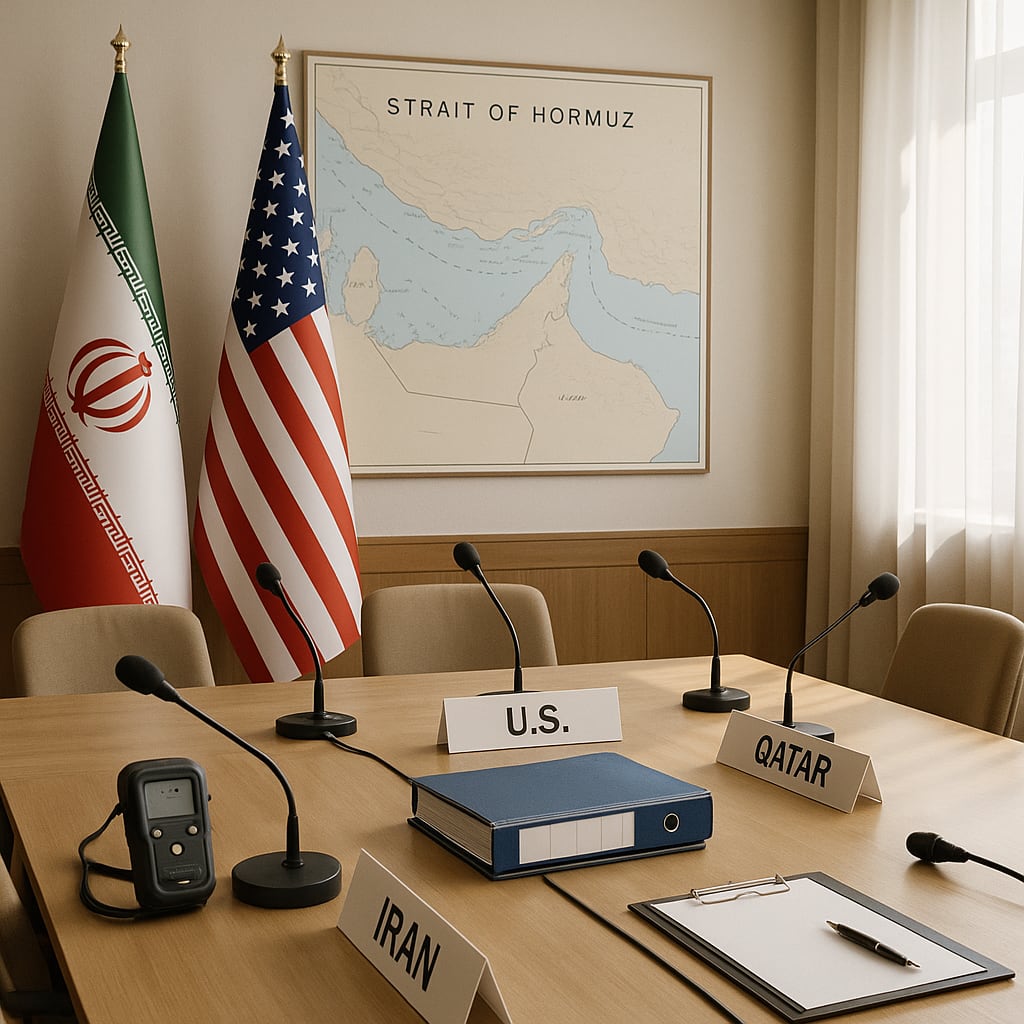
In a Fox News interview aired during UN General Assembly week, Iranian President Masoud Pezeshkian said Tehran does not seek to continue fighting and asserted it is for the United States to decide whether to end the war. He coupled that message with a denial of nuclear weapons intent and an indication that Iran could reduce enrichment and accept international inspections. At the UN, Pezeshkian criticized the permanent deployment of hostile fleets and argued Iran must have access to shipping through the Strait of Hormuz. Reuters reporting cited by CGTN said indirect US–Iran contacts resumed via mediators after a July ceasefire collapse, with Tehran reviewing Washington’s response to proposals prioritizing the lifting of a US naval blockade and reopening Hormuz. Middle East Eye and IRNA reported Tehran conveyed through Qatar conditions including ending hostilities on all fronts, halting “acts of aggression,” ending economic warfare, and releasing Iranian assets.
Why It Matters
The contest over the Strait of Hormuz fuses military, economic, and diplomatic leverage. Before the war, the waterway carried roughly one-fifth of global oil and liquefied natural gas shipments, and Iranian officials are making maritime access a top condition in backchannel contacts. If nuclear oversight is paired with maritime de-escalation, the mix could reopen space for inspections and energy trade stabilization, but the Reuters-sourced assessment via CGTN that positions remain “far apart” underscores limited near-term convergence. The Fox News framing that uranium enrichment drove Washington’s February operation, combined with Pezeshkian’s stated openness to dilute enrichment, creates a potential—though untested—trade space anchored in inspection regimes. Qatar’s mediation role, alongside outreach to Pakistan noted by Al Jazeera, points to a familiar regional architecture of crisis management when direct US–Iran channels stall. For multilateral institutions and energy markets, policy choices on blockade claims, sanctions relief, and inspection modalities will shape both conflict risks and supply security.
Diverging Narratives
Tehran’s messaging centers on agency and blame: Pezeshkian’s line that “America must choose” is paired with accusations that Israeli “instigations” imposed the conflict, and with conditions that foreground ending a naval blockade, halting economic warfare, and releasing assets. Clarin adds denials of control over the Houthis and emphasizes Iranian willingness for dialogue. US domestic coverage on Fox News steers to the nuclear file and the administration’s rationale for “Operation Epic Fury” launched in February because of enrichment levels, while highlighting Pezeshkian’s categorical rejection of nuclear weapons and openness to inspections and lower enrichment. On the economic front, Tehran Times rejects US attempts to attribute rising fuel prices to Iran, deflecting responsibility to the conflict and shipping disruption around Hormuz. France24 and Bangkok Post foreground a defiant UN stance and the core “US must choose” formulation, while CGTN relays Reuters’ assessment that despite resumed indirect contacts, significant gaps persist over maritime access and the purported blockade. Middle East Eye alone reports Pezeshkian’s claim that a prior memorandum with Washington collapsed within two weeks, underscoring Tehran’s skepticism about US follow-through.
What Happens Next
Two decision points are explicit in the sources. First is whether Washington engages the Iranian conditions relayed via Qatar: lifting a claimed naval blockade, reopening Hormuz to Iranian shipping, and addressing economic warfare and frozen assets. Movement here would be visible in US statements on maritime deployments in and around Hormuz and any adjustments to sanctions enforcement. Second is whether nuclear de-escalation becomes a workable lever; Pezeshkian’s signal on lowering enrichment and accepting inspections would need concrete steps and verification, and US acknowledgment that such measures address the rationale for February’s operation. Analysts should watch for further mediated contacts reported via Doha, any reference to restoring or revising inspection arrangements, and indications of a renewed ceasefire effort after July’s collapse. Pezeshkian’s comment that the timing relative to US midterms “makes no difference” to Tehran sets expectations that Iranian positions may hold steady regardless of near-term US political calendars.