
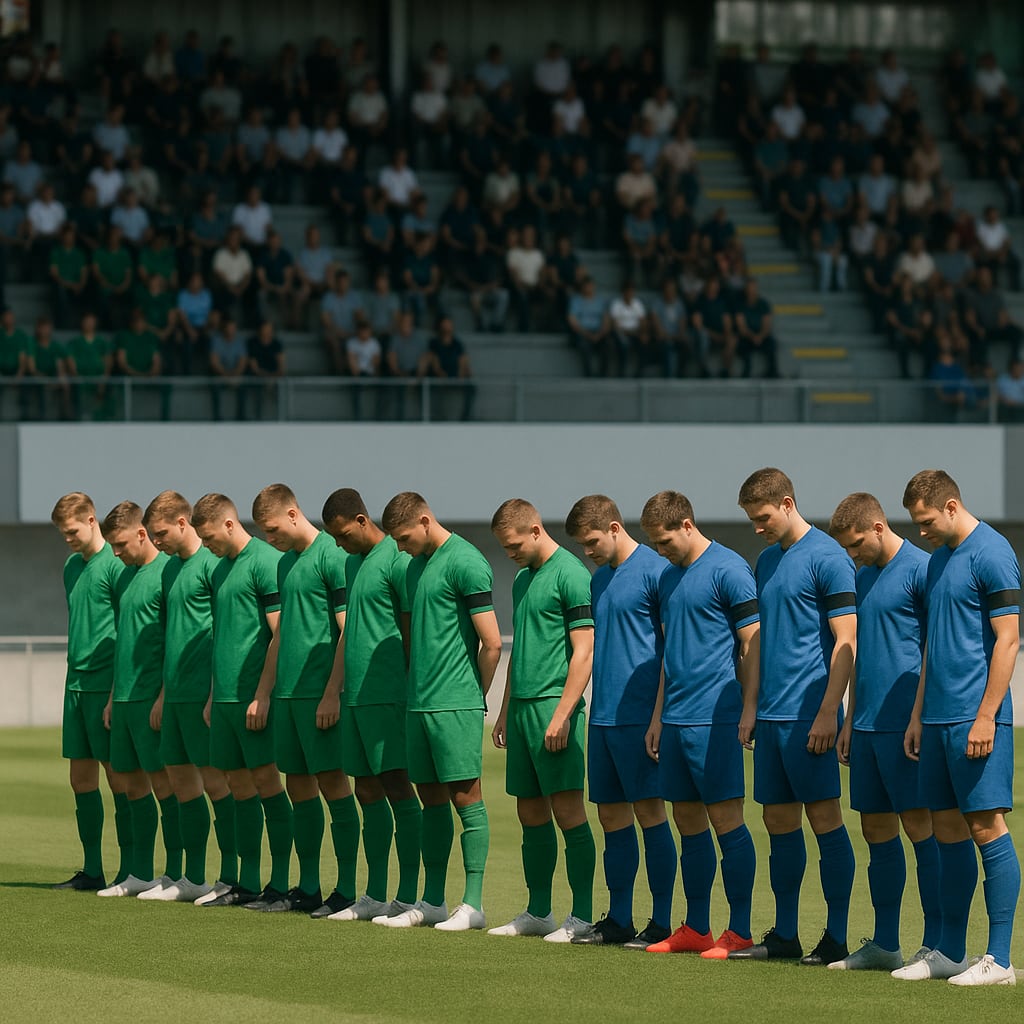
Ireland beat Israel 3-0 after pre‑match protest at neutral‑site Nations League fixture
Narrative Snapshot
Across outlets, there is broad agreement on the core facts: Ireland played Israel on a neutral field in Debrecen, Hungary; Irish players wore black armbands, bowed their heads during the Israeli anthem, and refused customary handshakes; Ireland won 3-0. Yet the center of gravity differs. European news desks concentrated on the visible gestures and match procedure, documenting the refusal to shake hands and the on‑field result without extended political argument (Sky News; La Repubblica; Clarin; Deutsche Welle). Middle East outlets explicitly framed the protests as solidarity with victims in Gaza, repeatedly using “genocide” to characterize the context and highlighting symbolic moments such as an Irish scorer kissing his black armband (Al Jazeera English; Middle East Eye).
Israeli coverage captured the political and emotional stakes for Israeli audiences. A pre‑match column cast the contest as a charged national moment after Ireland’s genocide accusations, while match reporting emphasized the skipped handshakes, the swift Irish goals, and a post‑match assertion by a coach that “We are not playing with genocide, we are playing against genocide” (Haaretz). The Times of Israel reported that a broadcaster pared back its coverage and quoted Israel’s captain on hostile in‑game exchanges: “Obviously they hate us. We don’t like them.”
U.S. conservative coverage widened the frame to Ireland’s political posture. Fox News featured an interview in which the Irish prime minister rejected claims that criticism of Israel in Ireland had crossed into antisemitism, called Israel’s Gaza response “absolutely disproportionate,” and urged a strategy change and more aid to Gaza. The outlet also underscored that the Football Association of Ireland had earlier sought to have Israel banned from UEFA competitions and had moved its home fixture to a neutral, closed‑door setting, though other reporting from Israel described a “limited crowd” in Debrecen (Fox News; Haaretz).
What Happened
Ireland proceeded with a Nations League match against Israel in Debrecen, Hungary, after days of pressure to boycott. The team demonstrated on the field by wearing black armbands, bowing their heads during the Israeli anthem, and declining the traditional pre‑match handshakes; Ireland’s captain shook hands with officials but not Israeli players (France24; Sky News; Fox News; La Repubblica). One Ireland goalkeeper withdrew over the fixture on principle; accounts differ on whether he was the usual starter or a backup who left after a squad vote to play (France24; Clarin; Deutsche Welle; Al‑Quds News). Ireland scored in the 13th, 16th, and 25th minutes to win 3-0, with Jack Moylan later kissing his armband after the third goal (Haaretz; Middle East Eye; Al Jazeera English). Israeli and Irish media both noted the match’s political overtones and the lack of standard pre‑match courtesies (Haaretz; The Times of Israel).
Why It Matters
This fixture tested how European football manages conflict‑linked contention inside competition windows. The Football Association of Ireland had already moved a home date to a neutral, closed venue and unsuccessfully sought Israel’s exclusion from UEFA play, signaling both the limits and the tools available to national associations within UEFA procedures when political pressures mount (Fox News). The visible in‑stadium protest—armbands, bowed heads, refused handshakes—shows how teams can operate within match protocols while conveying a political stance, creating precedents peers may study.
The episode also externalizes Ireland’s broader foreign policy posture into sport. Ireland’s prime minister publicly defended sharp criticism of Israel while rejecting claims of antisemitism, positioning Dublin as an advocate for humanitarian relief in Gaza (Fox News). On the Israeli side, media and player reactions portrayed the contest as symbolically fraught and personally adversarial (Haaretz; The Times of Israel). Domestic civic and media responses—from Irish pubs declining to show the game to a broadcaster scaling back coverage—illustrate how soft‑power arenas can amplify or dampen contentious fixtures (Al Jazeera English; The Times of Israel).
Diverging Narratives
Outlets differ most in framing. Middle East Eye and Al Jazeera English repeatedly describe the Gaza context as “genocide” and cast the armbands and bowed heads as tributes to Gaza’s dead, spotlighting gestures like Jack Moylan kissing his armband (Middle East Eye; Al Jazeera English). Israeli reporting also invoked the term, quoting a coach who said, “We are not playing with genocide, we are playing against genocide,” and an opinion column that treated the match as a high‑stakes proxy after Ireland’s genocide accusations (Haaretz). The Times of Israel focused on hostile on‑field exchanges and a stripped‑down broadcast, amplifying the sense of confrontation.
U.S. coverage foregrounded a different axis: whether Ireland’s criticism of Israel shades into antisemitism. In a Fox News interview, Ireland’s prime minister rejected that charge and called Israel’s Gaza campaign “absolutely disproportionate,” urging a strategy change and more aid (Fox News). European outlets largely stuck to match facts and protest choreography. Even on logistics, accounts diverge: Fox News said Ireland’s home game was moved to a neutral, no‑fans venue, while Haaretz described a “limited crowd” at Debrecen. Reporting also conflicted on whether the boycotting Ireland goalkeeper was the usual starter or a backup who departed after a team vote (France24; Clarin).
What Happens Next
Two Nations League fixtures between the sides were at issue, and Ireland’s association had already indicated its home match would be shifted to a neutral, closed‑door setting (Al Jazeera English; Fox News). Analysts should watch for UEFA and host‑country determinations on venues, attendance, and match‑day protocols for the remaining tie, given the first game’s relocation and the reported restrictions. Team‑level signaling is another axis: Ireland’s actions—armbands, bowed heads, and handshake refusals—established a template that could be repeated or adapted; whether similar gestures recur will indicate how the squad intends to sustain its stance (Sky News; Fox News; La Repubblica).
Domestic responses are also consequential. Irish pubs’ refusal to screen the match and a broadcaster’s pared‑back coverage show how civic and media choices can shape the environment around future fixtures (Al Jazeera English; The Times of Israel). Finally, statements from political leaders and federation officials—after a failed bid to ban Israel—will clarify whether further institutional steps are contemplated within UEFA channels (Fox News).