
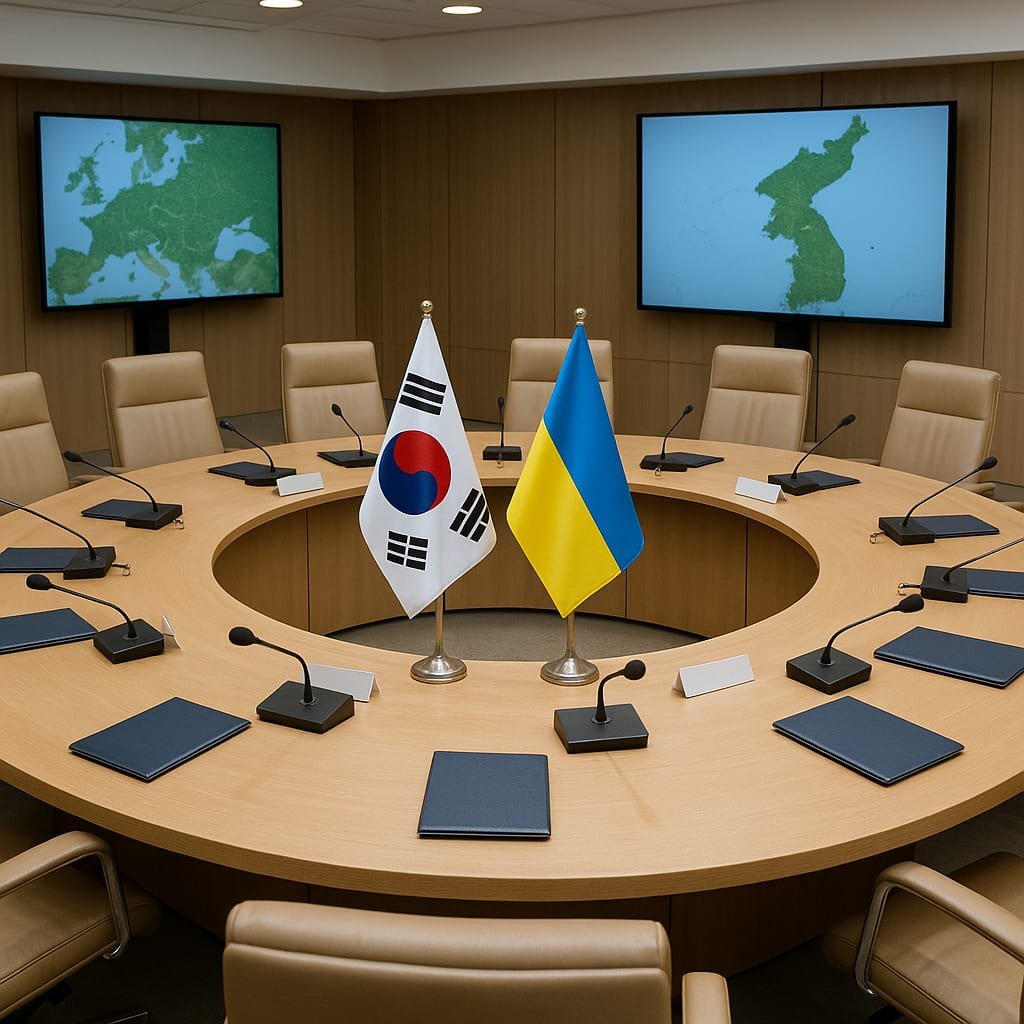
Seoul demands apology after Zelensky discloses North Korean POW transfer
Narrative Snapshot
Across outlets, there is broad alignment on the core elements: South Korea’s presidency publicly rebuked Ukraine after President Volodymyr Zelensky disclosed at the UN General Assembly that Kyiv had transferred two North Korean prisoners of war to Seoul, and Seoul says Kyiv later denied a prior confidentiality arrangement. Coverage diverges mainly in framing and emphasis. Hong Kong’s South China Morning Post and Qatar’s Al Jazeera foreground the diplomatic fallout and Seoul’s charge that Ukraine denied a nondisclosure deal, while Germany’s Deutsche Welle and Japan’s Japan Times stick to concise accounts of the accusation and the UN venue.
Two strands add texture. France’s Le Monde situates the POWs in a longer arc, noting they were captured in January 2025 after North Korea’s deployment in support of Russia, and India’s The Hindu highlights Zelensky’s line that they were “not easy to capture alive.” Russia’s RT escalates the rhetoric, characterizing the UN disclosure as a “PR stunt” and calling it a “blunder,” while also reporting Seoul’s warning that it is reviewing “further necessary measures.” A second South China Morning Post report extends the stakes beyond protocol, relaying analyst views that the dispute could jeopardize South Korea’s future ties and support for Kyiv and fuel domestic opposition pressure in Seoul.
What Happened
After President Volodymyr Zelensky told the UN General Assembly that Ukraine had sent two captured North Korean soldiers to South Korea—adding they were “not easy to capture alive”—Seoul said Kyiv had violated a confidentiality agreement and then denied that such an accord existed. South Korea’s presidential office issued a statement expressing “strong regret” over Ukraine’s “unilateral disclosure” and its “subsequent false public statement denying the existence of an agreement,” and demanded an official explanation and apology, according to statements reported by South China Morning Post and RT. Deutsche Welle likewise reports that Ukraine has denied the deal’s existence. Le Monde adds that the two North Korean soldiers were captured by Ukraine in January 2025 after Pyongyang deployed forces in support of Russia. RT reports that Seoul is reviewing unspecified “further necessary measures.”
Why It Matters
The episode tests the trust underpinning wartime coordination and political support. The dispute has immediate bilateral implications: analysts cited by the South China Morning Post warn South Korea’s future ties with and support for Ukraine could be at risk, and note the row provides ammunition to Seoul’s domestic opposition. It also intersects with a broader alignment picture. Le Monde’s account that North Korean personnel were deployed in support of Russia and captured by Ukraine underscores the war’s widening network of participants and the sensitivities around handling POWs from third states. The UN platform amplified the diplomatic stakes by shifting a private transfer into a public signal. For decision-makers, the question is whether a disagreement over confidentiality becomes a constraint on practical cooperation, messaging discipline, and assistance, or whether it is contained through clarification and apology.
Diverging Narratives
The principal factual contention is whether a nondisclosure agreement existed. South Korea asserts there was such an accord and accuses Ukraine of both breaking and denying it, as reported by Al Jazeera, South China Morning Post, Deutsche Welle, and Bangkok Post. Deutsche Welle explicitly notes that Ukraine denied the deal’s existence, leaving an unresolved gap in the public record about the agreement’s terms or even its reality. The characterization of Zelensky’s UN remarks also varies by outlet. RT labels the disclosure a “PR stunt” and a “blunder,” a framing not reflected in the more neutral language used by Deutsche Welle, Japan Times, and Al Jazeera. The Hindu and Le Monde draw attention to Zelensky’s comment that the soldiers were “not easy to capture alive,” an emphasis absent from other reports but material to how the episode is perceived. South China Morning Post’s subsequent analysis piece advances the policy stakes—potential risk to ties and support—where other outlets largely confine themselves to the immediate diplomatic exchange. RT alone reports Seoul’s review of “further necessary measures,” which other sources do not detail.
What Happens Next
Two decision points are clear from the coverage. First, whether Kyiv offers the “official explanation and apology” Seoul demands. An apology or clarifying statement could de-escalate the dispute; maintaining denial of any nondisclosure deal, as reported by Deutsche Welle, would sustain the rift. Second, how Seoul operationalizes its response. RT reports officials are reviewing “further necessary measures”; any move to recalibrate support to Ukraine or to formalize new communication protocols would signal a harder line, whereas silence or reaffirmation of cooperation would indicate containment.
Analysts should watch for signals highlighted by the South China Morning Post: shifts in South Korea’s stated support posture toward Kyiv and how the opposition leverages the episode domestically. Monitoring whether Ukrainian officials address the agreement claim directly, and whether South Korean briefings provide specifics on the alleged terms, will indicate whether this remains a dispute over process or evolves into a substantive constraint on bilateral engagement.