
Israeli outlets report Netanyahu held unannounced Abu Dhabi meeting with UAE president
Narrative Snapshot
Across Israeli and regional outlets, coverage converges on the secrecy and brevity of the Abu Dhabi encounter and on the absence of official confirmation from either government. Israeli reporting foregrounds the visit’s sensitivity: Haaretz situates it amid fallout from its own reporting that the Emirati leader warned Netanyahu shortly before October 7, while the Times of Israel underscores the lack of comment from both capitals. Palestinian and UK-based outlets emphasize operational details, with Al-Quds News describing multiple private planes and a one-on-one format, and Middle East Eye noting use of a businessman’s aircraft commonly employed by senior Israeli figures. Chinese state media, citing Israel’s Kan, highlights a substantive agenda focused on Iran and places the meeting within the Abraham Accords’ security logic and an earlier episode when the UAE denied a claimed May rendezvous. What is most at stake is credibility and coordination: the ability of Abu Dhabi and Jerusalem to manage high-level engagement on Iran and regional security while navigating public sensitivities shaped by October 7 retrospectives and visible diplomatic headwinds, such as the UN General Assembly backlash reported by Telesur.
What Happened
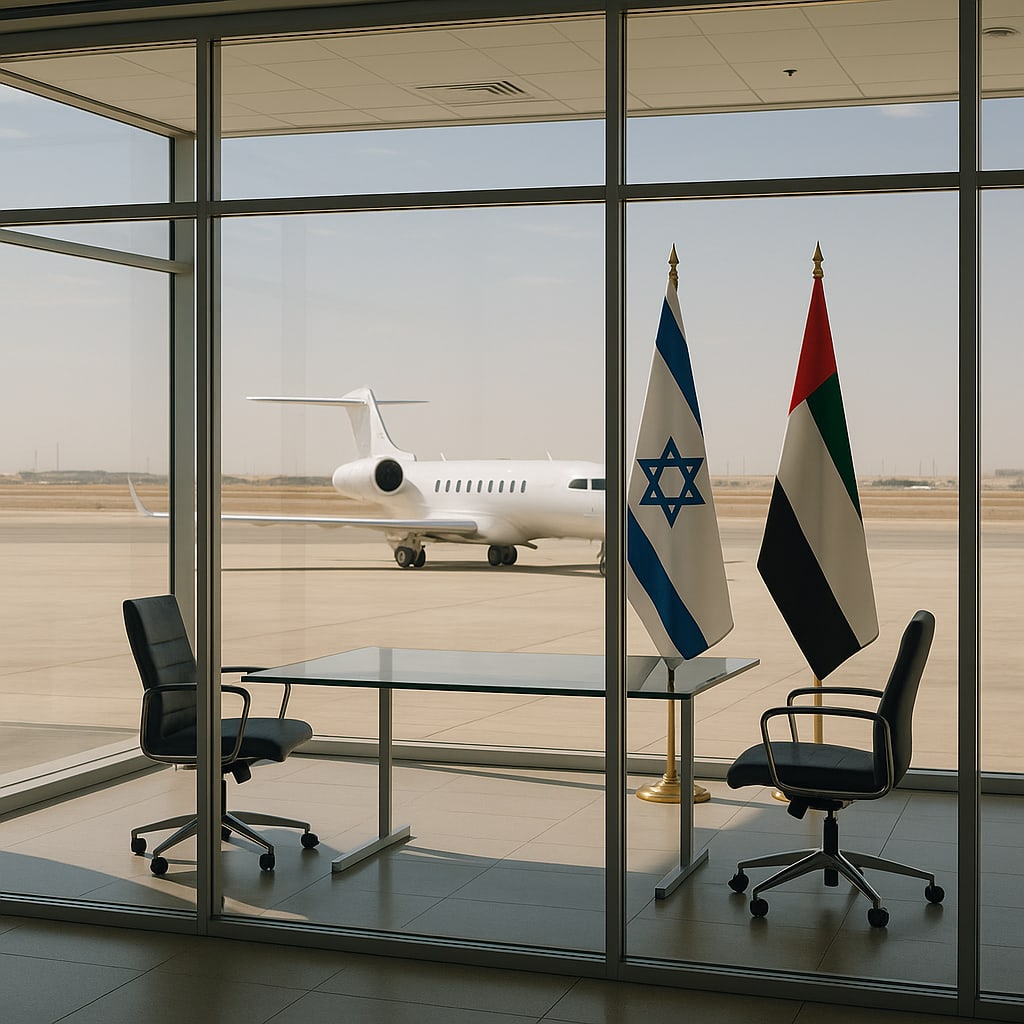
Israeli media reported that Prime Minister Benjamin Netanyahu flew to the United Arab Emirates on Sunday for a discreet meeting in Abu Dhabi with President Sheikh Mohamed bin Zayed Al Nahyan. The Times of Israel described a roughly four-hour stop, while CGTN, summarizing Israeli reports, said he spent the day in the country. Middle East Eye, citing Israel’s public broadcaster KAN and Channel 12, reported he traveled on a private plane owned by an unnamed Israeli businessman; Al-Quds News said multiple private aircraft carried Netanyahu and his entourage, and that the visit centered on an individual meeting between the two leaders. There was no immediate comment from Netanyahu’s office or the UAE Foreign Ministry, according to The Hindu, the Times of Israel, and CGTN. Haaretz linked the timing to fallout from its recent report that the Emirati president warned Netanyahu shortly before the October 7, 2023 Hamas attack. CGTN, citing Kan TV, said Iran was the main focus.
Why It Matters
A clandestine, comment-free leader-level engagement between Israel and the UAE tests the balance the Abraham Accords must strike between deepening security coordination and managing public optics. CGTN, relaying Kan TV, framed Iran as central to the talks and noted that since being targeted during the Iran war, the UAE has reinforced ties with the United States and Israel, underlining a structural convergence that persists even when public acknowledgment is constrained. Haaretz’s reminder of its report about a pre-October 7 warning situates the meeting within a charged accountability debate that can complicate overt diplomacy. CGTN also recalled an earlier instance this year when the UAE publicly denied a claimed Netanyahu meeting, pointing to recurring incentives for deniability. Telesur’s account of visible pushback to Netanyahu at the UN General Assembly days earlier adds context to the heightened diplomatic sensitivity surrounding overt engagements, especially on Gaza and Iran.
Diverging Narratives
Outlets differ on emphasis and detail. Haaretz and the Times of Israel anchor the episode in the shadow of reports that Sheikh Mohamed warned Netanyahu before October 7, foregrounding the political sensitivity surrounding the Israeli premier. By contrast, CGTN, citing Kan TV, stresses policy substance—specifically Iran—as the main focus, and situates the contact within the Abraham Accords’ security cooperation. On logistics and duration, accounts vary: the Times of Israel reports a four-hour visit; CGTN says he spent the day; Middle East Eye points to a businessman’s jet; Al-Quds News says several private planes and a one-on-one meeting dominated the schedule. Another tension lies in official posture: The Hindu, the Times of Israel, and CGTN all note the lack of comment from both governments, while CGTN reminds readers that the UAE previously denied a claimed May meeting—suggesting constraints on public disclosure. Telesur’s depiction of significant UNGA pushback to Netanyahu provides context not echoed elsewhere, reflecting divergent editorial priorities rather than directly conflicting facts.
What Happens Next
Two decision points will shape the trajectory. First, whether Abu Dhabi or Jerusalem acknowledges any aspect of the encounter. Continued silence would align with the prior May denial recalled by CGTN and maintain operational discretion; any confirmation or readout would signal confidence in publicly managing the relationship amid sensitivity highlighted by Haaretz and the Times of Israel. Second, whether Israel-linked outlets sustain the Iran framing. Further reporting from Kan or Channel 12, or any indirect policy signals, would indicate if the meeting fed into ongoing Iran coordination referenced by CGTN. Analysts should also watch for additional Israeli media follow-up on Haaretz’s pre-October 7 warning reporting, which could intensify the “fallout” Haaretz associates with the visit. Finally, given Telesur’s account of UNGA backlash, observe whether the UAE continues to avoid public association with Netanyahu, an indicator of how domestic and international optics condition the pace and visibility of Abraham Accords-era engagement.