
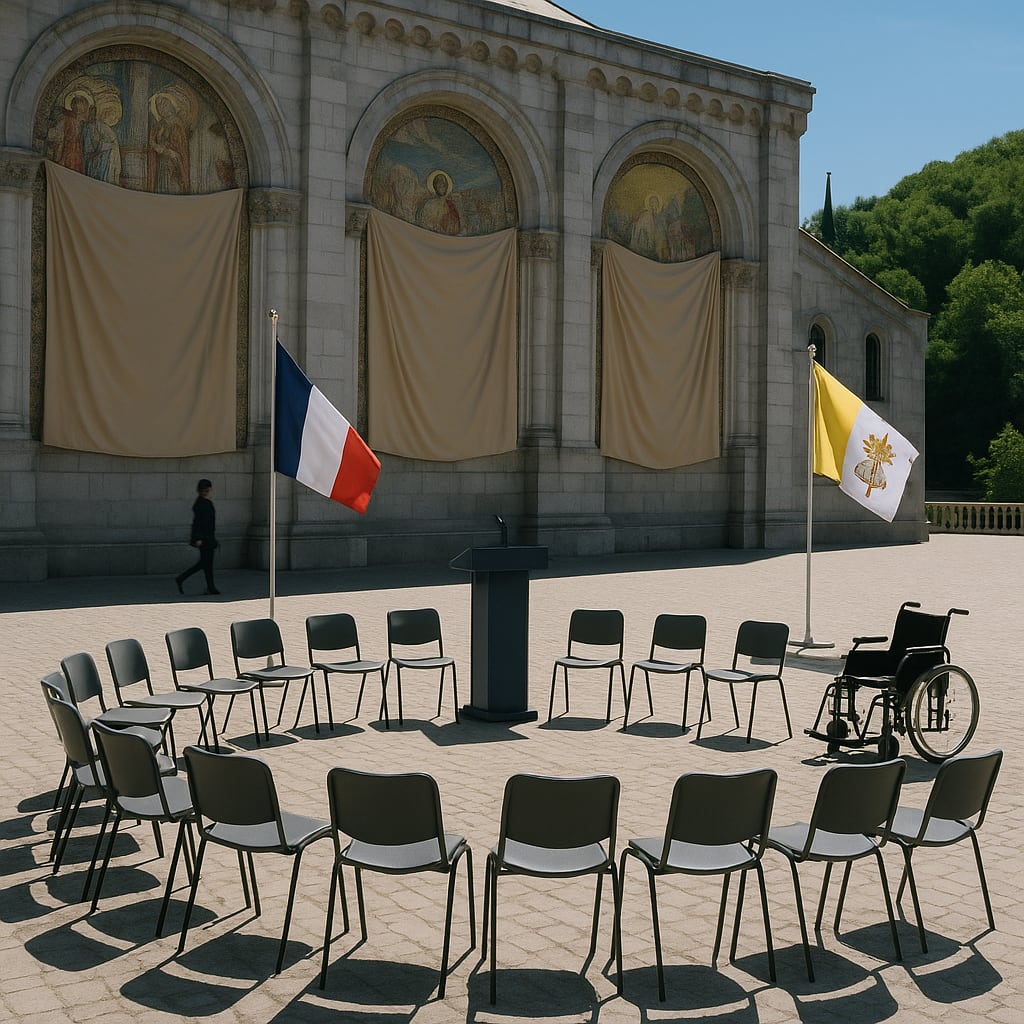
In Lourdes, Pope Leo XIV meets French abuse survivors, urges vigilance, and reiterates opposition to assisted dying
Narrative Snapshot
Across outlets, coverage converges on the abuse crisis as the defining frame of the visit: the pope’s language of “deep wounds” and “painful errors” and his private meeting with seven survivors anchor reports from Brazil, the UK, Germany, France, and Japan. Multiple sources highlight the appeal to continue “truth, justice, forgiveness, and reparations” and to maintain “maximum vigilance,” signaling a corrective and ongoing-process message rather than a single announcement.
French and Italian reporting adds institutional texture. Le Monde underscores both the exhortation to continue combating pedocriminality and, according to a survivor, the pope’s recognition of the “systemic nature” of the violence, while stressing that associations now want “actions.” ANSA and La Repubblica foreground a concrete symbolic gesture at Lourdes: the covering of mosaics by artist and former priest Marko Rupnik, who is accused of abuses.
A political read is present but not dominant. The South China Morning Post notes the pope’s call for “wise leaders” as elections approach, while Clarin situates the visit seven months before a presidential contest with Marine Le Pen leading polls and points to euthanasia and migration as sensitive touchpoints. Most Anglophone coverage keeps the focus squarely on accountability rhetoric and pastoral engagement rather than electoral dynamics.
Finally, the French context sharpened another policy edge: Le Monde reports that the pope reaffirmed opposition to assisted dying during the visit. Other international outlets largely omit this, emphasizing instead the scale of attendance and the rarity of an official papal trip to France in nearly two decades.
What Happened
On the third day of a four-day official visit to France—the first in nearly two decades—the pope traveled to Lourdes after two days in Paris that drew large crowds, including hundreds of thousands in the capital, according to France24. In Lourdes, he addressed bishops and worshippers, calling for the Church to heal “deep wounds,” acknowledge its “painful errors,” and eradicate the “scourge” of abuse, as reported by The Guardian, Folha de S.Paulo, BBC News, and Deutsche Welle. He urged French bishops to persevere with “maximum vigilance” and with prevention, truth, justice, forgiveness, and reparations, per Telesur and Le Monde. He then held a private, approximately two-hour, “emotional” meeting with seven survivors, Al Jazeera reported. Le Monde also notes he reaffirmed opposition to assisted dying. At Lourdes, mosaics by Marko Rupnik—an artist accused of abuses—were covered out of respect for victims, ANSA reported.
Why It Matters
The visit amplifies institutional accountability pressures within the Catholic Church in France and beyond. The appeals to “truth, justice, forgiveness, and reparations,” coupled with praise for “courageous” steps by French bishops and survivors’ calls for concrete measures, benchmark expectations for diocesan and Vatican follow-through on prevention, redress, and transparency (Deutsche Welle, Telesur, Le Monde). For policymakers, the Church’s handling of survivor engagement and reparative frameworks intersects with national legal processes, public health services for victims, and cooperation with civil authorities.
In France’s policy arena, the reaffirmation of opposition to assisted dying inserts a high-profile ecclesial stance into an active national debate, positioning Church arguments alongside secular legislative considerations (Le Monde). The trip’s timing—months before elections and amid campaigns where migration and end-of-life policy are salient—adds potential resonance in political discourse, even as much coverage centered on pastoral and accountability themes (Clarin, South China Morning Post).
Diverging Narratives
Accounts differ in emphasis and framing rather than in basic facts. Anglophone outlets foreground contrition and healing language—“deep wounds,” “painful errors,” and the need to “root out” abuse—while The Guardian notes he did not explicitly cite the French scandal’s scope even as he spoke in Lourdes. German reporting leans into institutional encouragement, highlighting “courageous” steps by French bishops (Deutsche Welle), whereas Le Monde pairs the exhortation to continue the fight against pedocriminality with survivor feedback that the pope acknowledged the violence’s “systemic nature,” and with civil society voices urging tangible action.
Italian and French outlets add symbolic and procedural specificity by detailing the covering of Rupnik’s mosaics at Lourdes as a gesture of respect for victims (ANSA, La Repubblica). By contrast, many international reports omit this, keeping focus on the survivor meeting and rhetoric. Political context is present in Clarin and the South China Morning Post, which link the visit to France’s looming elections and quote the pope’s appeal to “wise leaders,” but most coverage avoids electoral framing. Only Le Monde prominently features the concurrent stance on assisted dying, while other outlets center on abuse accountability and the uncommon nature of an official papal visit to France.
What Happens Next
Key decisions now sit with the French bishops’ conference and the Vatican regarding concrete follow-up on the pope’s call for prevention, truth, justice, forgiveness, and reparations. Indicators to watch include new or expanded safeguarding measures, survivor compensation and support schemes, disclosure practices, and disciplinary processes—areas survivors and associations say require “actions” beyond statements (Telesur; Le Monde).
In France’s policy sphere, analysts should monitor whether the papal reaffirmation against assisted dying is invoked in parliamentary debate or campaign messaging as elections approach, a context flagged by Clarin and the South China Morning Post. Within Church institutions, the choice at Lourdes to cover Rupnik’s mosaics signals sensitivity to the presence of works by accused clergy; observers can track whether similar steps are adopted elsewhere or formalized in guidance (ANSA). Finally, official communiqués following the “emotional” survivor meeting will indicate how commitments translate into timelines and implementation (Al Jazeera).