
Swiss voters reject bid to harden neutrality, keep case-by-case sanctions discretion
Narrative Snapshot
Across outlets, coverage converges on the scale and clarity of the rejection and on who backed the initiative, but diverges in framing its geopolitical valence. European media stress policy consequences for sanctions and cooperation with Western partners: the Guardian highlights that the proposal would have required curbing cooperation with NATO and abandoning sanctions against Russia, while the BBC underscores a UN-approval threshold for any sanctions. The Japan Times advances the policy bottom line via Foreign Minister Ignazio Cassis: Switzerland retains case-by-case discretion on economic sanctions.
Several outlets characterize the political sponsors differently. The Guardian calls the Swiss People’s party (SVP/UDC) “far-right,” the South China Morning Post describes it as “right-wing populist,” and the Bangkok Post says the push came from the “hard-right.” Telesur identifies the civil sponsor, Pro Suiza, and details its aim to entrench “perpetual and armed” neutrality. Opponents’ “pro-Russian” label appears in the Bangkok Post and SCMP; ANSA notes the initiative was “well viewed from Moscow.”
Interpretations of what the result signals for Switzerland’s strategic orientation also vary in tone. La Repubblica casts it as marking limits to a sovereignty push and reinforcing Bern’s progressive approach toward Europe, while Le Monde reads the vote as endorsing a Western-aligned pragmatism that preserves sanctions on Russia. The SCMP flags that, despite consensus on neutrality’s importance, the referendum surfaced deeper disagreement over how neutrality should be defined in practice.
What Happened
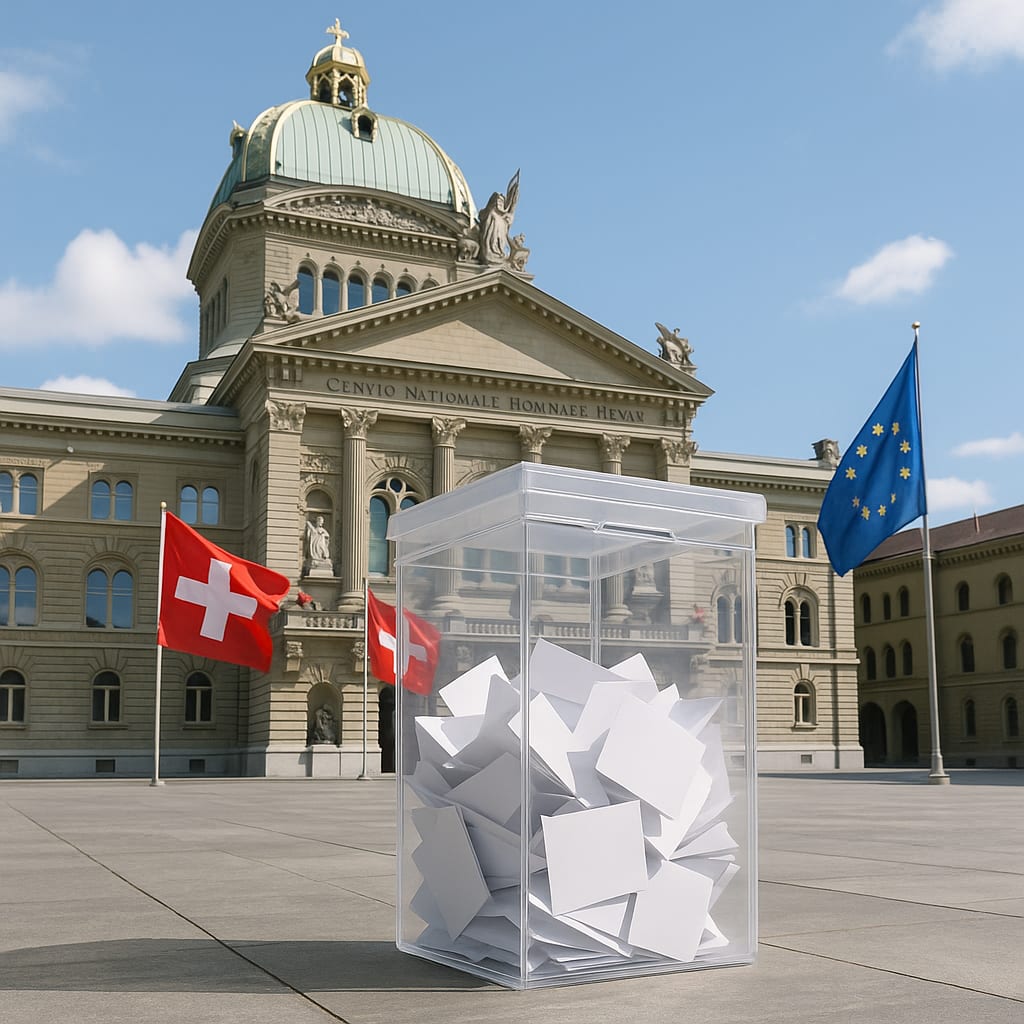
Swiss voters rejected a popular initiative to codify a stricter interpretation of neutrality in the federal constitution. Final tallies reported about 70% voting no, with all cantons opposed, according to final results cited by the Guardian and the South China Morning Post. Preliminary figures published by the Federal Statistical Office and reported by TASS showed 68.6% voting no with 46.36% turnout, aligning with projections from Al Jazeera and Deutsche Welle that signaled defeat for the measure. The proposal, championed by the SVP/UDC and the conservative nationalist group Pro Suiza, sought to enshrine “perpetual and armed” neutrality and would have constrained sanctions unless approved by the UN, while also curbing cooperation with NATO, according to Telesur, the BBC, and the Guardian. The government and parliament had urged rejection, as Telesur reports. Swiss neutrality has been constitutionally enshrined since 1848, Deutsche Welle notes.
Why It Matters
The vote preserves the federal government’s discretion to calibrate foreign policy and sanctions within Switzerland’s longstanding neutrality framework. Foreign Minister Ignazio Cassis emphasized that rejection enables continued case-by-case decisions on economic sanctions, the Japan Times reports—critical for alignment with EU measures on Russia that multiple outlets note would have been jeopardized by the initiative. By maintaining flexibility rather than a rigid constitutional formula, Bern keeps room to cooperate with Western partners, including NATO, without formal alliance commitments, as the Guardian frames the counterfactual.
Beyond immediate policy levers, several European outlets read the outcome as reinforcing Switzerland’s recent trajectory of pragmatic engagement with Europe and the Western bloc: La Repubblica highlights continuity in Bern’s European approach, and Le Monde argues voters endorsed a Western-aligned pragmatism that sustains sanctions on Russia. ANSA notes the proposal had been well regarded in Moscow, underscoring the geopolitical signaling embedded in the referendum’s defeat.
Diverging Narratives
Outlets agree on the decisive margin and the political sponsorship but differ in how they interpret the underlying meaning. For some, the measure’s defeat is primarily a foreign policy clarification: the BBC focuses on the sanctions architecture that would have required UN authorization, and the Japan Times underscores retained executive discretion on sanctions. The Guardian and Le Monde extend this to a broader alignment story, highlighting preserved cooperation with NATO and ongoing sanctions on Russia as indicators of Western-oriented pragmatism.
Others situate the vote within Switzerland’s domestic sovereignty debates. La Repubblica links the outcome to the limits of a sovereignty movement, pairing it with the separate defeat of a food self-sufficiency proposal on the same day. Framing of the initiative’s geopolitical tilt also varies: the Bangkok Post and SCMP report that opponents dubbed it “pro-Russian,” while ANSA says it was viewed positively in Moscow. Meanwhile, Telesur centers on the legal text and institutional posture—“perpetual and armed” neutrality and mechanisms to restrict alignments—rather than geopolitical labels. The SCMP cautions that, despite consensus on neutrality’s value, the contest exposed unresolved disagreements over what neutrality should practically entail.
What Happens Next
Policy discretion now remains with the federal executive and parliament, which had opposed the initiative. Analysts should watch how Switzerland handles forthcoming sanctions decisions, since Cassis’s case-by-case approach remains intact, as reported by the Japan Times, and EU-aligned measures are preserved, per ANSA and Le Monde. Any new EU or multilateral sanctions packages on Russia will test the durability of Switzerland’s current stance and its pace of alignment.
Cooperation with NATO will continue without the additional constitutional constraints the Guardian described, but the depth of that cooperation will be shaped by incremental policy choices rather than a referendum mandate. Domestically, the SVP/UDC and Pro Suiza may recalibrate their neutrality agenda following the defeat noted by La Repubblica and Telesur; signals to watch include whether they pursue narrower legislative initiatives or another popular measure, and how government messaging frames neutrality amid the “deep disagreement” over its meaning highlighted by the SCMP.