
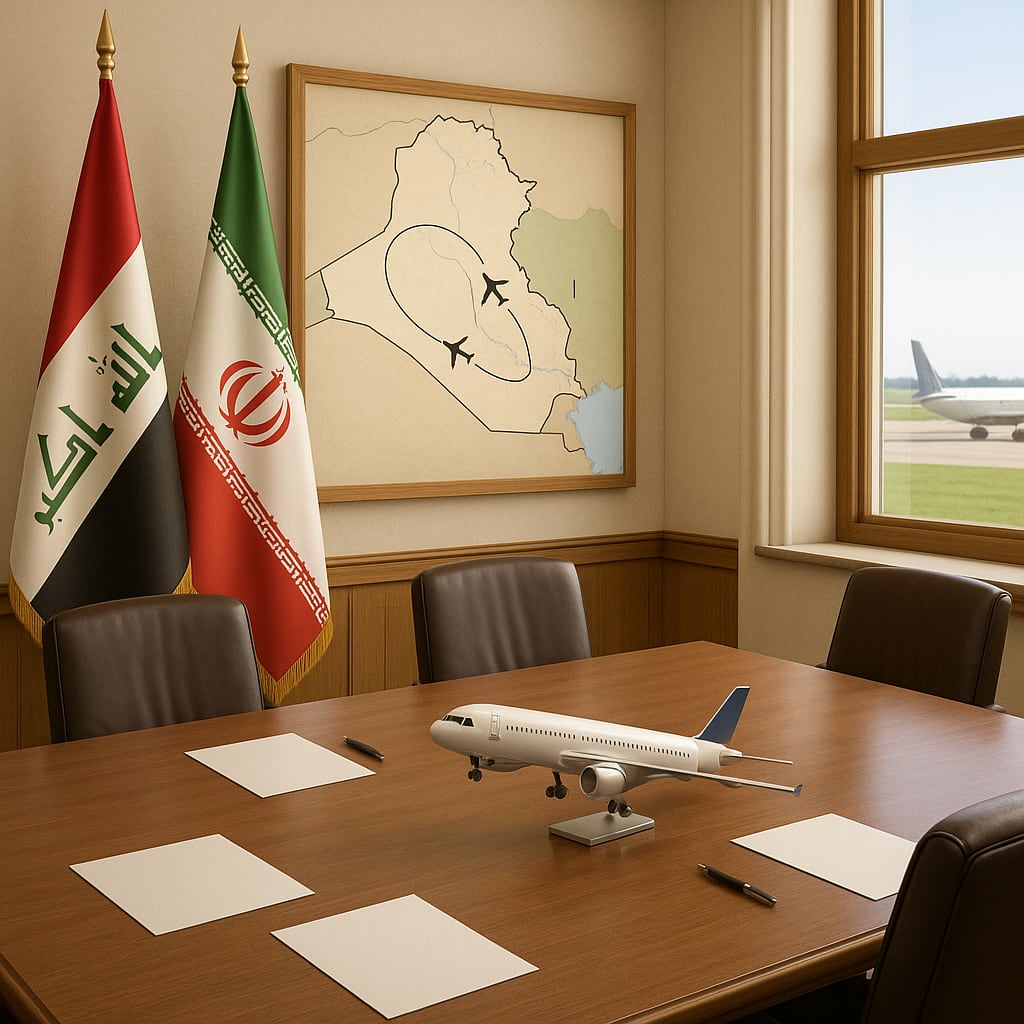
Iraq halts then restarts Najaf–Iran flights as Baghdad seeks a U.S. sanctions waiver
Narrative Snapshot
Across outlets, there is agreement that U.S. secondary sanctions on Iran’s aviation sector prompted Iraqi airports to restrict service to Iranian carriers, with Najaf seeing the sharpest disruption before flights were restored. Iranian and regional reporting emphasizes the sanctions’ human and social impacts—on pilgrims, patients, and students—while Western and Asian coverage centers on policy mechanics such as exemptions and licensing. Iranian state-linked sources underscore public pushback and a diplomatic response at the UN, contrasting with reporting that foregrounds Baghdad’s negotiations with Washington for a narrowly tailored waiver. There is also a notable split over agency: several reports attribute the halt to an Iraqi government directive, while others say service providers withdrew support under sanctions pressure. What is most at stake is whether a limited carve-out around religious travel becomes a durable channel for cross-border mobility despite broader enforcement.
What Happened
U.S. Treasury warnings of secondary sanctions against foreign entities servicing Iranian airlines took effect around September 23, with Washington threatening to cut violators off from the dollar system and, according to RT, targeting 27 Iranian carriers (RT; Middle East Eye, Sept 22). Iranian officials initially said foreign flights would continue and that routes to Istanbul, Baku, and Najaf were operating (IRNA, Sept 22; Middle East Eye, Sept 22). By September 25, Najaf Airport suspended all Iranian flights following a directive from the prime minister’s office, and Al Jazeera reported a broader halt across Iraqi airports serving Iranian routes (Middle East Eye, Sept 25; Al Jazeera, Sept 25). Baghdad then sought U.S. exemptions on humanitarian grounds, citing pilgrims, students, and patients (Middle East Eye, Sept 27; The Hindu). Amid protests in Najaf and Karbala and a UN complaint by Tehran, Iraqi Airways resumed Najaf–Iran flights as a U.S. one‑month waiver for pilgrim traffic was under consideration (Tehran Times, Sept 28; Al Jazeera, Sept 28; Middle East Eye, Sept 28; South China Morning Post).
Why It Matters
The episode illustrates how U.S. secondary sanctions reshape third-country compliance behavior in civilian aviation, pressuring airports, fuel suppliers, and ground handlers far beyond U.S. jurisdiction (Deutsche Welle; RT). For Iraq, the measures intersect directly with religious mobility and medical and educational travel between two tightly linked societies, forcing Baghdad to balance domestic constituencies with exposure to U.S. financial penalties (Middle East Eye, Sept 25, 27). The emerging, time‑bound waiver for Najaf suggests Washington may calibrate enforcement through narrow humanitarian channels, potentially establishing a template for limited connectivity in otherwise sanctioned networks (South China Morning Post; Middle East Eye, Sept 28). Tehran’s UN complaint adds an institutional layer, signaling that Iran will pair local pressure and public protest narratives with multilateral démarches to contest enforcement’s spillovers (Al Jazeera, Sept 28; Tehran Times, Sept 28). For decision-makers, this underscores the operational leverage of licensing and the policy trade-offs embedded in targeted exemptions.
Diverging Narratives
Accounts diverge on causality and control. Middle East Eye attributes Najaf’s suspension to a directive from Iraq’s prime minister’s office, while IRNA quotes Iraq’s ambassador in Tehran asserting Baghdad “had not ordered a halt,” and Telesur reports that foreign service companies withdrew ground services for fear of U.S. penalties (Middle East Eye, Sept 25; IRNA, Sept 28; Telesur). There is also inconsistency on scope and timing: Iran’s aviation authorities said foreign flights were continuing and highlighted ongoing service to Najaf on September 22, even as Al Jazeera and Clarín reported cancellations to Baghdad and Muscat ahead of the sanctions trigger (Middle East Eye, Sept 22; IRNA, Sept 22; Al Jazeera, Sept 22; Clarín). Framing differs by outlet. Tehran Times stresses sanctions’ social and economic costs and highlights street protests in Najaf and Karbala, while Deutsche Welle generalizes to regional unpredictability in travel and service provision (Tehran Times, Sept 27, 28; Deutsche Welle). On policy resolution, South China Morning Post reports a specific one‑month U.S. waiver for Najaf pilgrim flights under deliberation, whereas other outlets describe resumed service without detailing the licensing basis, leaving ambiguity about the durability and scope of the carve‑out (South China Morning Post; Middle East Eye, Sept 28; IRNA, Sept 28; Al Jazeera, Sept 28).
What Happens Next
Two decision points will shape the trajectory. First is U.S. licensing: a one‑month Treasury waiver for Najaf pilgrim flights is described as imminent, with the prospect of a more permanent waiver under discussion; whether Washington formalizes and extends this carve‑out will determine if resumed service remains stable or episodic (South China Morning Post). Second is Baghdad’s pursuit of broader exemptions “for certain Iraqi airports” on humanitarian grounds; signals from the prime minister’s office or state carrier on additional routes or airports would indicate whether the accommodation expands beyond Najaf (Middle East Eye, Sept 27; Middle East Eye, Sept 28). Operationally, watch whether ground service providers and fuel suppliers resume support where flights are authorized, given prior self‑deterrence, and whether Iran’s UN complaint evolves into further diplomatic steps, as these factors will affect the reliability of restored links (Telesur; Deutsche Welle; Al Jazeera, Sept 28).