
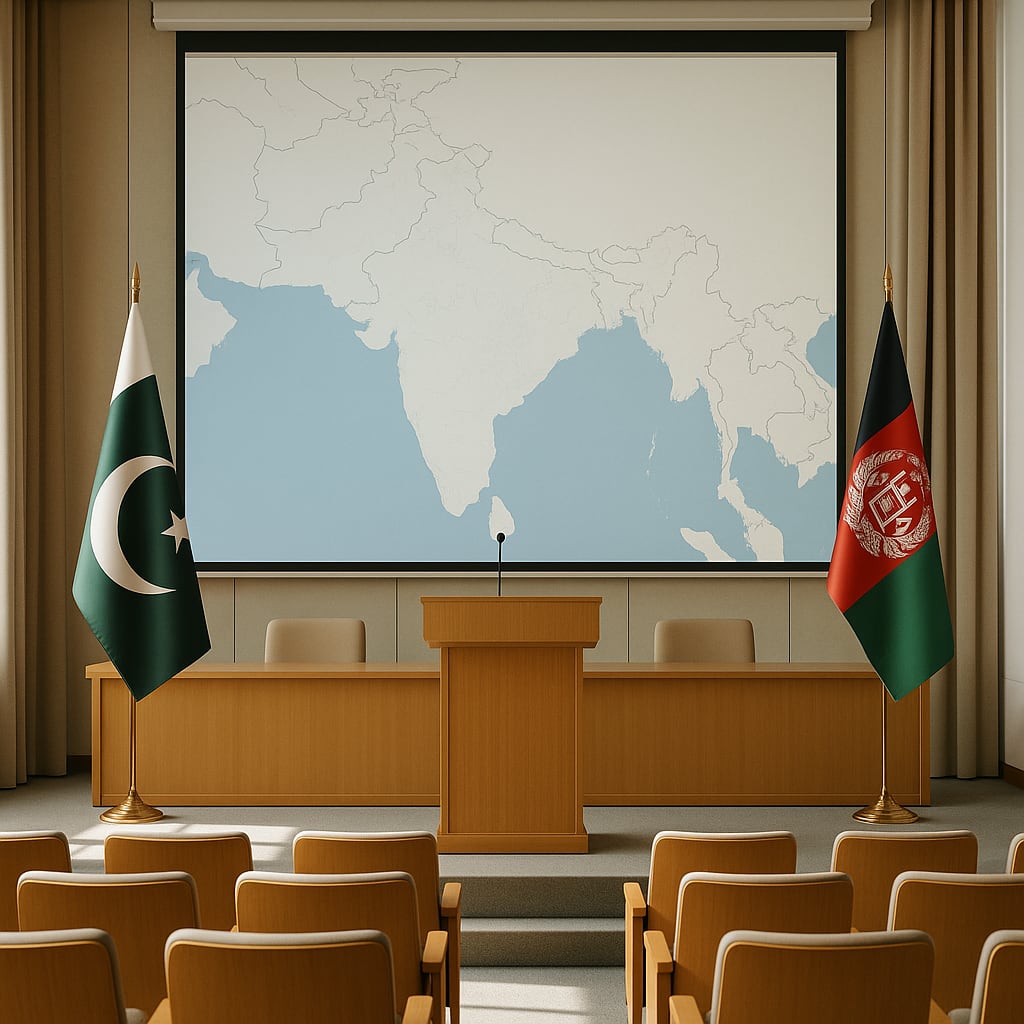
Pakistan conducts airstrikes in Afghanistan; Kabul reports civilian deaths while Islamabad cites militant targets
Narrative Snapshot
Across outlets there is broad agreement that Pakistani aircraft struck targets in Afghanistan’s Kunar and Helmand provinces, and that the two governments issued sharply conflicting casualty and targeting claims. Deutsche Welle and The Hindu present the competing official tallies side by side, with Islamabad asserting it hit militant hideouts and Kabul reporting civilian deaths, including women and children. Russian outlets TASS and RT emphasize the civilian toll and property damage reported by Afghan authorities, while Al Jazeera underscores that Afghan officials counted women and children among the dead. RFE/RL highlights Pakistan’s justification of “credible evidence” of militant activity.
Coverage diverges on how to interpret the pace and character of Pakistan’s actions. Bangkok Post, citing AFP, calls the Helmand strikes “rare,” whereas RFE/RL describes “another round” of strikes and RT reports it was the third such action in two weeks. The Diplomat situates the episode in a longer arc: one analysis argues Islamabad’s response reflects the failure of months of diplomacy and external mediation, while another contends Pakistan’s history of enabling violent actors shapes how its current claims are received. India’s The Hindu adds a mirror accusation from Kabul a day earlier, reporting Afghanistan’s Defense Ministry said its forces killed 41 insurgents who had entered Afghanistan “with the support” of Pakistan, underscoring mutually reinforcing claims of cross-border culpability.
What Happened
Pakistan carried out airstrikes on October 1 against sites in Afghanistan’s Kunar and Helmand provinces. Pakistan’s government said the operation, based on “credible evidence” of militant activity, targeted militant hideouts and killed 22 fighters, according to RFE/RL and Deutsche Welle. Afghan officials said at least nine civilians, including women and children, were killed and 11 wounded; they condemned the action as aggression that violated recognized principles, reports Deutsche Welle, Al Jazeera, and RT. TASS cited Afghan authorities as saying three buildings were destroyed. Bangkok Post, citing AFP, described the Helmand strike as a rare move. RT reported it was the third Pakistani strike inside Afghanistan in two weeks. The Hindu reported the day before that Afghanistan’s Defense Ministry claimed to have killed 41 insurgents who crossed from Pakistan “with the support” of Pakistan. The Diplomat characterized the clashes as reflecting failed diplomacy and mediation.
Why It Matters
The strikes test already fraught Afghanistan–Pakistan relations and the fragile norms governing cross-border use of force. Kabul’s statement that the action violated “recognized principles” casts the episode as a sovereignty breach, while Islamabad’s framing of precise, intelligence-led counterterrorism activity highlights a security-first interpretation, as reported by RT, RFE/RL, and Deutsche Welle. The Diplomat’s analysis that months of diplomacy and external mediation have failed underscores the erosion of bilateral crisis-management channels. A parallel Diplomat commentary suggests Pakistan’s historical support for armed actors continues to shape regional perceptions of its security claims, complicating efforts to build trust.
The United States’ engagement—via a meeting between the U.S. Commission on the Afghanistan War and Pakistan’s army chief days earlier—signals international attention to the regional security environment and Pakistan’s role, Telesur reports. Conflicting casualty accounts and differing portrayals of the strikes’ frequency risk entrenching narratives that impede coordinated border security, with potential repercussions for multilateral attempts to stabilize cross-border dynamics.
Diverging Narratives
Pakistan presents the strikes as targeted counterterrorism, asserting “credible evidence” and precision against militant hubs that yielded 22 militant fatalities, according to RFE/RL, Deutsche Welle, and RT. Afghan authorities frame the action as an “act of aggression” that killed civilians, including women and children, and violated recognized principles, as reported by Deutsche Welle, Al Jazeera, and RT; TASS adds claims of destroyed buildings. The casualty and target profiles thus stand in direct contradiction, with no independent verification offered in the cited reports.
Accounts also differ on operational tempo and precedent. Bangkok Post, drawing on AFP, calls the Helmand strike rare, while RFE/RL’s “another round” and RT’s claim of a third strike in two weeks depict an ongoing campaign. The Hindu’s report that Afghanistan’s Defense Ministry killed 41 insurgents crossing from Pakistan “with the support” of Pakistan introduces a mirrored accusation, juxtaposing Kabul’s charge of Pakistan-backed infiltration with Islamabad’s assertion that threats emanate from Afghan territory. The Diplomat’s pieces frame these claims within a breakdown of diplomacy and long-running debates over Pakistan’s past relationships with armed groups, which influence how each side’s assertions are weighed.
What Happens Next
Three decision points are salient. First, Pakistan’s calculus on further cross-border action: RFE/RL’s description of “another round” and RT’s reporting of multiple recent strikes imply an operational rhythm that Islamabad may sustain or pause; signals would include official statements citing new “credible evidence” or, conversely, announcements of restraint. Second, Kabul’s response posture: The Hindu’s account of Afghan forces engaging alleged infiltrators from Pakistan suggests a willingness to act militarily at the frontier; watch for additional Afghan claims of interdictions or for formal protests and diplomatic channels being activated. Third, the diplomatic track flagged by The Diplomat as having failed: indicators of renewed external facilitation or bilateral talks would mark a shift from coercion to negotiation.
International engagement bears watching. Telesur’s report of U.S. Commission discussions with Pakistan’s army chief suggests external stakeholders are assessing regional security; public readouts or follow-on engagements could signal pressure for de-escalation or support for specific border-security measures.