
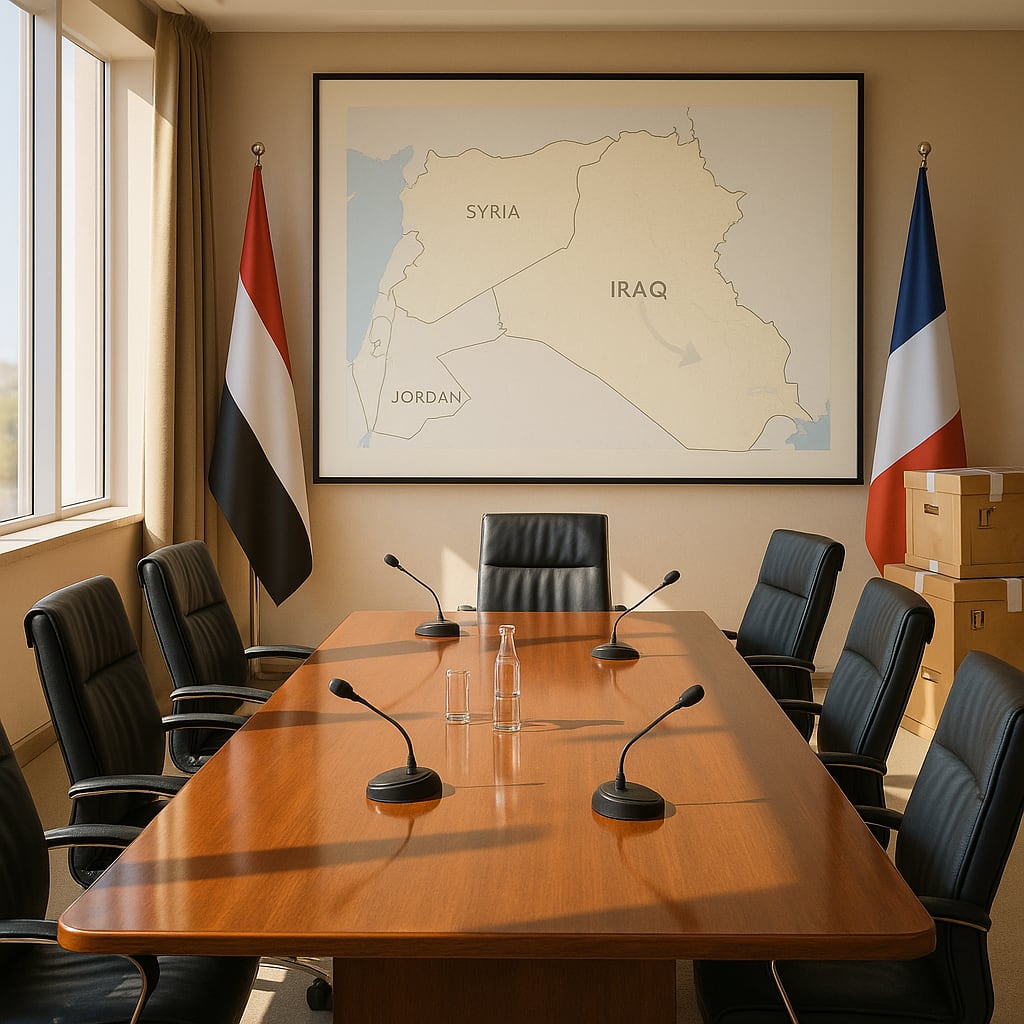
US and coalition complete Iraq withdrawal, ending Operation Inherent Resolve as Baghdad marks sovereignty and Kurds warn of new risks
Narrative Snapshot
Across outlets, there is broad agreement that the coalition has formally concluded its Iraq mission and that Iraqi forces are assuming primary security responsibilities. US and UK media emphasize the mechanics of closure and continuity elsewhere: the departure from Erbil Air Base, conclusion of Operation Inherent Resolve in Iraq, and the relocation of the coalition’s headquarters to Jordan with operations continuing in Syria (Fox News; BBC; Middle East Eye). European and regional coverage repeatedly ties the exit to Iraqi sovereignty, noting official celebrations and parades in Baghdad and Najaf (Al Jazeera English; France24; Deutsche Welle).
Where narratives diverge most sharply is over the balance sheet and risk horizon. US military statements frame the mission as a success that left Iraqi forces and Kurdish Peshmerga capable of managing threats (Fox News; Middle East Eye). By contrast, Russian and Iranian outlets cast the withdrawal as the denouement of a failed or “disgraceful” intervention, predicting instability and even civil war, and crediting regional “resistance” with forcing the exit (TASS; RT). Several mainstream reports foreground unresolved internal security questions: the status and behavior of militias, foreign influence, and gaps in Kurdish-region air defenses amid cross-border drone activity (Deutsche Welle; Toronto Star; Clarin; Middle East Eye).
What is most at stake, according to this cross‑section, is the integrity and capacity of Iraq’s state security architecture without a coalition backstop, the trajectory of armed non‑state actors, and how regional actors—especially Iran and Iran‑aligned groups—interpret and respond to the new balance. The coalition’s geographic pivot to Jordan and continued counter‑ISIS work in Syria underscores that the theater has shifted rather than ended (Fox News; Middle East Eye).
What Happened
The Pentagon and US Central Command said coalition troops and equipment departed Erbil Air Base, formally ending Operation Inherent Resolve in Iraq after a 12‑year campaign against ISIS (Fox News; Middle East Eye). The move implements a withdrawal framework agreed with Baghdad, described as a transition to an “Iraqi‑led security effort,” with Iraqi forces and Peshmerga responsible for keeping ISIS suppressed (Middle East Eye; BBC). CENTCOM commander Adm. Brad Cooper credited Iraqi and Kurdish forces with having the capacity and operational independence to manage threats (Fox News). Coalition headquarters shifts to Jordan, with operations continuing in Syria (Fox News). Iraqi authorities marked the handover with military parades and a “Sovereignty Day” celebration (Al Jazeera English; France24). Reporting highlights mixed public reactions: pro‑Iran factions celebrated, while concerns rose in the Kurdish region about air defenses and vulnerability to cross‑border strikes (Toronto Star; Clarin; Middle East Eye).
Why It Matters
The withdrawal reconfigures the regional security architecture by ending a long‑running foreign troop presence in Iraq while preserving a transborder counter‑ISIS posture from Jordan and Syria (Fox News; Middle East Eye). It consolidates Baghdad’s political goal of formal sovereignty over bases and operations—a demand repeatedly referenced in European and regional coverage—and tests the state’s capacity to manage security without a coalition tripwire (BBC; Al Jazeera English; France24; Deutsche Welle). The move also shifts the center of gravity in Iraq’s contest between state forces and armed groups whose futures remain unsettled, an uncertainty several outlets flag as consequential for rule of law and foreign influence (Deutsche Welle; South China Morning Post).
For decision‑makers, the outcome will inform how host‑nation agreements and timelines shape coalition posture and burden‑sharing in conflict theaters. It also sets a precedent for coalition drawdowns that maintain theater‑adjacent operations, with implications for legal authorities, basing access, and intelligence sharing as counter‑ISIS efforts continue next door (Fox News). Regionally, the framing battles—sovereignty for Baghdad versus “victory” for Iran‑aligned actors—will color deterrence dynamics and diplomatic engagement (RT; Al Jazeera English; SCMP).
Diverging Narratives
US military and coalition messaging centers on mission accomplishment and partner capacity: the Pentagon called the drawdown the success of a 12‑year campaign and a move to Iraqi‑led security, while CENTCOM said ISIS no longer poses a systemic threat to Iraq’s national security and credited Iraqi forces and the Peshmerga with operational independence (Middle East Eye; Fox News). Several Western and regional outlets echo the sovereignty framing, highlighting official celebrations and the political symbolism of the final handover (Al Jazeera English; France24; BBC).
Counter‑narratives depict the withdrawal as failure or defeat. Russian and Iranian sources assert that the US is leaving behind instability, with one Russian expert predicting a country on the brink of civil war and growing Kurdish autonomy, and Iran’s IRGC hailing the exit as a “historic victory” for the “revolutionary fighters of the Islamic world” (TASS; RT). Left‑leaning Latin American coverage revisits the 2003 invasion’s false WMD premise and tallies the human and financial costs, casting the entire intervention as illegitimate and destructive (Telesur English; Middle East Eye).
A third strand focuses on unresolved risks rather than verdicts. German and French coverage underscores questions about militias, foreign forces, and the state’s future security capacity (Deutsche Welle; France24). Reports from Iraq and the Kurdish region point to immediate vulnerabilities, including recent Iranian drone strikes on Kurdish opposition targets and concern over inadequate air defenses as the coalition departs (Middle East Eye; Clarin; Toronto Star). Asian coverage notes fears that pro‑Iran factions could feel emboldened (South China Morning Post).
What Happens Next
Three decision points emerge. First, Baghdad’s approach to militias and foreign‑aligned armed actors: outlets note delays and open questions around disarmament and integration, with implications for public security and state authority (Deutsche Welle; SCMP). Indicators include government moves on militia regulation, shifts in attack patterns, and public messaging from pro‑Iran groups (Toronto Star; SCMP).
Second, security in the Kurdish region amid cross‑border pressure. Concerns over air defense gaps and recent Iranian drone strikes highlight the need for Baghdad‑Erbil coordination and potential capability upgrades (Clarin; Middle East Eye). Watch for Iraqi or regional responses to drone activity, air defense procurements, and intra‑Iraqi security arrangements.
Third, the coalition’s posture beyond Iraq. With headquarters moving to Jordan and operations continuing in Syria, the extent and tempo of counter‑ISIS activity, and how regional tensions shape access and cooperation, will signal durability of the reconfigured mission (Fox News; Middle East Eye). Fox News also situates the withdrawal in a changed environment, noting recent direct US‑Iran conflict earlier this year, which may shape risk calculations going forward (Fox News).