
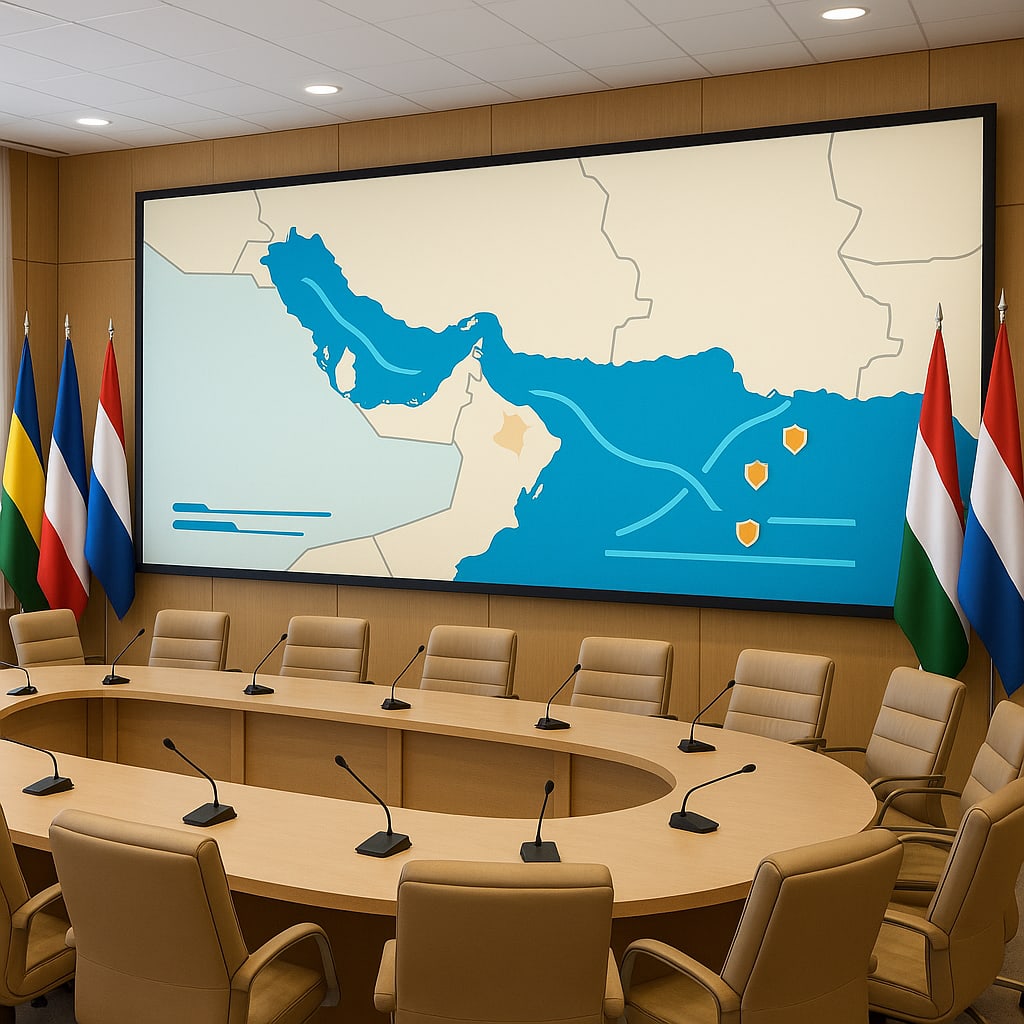
U.S. sends third carrier and Patriot batteries to Gulf, adds thousands of troops amid Iran tensions
Narrative Snapshot
Across outlets, there is broad agreement on the shape of the U.S. buildup: a third aircraft carrier centered on the USS Theodore Roosevelt is moving toward the Gulf, and additional air defenses are being emplaced in Saudi Arabia and Qatar to shield oil and gas infrastructure, with reporting attributing the Patriot deployments to Axios (TASS; Middle East Eye; Haaretz). Several sources tie the force movements to statements by President Donald Trump that increased strikes on Iran are possible after the November 3 U.S. elections (Japan Times; RT; Clarín).
The largest divergences are over scale and timing. Reported troop increments range from roughly 9,000 (Clarín; RT) to 10,000 (Japan Times; ANSA; Haaretz; Telesur), while baseline figures span “more than 20,000” already deployed (RT, citing AP) to “50,000 troops” as part of a broader deployment that includes F-35s and Marines (Al Jazeera; Telesur). Timelines for the Roosevelt’s arrival vary from the first half of November (Corriere della Sera) to late November (Telesur; ANSA). Not all outlets reference the amphibious component; where detailed, Telesur describes the USS Makin Island Amphibious Ready Group with elements of the 13th Marine Expeditionary Unit.
Coverage also diverges in how causality and justification are framed. Italian reporting floats two recent security incidents—a FlyDubai flight episode and a failed attack on the Raf base—as potential rationales for renewed raids (Corriere della Sera). By contrast, TASS and Middle East Eye emphasize the defensive purpose of the Patriot batteries to protect energy sites, while RT foregrounds Trump’s coercive framing that Iran must accept a “very fair deal” or face consequences. Middle East Eye additionally notes Patriot batteries are in short supply, underscoring the priority Washington is placing on Gulf energy infrastructure.
What Happened
U.S. officials and multiple outlets report that Washington is sending a third aircraft carrier toward Iran, with the USS Theodore Roosevelt expected to arrive in November (Al Jazeera; Corriere della Sera; ANSA). Several reports add an amphibious element: the USS Makin Island Amphibious Ready Group with members of the 13th Marine Expeditionary Unit is also heading to the region (Telesur). Telesur says these forces will join the USS George H.W. Bush and USS George Washington already operating there, with arrivals projected by mid-to-late November (Telesur; ANSA; Corriere della Sera). In parallel, the U.S. has deployed additional Patriot air-defense batteries to Saudi Arabia and Qatar to protect key oil and gas facilities, per Axios reporting cited by TASS, Middle East Eye, and Haaretz. Reported troop increments range between about 9,000 and 10,000 (Clarín; RT; Japan Times; ANSA; Haaretz; Telesur). President Trump has said increased strikes on Iran are possible after the November 3 elections and dismissed a recent truce proposal from Tehran as insufficient (Japan Times; RT; Clarín).
Why It Matters
The deployments consolidate a layered U.S. posture that couples maritime power projection with point defense of critical energy infrastructure in Saudi Arabia and Qatar, explicitly identified as targets for protection (TASS; Middle East Eye; Haaretz). Moving a third carrier into the theater and adding an amphibious ready group widens strike and contingency options while visibly signaling resolve; Al Jazeera also reports F-35s and Marines as part of the broader buildup. Middle East Eye’s note that Patriot batteries are scarce underscores an allocation choice that prioritizes Gulf sites over other demands, a salient constraint for planners.
Politically, multiple outlets link the posture to President Trump’s stated willingness to resume large-scale strikes after the U.S. elections (Japan Times; RT), and to his rejection of Tehran’s most recent truce proposal (Clarín). That sequencing frames the deployments as coercive leverage as well as contingency preparation. For regional partners, the added defenses and carrier presence reinforce U.S. security guarantees around energy assets; for adversaries, they raise the potential costs of escalation.
Diverging Narratives
Numerical assessments vary sharply. RT, citing AP, says the additional forces would push the U.S. presence “to more than 20,000,” calling it unusually high, while Al Jazeera describes a “massive” deployment including 50,000 troops, F-35s, and Marines. Clarín and RT reference about 9,000 extra personnel, whereas Japan Times, ANSA, Haaretz, and Telesur cite roughly 10,000. Telesur adds that over 50,000 U.S. personnel are already in the region, a baseline not echoed elsewhere. Such discrepancies reflect differing sourcing and what each outlet includes in its count—incremental reinforcements versus total in-theater presence.
Intent is also framed differently. Italian coverage weighs whether the Roosevelt’s arrival is a tactical move or a step toward renewed conflict, and suggests the FlyDubai flight incident and a failed attack on the Raf base could be invoked to justify resuming raids (Corriere della Sera). By contrast, several outlets anchor causality to declared U.S. policy: Trump’s public statements that strikes are possible after the elections and that Iran must accept a “very fair deal” (Japan Times; RT). Meanwhile, TASS, Middle East Eye, and Haaretz center the deployments’ defensive rationale around safeguarding oil and gas infrastructure via the Patriot batteries, emphasizing Axios’s reporting and Middle East Eye’s observation that Patriots are in high demand and limited supply.
What Happens Next
Two decision points are explicit in the reporting. First is whether the White House orders renewed large-scale strikes after November 3, a step Trump has said is possible (Japan Times; RT). Analysts should watch for formal Pentagon tasking, changes in rules of engagement, or public framing that cites specific incidents, as Italian coverage suggests those could be used to justify action (Corriere della Sera). Second is how quickly the naval and Marine forces integrate upon arrival; outlets cite windows from early to late November for the Roosevelt and the Makin Island group (Corriere della Sera; Telesur; ANSA). The sequencing and exercises of these units will indicate readiness levels.
On the defensive track, confirmation of Patriot emplacement at designated oil and gas facilities in Saudi Arabia and Qatar would operationalize Axios’s reported intent (TASS; Middle East Eye; Haaretz). Clarity on troop totals—whether the increment is nearer 9,000 or 10,000, and how baselines are defined—will be signaled by any official U.S. briefings referenced by outlets such as the Wall Street Journal and AP as relayed in these reports (Telesur; RT; Haaretz).