
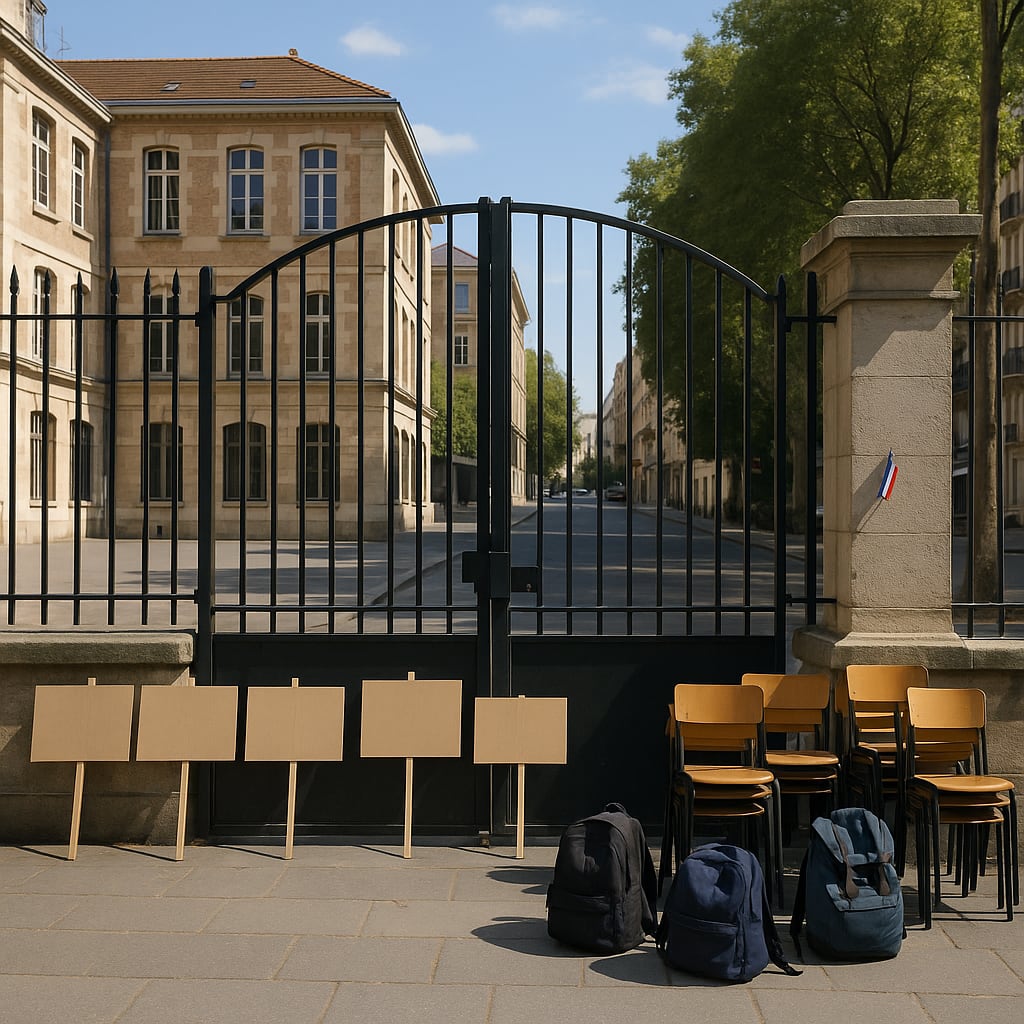
French student protests over education conditions escalate nationwide, triggering school closures, mass arrests, and competing claims over responsibility
Narrative Snapshot
Across outlets, coverage converges on the scale and breadth of the unrest and the core student demands. UK and French outlets detail grievances rooted in teacher shortages, overcrowding, long hours, and dilapidated buildings, with authorities shifting schools to online instruction and convening a crisis cabinet to manage disruption (The Guardian, France24). International reporting reinforces the reach of the protests beyond Paris, with clashes and fires in major cities and suburbs and continued school closures (Fox News, France24, Corriere della Sera).
The sharpest divergences concern accountability and policing. French officials explicitly attribute the movement’s ignition to the hard left, a line amplified in France24 and Fox News, while high-school unions publicly disavow violent incidents, reiterating demands for better conditions and committing to dialogue with the Education Ministry (Telesur English). Telesur English also foregrounds claims of heavy-handed policing and the detention of minors, while the Interior Ministry’s statements highlighted by RT and The Hindu stress “unrestrained violence” by protesters and injuries to hundreds of officers.
Counts and indicators vary by source and timing. Arrest figures range from nearly 2,000 in a single day to approximately 2,000 since the start, with some reports citing nearly 3,000 teenagers detained overall; reported injuries to security forces also differ (RT; The Hindu; Fox News; The Guardian, Europe live; Telesur English). Still, the cross-source throughline is institutional strain: hundreds of schools shut, dozens significantly damaged, and headteachers injured as administrators, police, and unions contest the response and responsibility (France24; The Guardian, Europe live).
What Happened
High-school protests that began in the Paris region expanded across France, with about 900 demonstrations, blockades, and incidents outside schools reported as authorities warned of “urban violence” and moved many schools online to protect staff and students (The Guardian). The prime minister convened a crisis cabinet and told ministers to cancel travel (The Guardian). Police used tear gas amid confrontations in places like Saint-Denis, with barricades and fires reported as the unrest spread to Lyon, Lille, Marseille, Pantin, Strasbourg, and Rennes (RT; Telesur English; Fox News; Corriere della Sera). The Interior Ministry reported 1,949 arrests on Thursday alone, up from 625 the day before, and hundreds of injured officers, while other outlets tallied roughly 400 schools closed and more than 560 disrupted (RT; The Hindu; France24; Fox News). French officials blamed the hard left for initiating the movement, as student unions distanced themselves from violence and pursued dialogue with the Education Ministry (France24; Telesur English).
Why It Matters
The protests intersect with broader public sector unrest and fiscal tightening, placing education policy within a wider contest over budget priorities and state capacity (Al Jazeera English; RT). Reports of striking firefighters, healthcare, and transport workers alongside students suggest cross-sector alignment that can complicate government sequencing of reforms and crisis management (RT). Administratively, large-scale closures and shifts to online classes indicate a system under acute strain, with damage to facilities and injuries to headteachers compounding operational risks (France24; The Guardian, Europe live).
Politically and legally, official claims of hard-left involvement and a floated requirement that parents pay for damages signal a securitized framing that could shape prosecutorial choices and liability debates involving minors (France24; Fox News). Pushback from student unions and the magistrates’ union over policing tactics points to potential friction within and around state institutions that will influence the trajectory of negotiations and the scope of public order measures (Telesur English). For decision-makers, the balance struck between dialogue and enforcement will affect education continuity, public trust, and the sustainability of budget reforms.
Diverging Narratives
Responsibility is framed differently across sources. France24 and Fox News highlight the government’s position that the hard left initiated the movement, while student unions quoted by Telesur English reject any link between their demands and the violence, emphasize continued mobilization for improved conditions, and endorse dialogue with the Education Ministry. Law-and-order framings also diverge: RT cites the interior minister’s condemnation of “unrestrained violence” and tallies hundreds of injured officers, while Telesur English describes police “repression,” listing tear gas, rubber bullets, and dispersal grenades, and underscores that most detainees are minors.
Quantification varies by outlet and time frame. RT and The Hindu report 1,949 arrests on a single day with 305 officers injured, Fox News cites approximately 2,000 arrests since the protests began, and The Guardian’s live coverage notes nearly 3,000 teenagers detained overall, alongside reports of 100 schools severely damaged and 40 headteachers injured. On the operational impact, France24 reports roughly 400 closures with more than 560 establishments closed or disrupted, while Corriere della Sera and Fox News detail specific hotspots and tactics, including fireworks aimed at police and arrests of adolescents in Toulon. Despite these differences, all accounts situate the protests within a rapidly expanding, nationwide disruption centered on education system conditions.
What Happens Next
Several decision points are explicit in the reporting. First is the government’s security posture: officials convened a crisis cabinet, deployed riot police, and blamed the hard left; a continuation of this line would prioritize containment and potential legal measures such as reparations from parents, whereas a parallel track emphasizing dialogue could gain traction if talks with student unions—already under way with the Education Ministry—produce tangible commitments on staffing and facilities (The Guardian; France24; Fox News; Telesur English). Analysts should watch for policy signals on substitute teacher hiring, budgeting for repairs, and any formal guidance on parental liability.
Second is education continuity. Authorities have already shuttered hundreds of schools and shifted many online; further closures or a reversion to in-person classes will indicate whether operational risks are receding or deepening (France24; The Guardian). Third is cross-sector spillover. Participation by firefighters, healthcare, and transport workers suggests potential alignment with broader public sector strikes; renewed strike calls or expanded blockades would point to widening pressure beyond schools (RT; Al Jazeera English).