
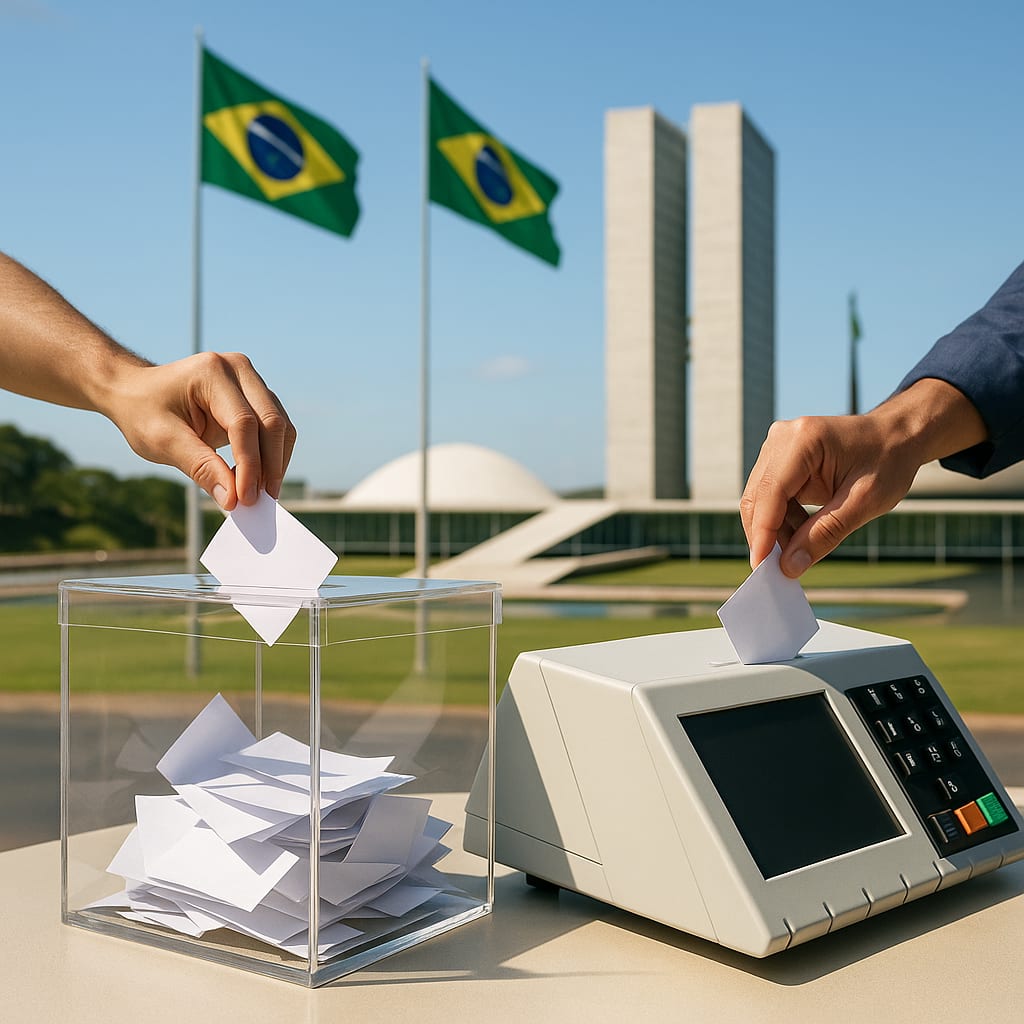
Brazil’s Lula and Flávio Bolsonaro head into a tight vote after a combative final stretch
Narrative Snapshot
Across international and Brazilian outlets, the race is consistently framed as razor-thin and intensely negative, with multiple reports highlighting a last-ditch barrage of scandals and insults that underscores entrenched polarization. French and Asian coverage converges on the tone and stakes of the campaign, emphasizing both sides’ efforts to discredit each other while noting that polling gives the incumbent a slight edge ahead of a possible runoff.
European reporting also lingers on tactics and structure: both candidates declined to attend the final debate, and while lesser-known right-wing contenders lag far behind, their voters could be decisive in a second round. In Brazilian and Qatar-based coverage, lineage and positioning take center stage: the Bolsonaro name anchors the right for a third cycle, even as Flávio seeks a more moderate image and greater personal separation from his father’s legacy. Left-leaning and UK outlets elevate democracy-defense framing around Lula’s push to clinch a first-round victory, while other sources situate a Flávio win within a broader regional rightward drift.
What Happened
In the closing days before Sunday’s first-round vote, Brazil’s presidential race narrowed between President Luiz Inácio Lula da Silva and Senator Flávio Bolsonaro. Coverage from France24 and others reports both campaigns skipped the final televised debate, while multiple outlets describe an escalation of mutual accusations and rumor-driven attacks as they chased late deciders. Lula staged a large Rio de Janeiro rally urging supporters to secure a first-round win, a result not seen since 1998, and cast the contest as a defense of democracy against the far right. Domestic reporting notes symbolic endorsements moving into the final stretch, including the public backing of Lula by the daughter of former president Fernando Henrique Cardoso. French coverage indicates Lula holds a slight polling advantage before a potential October 25 runoff, while Le Monde underscores that smaller right-wing candidates—though far behind—could shape second-round dynamics.
Why It Matters
The contest tests how Brazil’s institutions and electorate navigate hard-edged polarization and personalized politics. The campaign’s reliance on insinuation and out-of-context claims, reported by France24, points to a persistently degraded information environment with implications for governance and public trust beyond election day. A Bolsonaro-family standard-bearer leading the right for a third consecutive cycle, as noted by Al Jazeera English, signals the durability of dynastic branding in Brazil’s party system and the potential for continuity in messaging and networks even as Flávio seeks a more moderate profile.
Regionally, several outlets position Brazil within a wider pendulum: France24 and the South China Morning Post link a Flávio victory to recent right or far-right advances elsewhere in Latin America, while the SCMP stresses Brazil’s status as a key remaining leftist bastion. For policymakers and multilateral actors, the outcome will shape coalition formation, legislative maneuvering, and Brazil’s voice in regional alignments, with second-round bargaining—highlighted by Le Monde—likely to set the terms of any early governing mandate.
Diverging Narratives
The sharpest split lies in framing. Lula and his allies cast the election as a bulwark against authoritarianism: Telesur quotes him urging supporters to “defeat the far right” and “kill the disgrace,” while the Guardian reports him claiming he is the only figure capable of stopping “fascists” from returning to power. That stance is reinforced domestically by an establishment-inflected endorsement—Folha de S.Paulo reports that the daughter of former president Fernando Henrique Cardoso is voting for Lula to “defend Brazilian democracy.”
Coverage of Flávio Bolsonaro is more variegated. Folha emphasizes his bid to project moderation and an independent trajectory, even as it notes his candidacy was anointed by former president Jair Bolsonaro. International outlets diverge in labeling: France24 situates his potential victory within a right or far-right regional trend, while the SCMP identifies his father as far-right and underscores deep polarization. Al Jazeera English adds a dynastic throughline, underscoring the Bolsonaro family’s recurring dominance on the right. Procedurally, both camps’ choice to skip the final debate, reported by France24, leaves unresolved how either would navigate a head-to-head policy confrontation, while Le Monde points to the still-open question of how trailing right-wing candidates’ voters might reshape a runoff.
What Happens Next
Two immediate forks are explicit in the coverage. First is whether Lula’s call for a first-round win materializes or the race proceeds to an October 25 runoff; France24 reports a slight Lula advantage but a neck-and-neck scenario in second-round projections. If no candidate clears 50 percent, Le Monde highlights the pivotal role of voters backing smaller right-wing contenders, making their endorsements and turnout signals critical indicators during the three-week interlude.
Second is message discipline versus escalation. France24 and Asian outlets describe a campaign fueled by allegations and rumor; analysts should watch whether either side sustains or recalibrates this approach as they target undecideds. Folha’s portrait of Flávio’s moderation bid offers one potential pivot point, while Telesur and the Guardian document Lula’s democracy-defense framing. Ground operations and mobilization—illustrated by Lula’s Rio rally—become consequential signals of turnout capacity in the absence of further debates.