
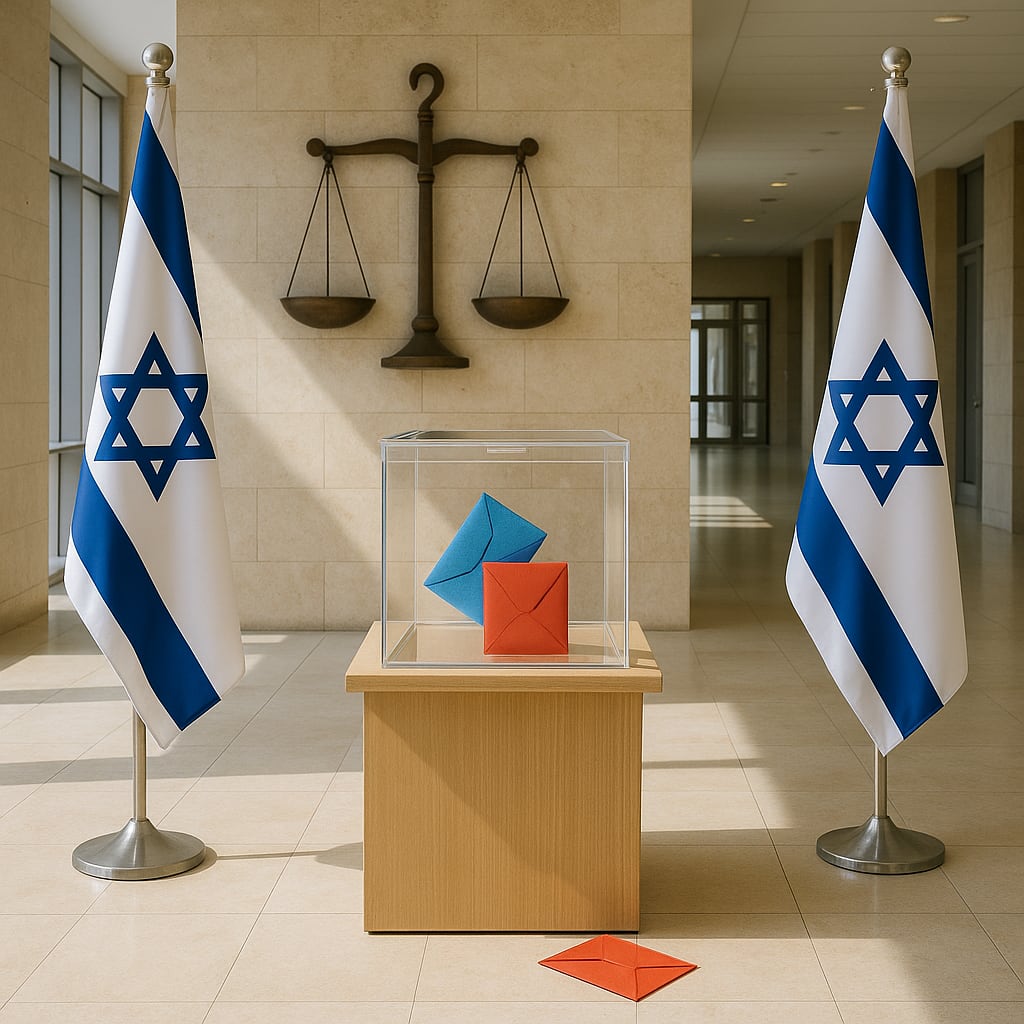
Israel’s top court reinstates Arab parties’ candidacy; Balad leader withdraws after court’s recommendation
Narrative Snapshot
Across Israeli and European outlets, reporting converges on the court’s unanimous reversal of the Central Elections Committee’s ban on Arab-led lists, while diverging on the meaning and mechanics of the separate move against Balad’s Sami Abu Shehadeh. Israeli sources emphasize the legal thresholds the justices said were not met for party bans; international and Arab-focused outlets concentrate on how the court handled an individual Palestinian politician’s speech.
Domestic coverage underscores institutional guardrails and nuances in the bench’s deliberations. The Times of Israel highlights that judges found the Ra’am party and the Joint List did not satisfy statutory criteria for disqualification related to racist incitement or support for armed struggle. Haaretz adds that two of nine justices dissented on allowing MK Ofer Cassif to run, signaling internal judicial disagreement even as the panel unanimously cleared the parties.
By contrast, Al Jazeera and Middle East Eye emphasize the court’s intervention against Abu Shehadeh, linking it to an article he wrote on 8 October 2023 and portraying the episode as a sharper curb on Palestinian political participation. Haaretz’s subsequent analysis argues the ruling communicates a restrictive message to the Arab public’s political speech and predicts Arab voter turnout will indicate the impact. European outlets and Deutsche Welle mostly frame the ruling as a straightforward reversal of a politically driven committee decision, with DW noting Ra’am’s potential as a post-election kingmaker.
What Happened
Israel’s Supreme Court unanimously overturned a Central Elections Committee decision that had barred the Arab-led Ra’am party and the Joint List from the 27 October Knesset elections. Israeli outlets report the justices found the parties did not meet legal criteria for disqualification related to racist incitement or support for armed conflict against Israel. The legal backdrop is the Basic Law governing the Knesset, which permits exclusions under specified conditions, as summarized by Telesur. Separately, the court recommended that Balad leader Sami Abu Shehadeh withdraw his candidacy; he did so. Middle East Eye reports the court’s stance was tied to an article Abu Shehadeh published on 8 October 2023, while Al Jazeera says the court told him to withdraw or face disqualification. Haaretz notes that, while the panel’s vote on party lists was unanimous, two of nine justices opposed allowing MK Ofer Cassif’s candidacy.
Why It Matters
The ruling illustrates judicial review acting as a counterweight to a politicized electoral body. Telesur describes the committee as largely composed of members of Prime Minister Benjamin Netanyahu’s Likud party, and Middle East Eye characterizes it as controlled by the governing coalition; the court’s unanimous rejection of its party bans reaffirms that disqualification thresholds remain narrowly construed. At the same time, the bench’s handling of Abu Shehadeh signals a boundary on protected political speech by Palestinian citizens, which Haaretz interprets as sending a “resounding message” to the Arab public. Deutsche Welle notes that Ra’am could again be a kingmaker, underscoring how restored participation reshapes coalition arithmetic. For policymakers and observers, the episode speaks to institutional capacity and constraints: electoral law’s prohibitions are intact but confined, while enforcement against individuals’ expression may be tightening, with potential consequences for turnout and perceived legitimacy among Palestinian citizens of Israel.
Diverging Narratives
Legalistic accounts in Israeli outlets emphasize evidentiary standards. The Times of Israel reports the justices concluded that Ra’am, the Joint List, and MK Ofer Cassif did not satisfy statutory tests on racist incitement or support for armed struggle, aligning with La Repubblica, Le Monde, and Deutsche Welle’s straightforward reporting that the party bans were reversed. Haaretz adds an internal split over Cassif—two justices dissented—indicating that even where party disqualifications fail, individual cases can test the margins.
In contrast, Middle East Eye and Al Jazeera focus on Abu Shehadeh, stating the court backed barring him over an October 2023 article and told him to withdraw or face disqualification. Haaretz’s next-day analysis presents the outcome as defining different tracks for free speech and contends the state is using his statements to end his political career, positing Arab voter turnout as the measure of impact. Separately, Telesur frames the committee’s initial ban as originating in a body largely aligned with Likud, foregrounding political context rather than statutory reasoning. European coverage and DW largely bracket the Abu Shehadeh dispute, centering the restored participation of Arab-led lists and its electoral implications.
What Happens Next
Two decision points emerge. First, how Arab voter turnout responds to the court’s mixed signals. Haaretz explicitly links the ruling’s message to the Arab public and identifies turnout on election day as the gauge of impact, making participation rates a primary indicator of whether restored party access offsets the Abu Shehadeh withdrawal. Second, post-election coalition formation if Ra’am or the Joint List secure pivotal seats. Deutsche Welle notes Ra’am could serve as kingmaker; whether it does will depend on final seat distributions and parties’ willingness to partner. Analysts should watch campaign rhetoric tested against the court’s articulated thresholds on racist incitement and support for armed struggle, as reported by the Times of Israel and Telesur’s summary of the Basic Law, to see if further candidacies face challenge under the same standards.