
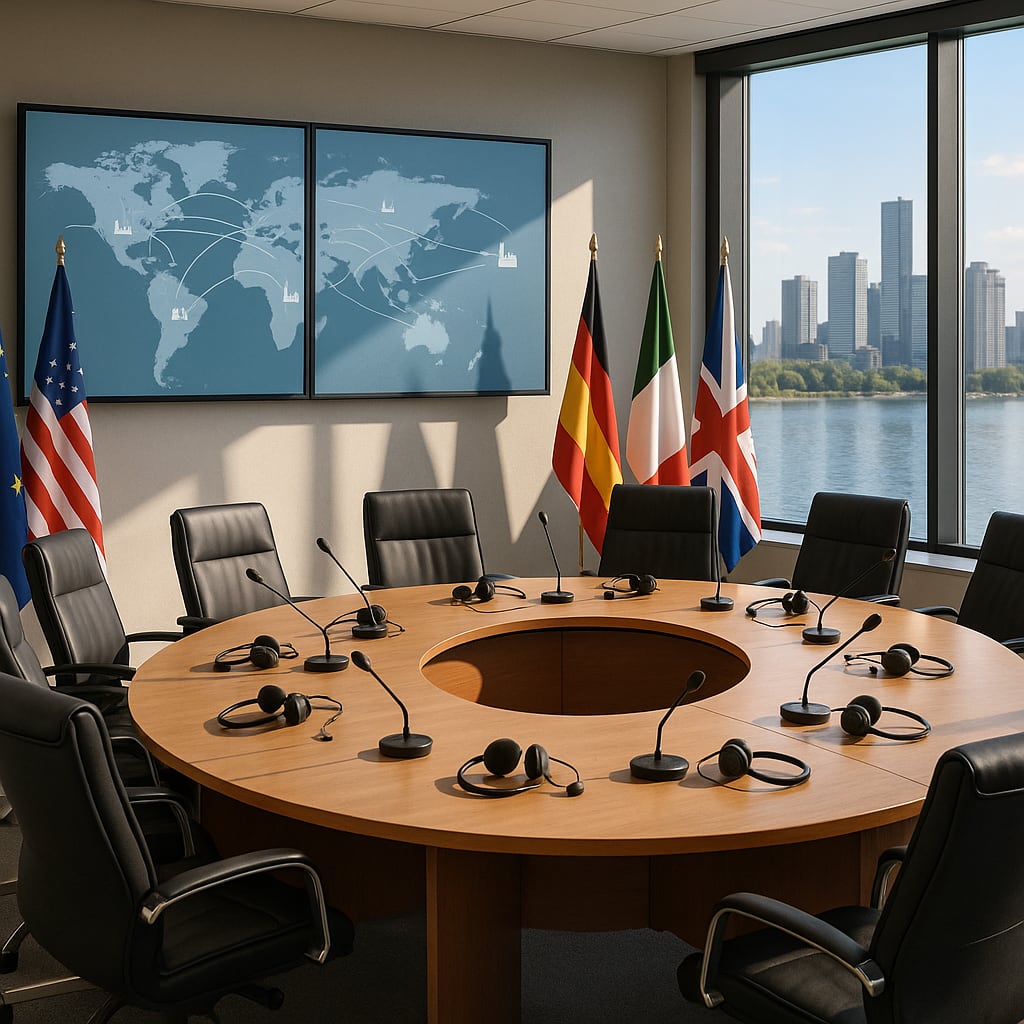
G20 trade ministers leave Milwaukee without consensus on industrial overcapacity
Narrative Snapshot
Across North American and European outlets, the absence of agreement is framed through Washington’s lens: calls to curb excess industrial capacity, described as flooding markets with underpriced goods and harming U.S. manufacturers, did not secure buy‑in. Coverage by France24 and Japan Times links the push to longstanding U.S. criticism often directed at China, with France24 noting Beijing rejects the charge. The Toronto Star similarly foregrounds the U.S. concern over undercut American industry.
Russian and Chinese outlets shift the emphasis. TASS highlights statements from Economy Minister Maxim Reshetnikov about the need to consolidate and the G20’s potential to resolve issues constructively, and separately reported the forum was close to consensus on preventing the weaponization of trade. CGTN situates the meetings in a broader agenda that included discussions of food weaponization and forced labor, underscoring process, bilateral engagements, and continuity into the December leaders’ summit in Miami.
Latin American reporting adds a concrete policy edge to Washington’s rhetoric. Clarin notes the United States is evaluating unilateral actions against overproduction and flags intensifying U.S.–Canada tariff frictions, indicating that failure to codify common positions at the G20 may spill over into bilateral measures among close partners.
What Happened
Trade ministers meeting in Milwaukee under the United States’ rotating G20 presidency ended talks without agreement on how to address excess industrial capacity. U.S. Trade Representative Jamieson Greer said the ministers failed to agree on tackling overcapacity and eliminating forced labor from supply chains. The Toronto Star reported the Trump administration’s view that overproduced, underpriced goods are flooding markets and undercutting American manufacturers. Clarin likewise reported no consensus and said Washington is weighing unilateral responses. Russian Economy Minister Maxim Reshetnikov, cited by TASS, said many G20 members see the need to consolidate and expressed confidence in the group’s potential to resolve issues, while TASS separately reported the forum was close to consensus on preventing the weaponization of trade. CGTN said ministers discussed food weaponization and forced labor and held bilateral meetings ahead of the G20 Leaders’ summit in Miami in December 2026. The Japan Times reported the United States was “severely disappointed.”
Why It Matters
The outcome tests the G20’s capacity to broker shared trade norms on issues at the intersection of industrial policy, market fairness, and human rights. Multiple outlets anchor the dispute in overcapacity—frequently linked in Western coverage to China even as Beijing rejects the framing—alongside efforts to address forced labor in supply chains, as described by France24. TASS’s focus on prospective agreement to prevent “weaponization of trade,” and CGTN’s mention of “food weaponization,” point to a parallel strand: whether the G20 can codify guardrails separating trade instruments from geopolitical coercion. Clarin’s reporting that Washington is considering unilateral measures, amid mounting U.S.–Canada tariff frictions, underscores the risk that absent multilateral alignment, major economies default to bilateral or unilateral tools. For decision-makers, the balance between coalition-building on discrete issues and hardening unilateral enforcement will shape both supply chain governance and the G20’s credibility ahead of the Miami summit.
Diverging Narratives
There is broad agreement that ministers did not reach consensus on excess capacity, but coverage diverges on emphasis and residual areas of convergence. France24 and the Japan Times foreground U.S. disappointment and the link between overcapacity debates and China, with France24 adding that China rejects the criticism. The Toronto Star anchors the stakes in domestic manufacturing harm from underpriced imports. By contrast, TASS portrays momentum on anti-weaponization language and stresses the G20’s constructive potential, offering a more optimistic portrayal on adjacent agenda items even as core disagreements persist. CGTN widens the aperture to procedural and thematic breadth—food weaponization, forced labor, and bilateral engagements—without centering the overcapacity dispute on any single country. Clarin introduces forward-looking policy consequences, reporting that the United States is evaluating unilateral steps and pointing to escalating U.S.–Canada tariffs and restrictions. Across these accounts, the clearest tension lies between U.S. framing of an unresolved structural market problem and alternative portrayals that accent partial consensus or broader dialogue.
What Happens Next
Two near-term decision points emerge. First, whether Washington proceeds with unilateral actions against overproduction, as reported by Clarin. Signals would include new tariff measures or trade remedies announced by the Trump administration targeting sectors associated with excess capacity. Second, whether ministers can translate TASS’s reported proximity to consensus on preventing the weaponization of trade into agreed language in any joint text or subsequent G20 documents; watch for references to “weaponization” or “food weaponization,” which CGTN said were discussed.
A further hinge is whether discussions on eliminating forced labor from supply chains move beyond acknowledgement—France24 reported deadlock on this point. Any shift would likely surface in statements by U.S. Trade Representative Jamieson Greer or in issue-specific annexes around the Miami leaders’ meeting. Bilaterally, Clarin’s note on intensifying U.S.–Canada tariffs suggests monitoring for additional restrictions, which would indicate fragmentation continuing in the absence of G20 consensus.