
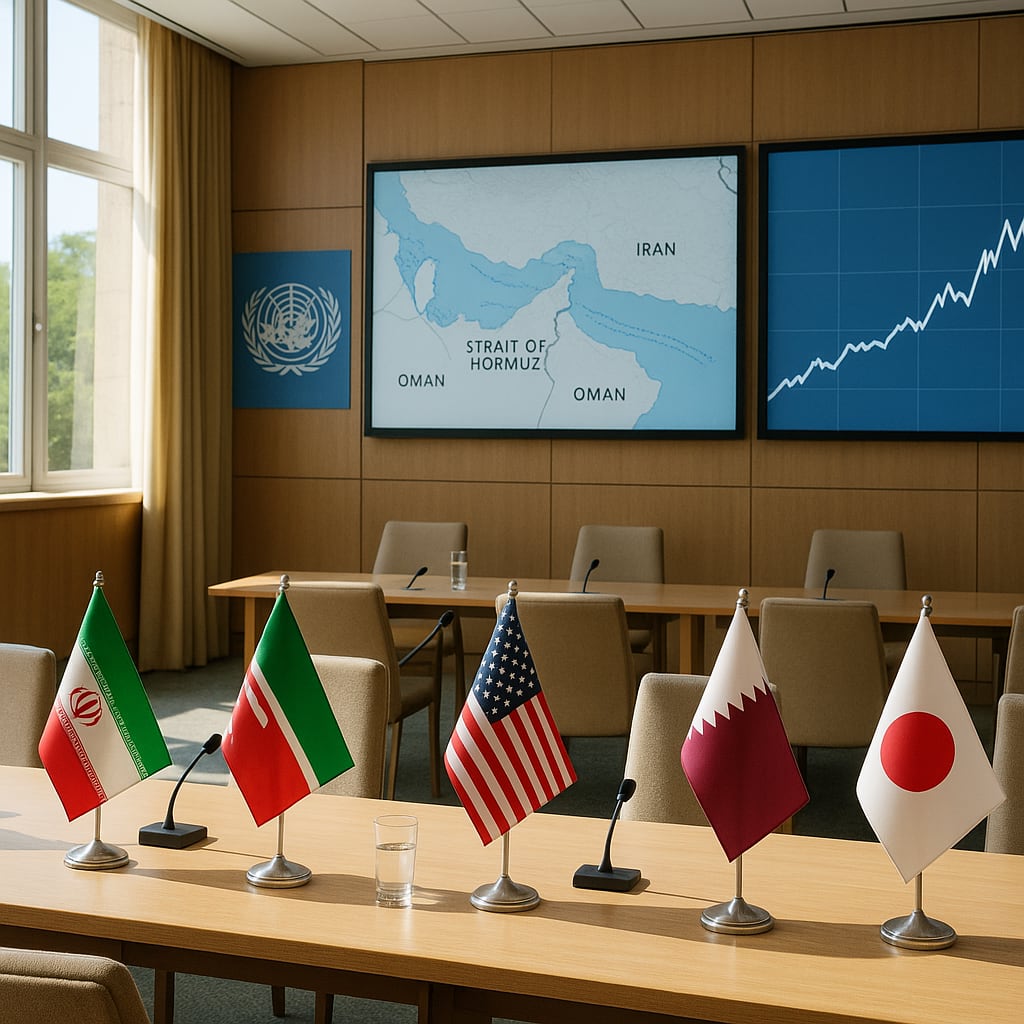
Iran says there is no military solution as talks stall and Hormuz closure endures
Narrative Snapshot
Across outlets, there is broad alignment that Tehran is signaling dual-track firmness: readiness to defend and a stated openness to diplomacy, while insisting that the path to de-escalation runs through the Strait of Hormuz. Iranian and regional coverage highlights that Washington has reduced large-scale strikes in recent weeks and leaned harder into sanctions, even as the maritime theater remains the pivotal point of leverage and risk. International reporting converges on negotiations being at an impasse and on the energy-market sensitivity of Hormuz’s status.
The emphases diverge on drivers and priorities. Iranian sources foreground deterrence and preparedness, including explicit warnings of a stronger military response and assertions of economic counter-leverage. Israeli outlets tie Tehran’s diplomatic posture to domestic economic strain and portray a dispute over the agenda itself—Washington prioritizing nuclear issues as Iran centers Hormuz. Several international reports surface maritime incidents and oil price reactions as immediate externalities of the standoff. Mediation is acknowledged, principally via Qatar and with Japanese diplomatic engagement, but described as yielding no breakthrough to date.
What Happened
Iranian Foreign Minister Abbas Araghchi stated that the conflict with the United States has no military solution and warned that any renewed attack would draw a stronger response, remarks carried by Iranian and international outlets on October 4. Iran’s armed forces separately emphasized readiness for “any scenario.” Multiple reports said talks are stalled while Washington has scaled back strikes in favor of economic pressure, with new U.S. sanctions targeting Iranian industrial and transport sectors and measures against third-country entities linked to Iran’s procurement networks. Mediation continues, notably by Qatar, and Araghchi also consulted Japan’s foreign minister on the diplomatic track. Iran said it expected a U.S. reply to its proposal to reopen the Strait of Hormuz—anchored in conditions such as lifting oil sanctions, ending a naval blockade, and a regional ceasefire—though President Trump publicly rejected a recent Iranian plan and said renewed strikes after the midterms were possible. Oil prices rose on that rejection, and a UK maritime agency reported another tanker hit by an unidentified projectile.
Why It Matters
The dispute over reopening the Strait of Hormuz directly tests freedom-of-navigation norms and the resilience of energy supply chains; even incremental incidents have translated into price volatility. The apparent U.S. shift from kinetic operations toward intensified sanctions underscores a broader trend toward economic statecraft and extraterritorial enforcement, including actions against third-country nodes connected to Iran’s defense procurement. Diplomacy is occurring through decentralized channels—Qatar’s shuttle mediation and Japan’s ministerial-level contacts—while formal, public frameworks remain thin, reflecting a reliance on ad hoc crisis management rather than institutionalized conflict resolution.
For decision-makers, the alignment problem is structural: Iran seeks negotiations anchored in maritime and sanctions relief, while U.S. and Israeli reporting points to Washington’s focus on nuclear and broader security files. The gap raises the costs of bargaining failure in a theater where miscalculation at sea can rapidly internationalize the crisis and where sanctions expansion risks entangling additional states and private actors.
Diverging Narratives
Iranian government-aligned outlets emphasize vigilance and deterrence, presenting readiness to “deal with any situation” and pledging a stronger response to any new attack alongside continued diplomacy. They also highlight claims of economic leverage against the United States and frame new U.S. sanctions as pressure on Iran’s “industrial lifelines.” International and regional outlets generally corroborate Iran’s declaratory posture but add that Washington has dialed back strikes and intensified economic measures, with the maritime domain as the unresolved core issue.
Israeli coverage introduces two distinct themes: first, that internal economic strain is spurring Tehran’s diplomatic engagement; second, that there is a negotiating disconnect, with the United States concentrating on the nuclear file while Iran seeks talks centered on reopening Hormuz. A factual tension also appears in accounts of process: while President Trump publicly rejected an Iranian reopening plan and even left open the possibility of renewed strikes after midterms, Iranian and Israeli reporting note Tehran’s assertion that it did not receive a formal rejection and was expecting a U.S. response via mediators. European and regional outlets add operational texture—reports of a tanker struck by an unidentified projectile and oil price spikes following U.S. rejection—positioning maritime security and market stability as immediate stakes.
What Happens Next
Three decision points will shape the trajectory. First, whether Washington delivers a substantive reply—directly or via mediators—to Tehran’s conditions for reopening Hormuz. Reports indicate Iran seeks sanctions relief on oil, an end to a U.S. naval blockade, and a regional ceasefire; a U.S. response that prioritizes nuclear issues, as described in Israeli reporting, would sustain the agenda gap. Second, U.S. force posture after the midterms bears watching. Public statements left open renewed strikes even as operations have been scaled back in favor of sanctions; either path would signal the weight Washington assigns to military versus economic coercion. Third, the maritime risk environment is an immediate indicator. Additional tanker incidents or credible de-escalatory steps at sea would respectively harden or soften negotiating conditions, with oil price moves amplifying pressure. Signals from Qatar’s shuttle diplomacy and Japan’s ministerial engagement will help gauge whether backchannels are converging toward a workable sequencing package.