
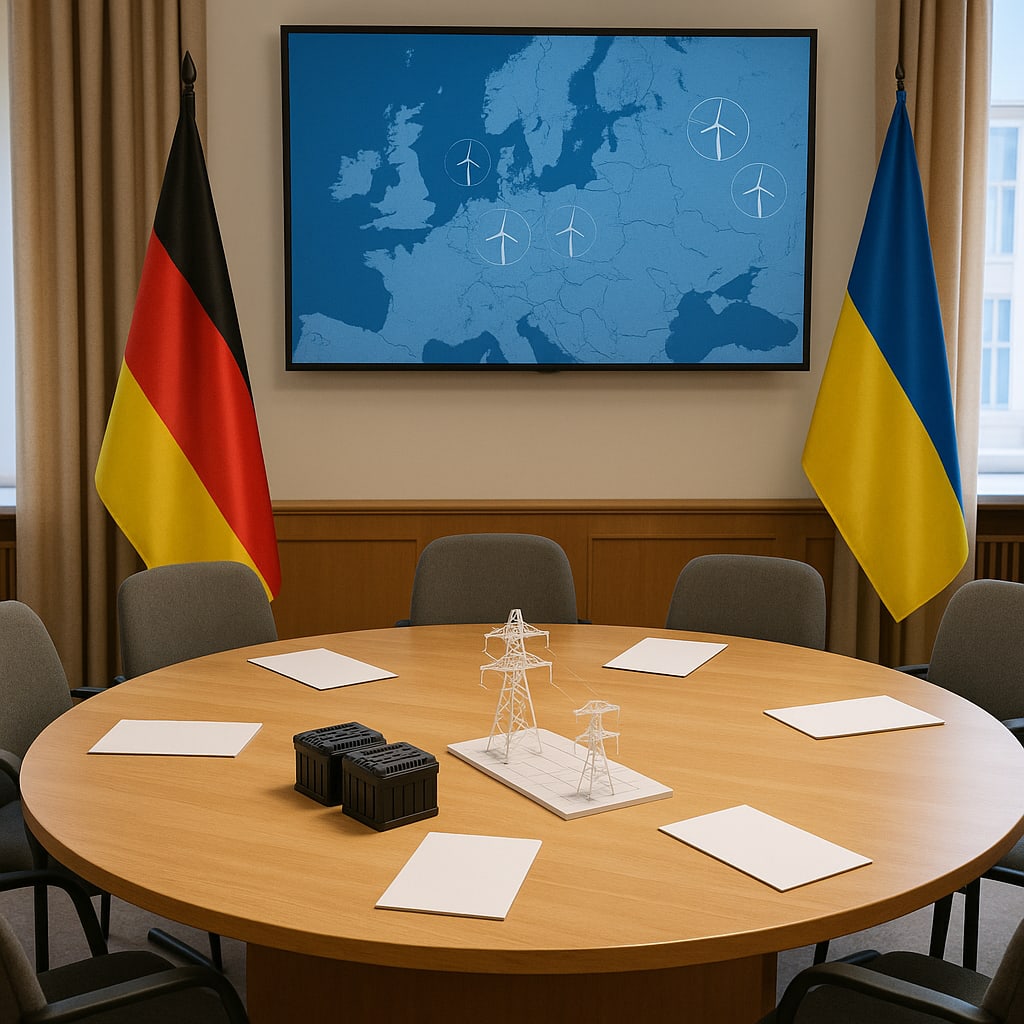
Russia strikes Kyiv bridge during Merz’s surprise visit as Germany pledges major aid and joint drone production
Narrative Snapshot
Across outlets, the throughline is the intersection of battlefield pressure on Kyiv and a German pledge to expand support. European and Ukrainian reporting converges on the policy substance: a sizeable German package, new defense-industrial cooperation, and air-defense enhancements centered on interceptor drones. German and Ukrainian sources also emphasize co-production plans and agreements tied to IRIS-T air-defense systems and energy-sector support. Anglo and Asian outlets foreground the timing and imagery of a bridge strike coinciding with the visit, anchoring the day’s developments in the visual evidence of infrastructure attacks. Russian state media counters with a political-risk frame, casting the visit as domestic posturing rather than alliance signaling.
There is also divergence on figures and composition, reflecting currency choices and portfolio breakdowns. Ukrainian and international outlets cite totals around $1.46–$1.5 billion, while a Latin American outlet reports €1.3 billion. Ukrainian and German sources detail discrete components—interceptor drones, IRIS-T missiles, and energy agreements—while several global reports keep the package at a headline level. A smaller set of Ukrainian reports adds forward-looking items still under discussion, such as Taurus missiles, that do not appear in many foreign accounts.
What appears most consequential in this coverage is the alignment between immediate operational needs and industrial policy: Ukraine’s push to counter faster, jet-powered Russian drones with indigenous and co-developed interceptors, and Germany’s signaling that support now includes joint production as well as deliveries. The pattern of repeated strikes on Kyiv’s bridges—documented by multiple outlets—situates the visit within a sustained campaign against urban infrastructure, sharpening the salience of air-defense measures and energy resilience.
What Happened
German Chancellor Friedrich Merz made an unannounced trip to Kyiv, meeting President Volodymyr Zelensky and announcing new support measures. Reports put the package at about $1.46 billion to $1.5 billion, with Ukrainian and German outlets highlighting interceptor drones and air-defense missiles, as well as energy-sector agreements exceeding €155 million and a series of defense-industry cooperation documents that include purchases and supplies of missiles for IRIS-T systems. German and Ukrainian sources also flagged plans for joint Ukrainian-German production of interceptor drones. During the visit, air-raid sirens sounded and a Russian drone struck Kyiv’s Northern (Pivnichyi) Bridge; footage showed a fireball and the city’s mayor reported two injuries. Ukrainian authorities said bridges had been targeted for several consecutive days. Zelensky raised the possible transfer of Taurus cruise missiles with Merz. In parallel, Moscow had urged foreign nationals and diplomats to leave Ukraine ahead of the visit.
Why It Matters
The visit and the accompanying agreements point to a shift from one-off transfers toward structured defense-industrial cooperation between Germany and Ukraine, with an emphasis on countering Russia’s faster, jet-powered drones. Ukrainian leadership says it is testing five interceptor models, including the SPYS high-speed drone jointly developed with Germany, and aims to produce up to 400 interceptors, aligning German co-production plans with Ukraine’s scaling goals. The package’s air-defense and energy components address two pressure points underscored by recent strikes: urban infrastructure and winter energy resilience. The episode also plays into ongoing diplomatic contestation: Russia has criticized Berlin’s arming of Ukraine, and state media framed the visit as domestic political maneuvering, while European outlets cast it as solidarity and deterrence signaling. For policymakers, the structural takeaway is the deepening integration of Ukraine into European defense and energy support frameworks that extend beyond emergency aid to longer-term capacity building.
Diverging Narratives
Outlets differ on the size and breakdown of Germany’s package. Ukrainian and international reporting places it at roughly $1.46–$1.5 billion and specifies interceptor drones and air-defense missiles, while one Latin American outlet cites €1.3 billion, with €1 billion for military assistance and €350 million for energy. Ukrainian state media adds detail on signed defense-industry documents tied to IRIS-T missiles and separate energy agreements totaling more than €155 million, granularity that most foreign outlets do not provide.
Coverage of the strikes splits between vivid documentation and pattern emphasis. British and Hong Kong outlets reference video of a drone hitting the Northern Bridge, with the Kyiv mayor confirming injuries, while Ukrainian reporting situates the strike within a multi-day campaign against Kyiv’s bridges. French coverage contextualizes the visit with Moscow’s prior call for foreigners to leave Ukraine and Russian criticism of German arms deliveries.
On prospective capabilities, Ukrainian sources report that Zelensky raised Taurus cruise missiles with Merz and that Ukraine is testing the jointly developed SPYS interceptor, whereas many international pieces stop at announced aid and co-production plans. A Brazilian outlet uniquely notes Zelensky’s announcement of a trilateral negotiation with the United States; this point is not echoed elsewhere in the provided material. Russian state media presents the trip as an escalation risk and a bid to boost Merz’s ratings, diverging sharply from European and Ukrainian portrayals of strategic support.
What Happens Next
Several decision points emerge. First is whether Germany moves from discussion to approval on transferring Taurus cruise missiles; Ukrainian reporting confirms the issue was raised, but no decision was announced. Analysts should watch for German statements and parliamentary or cabinet signals on long-range strike policy. Second is implementation of joint interceptor-drone production: German and Ukrainian outlets flag co-production plans and testing of the SPYS interceptor; concrete indicators will be signed industrial contracts, production timelines, and initial deliveries. Third is execution of the announced package’s components, including IRIS-T missile supplies and more than €155 million in energy agreements; disbursement schedules and procurement details will show pace and scope. Finally, the pattern of Russian strikes on Kyiv bridges bears monitoring for frequency and damage, alongside any shifts in diplomatic presence following Moscow’s call for foreigners and diplomats to depart, as referenced in European and Indian reporting.