
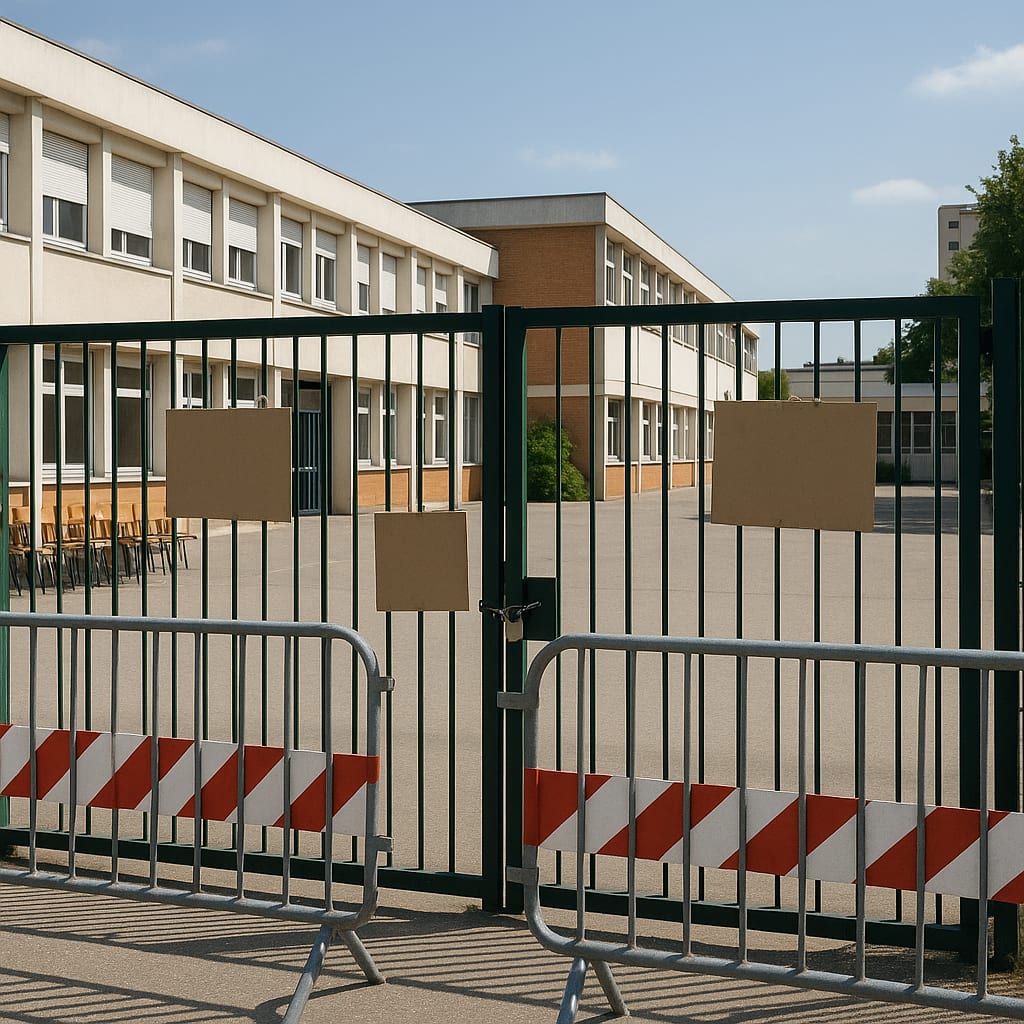
France shutters up to 500 schools as student protests over education conditions escalate
Narrative Snapshot
Across outlets, there is broad agreement that the movement’s core demands center on deteriorating learning conditions and unequal access to quality education, with reporting repeatedly citing absent or non-replaced teachers, dilapidated buildings, overcrowding, and long school days. French and international coverage converge on the scale of disruption and the government’s security-led response, noting closures of 400–500 secondary schools for safety reasons and clashes with police. Where they diverge is in emphasis: some foreground material neglect and social justice claims; others focus on public order and the most violent episodes.
French sources deepen the political framing. France 24’s interview with sociologist Éric Fassin places the protests in a democratic register of dignity and equality from working-class suburbs, while Le Monde describes a “singular and already historic” high-school movement anchored in lack of resources and the “failures of school massification,” warning that an essentially repressive response risks intensifying anger. Anglo and Asian outlets center operational impacts and ministerial briefings on closures. Latin American and pan-African outlets highlight arrest figures, policing tactics, and union reactions, including student unions’ efforts to distance the movement from violence and a magistrates’ union calling for an end to police repression. Coverage from RT and Al Jazeera concentrates on spectacular incidents of arson and assault, underscoring the security dimension but not the movement’s internal efforts to keep mobilization non-violent.
What Happened
High-school protests that began in the Paris suburbs in mid-September—reported as starting at a Paris school on September 17 and identified by Italian media with a Saint-Denis lycée emblematic of public neglect—rapidly spread nationwide. Students blocked entrances, cancelling classes and drawing attention to teacher shortages, crumbling facilities, overcrowding, and long days. Authorities reported 24 schools burned or ransacked and 78 injured education staff, prompting the education minister to say 400–500 of France’s roughly 3,700 lycées would be fully or partially closed on Monday for safety. Clashes included fires, projectiles, and tear gas, a high school in Metz engulfed in flames, and an aerosol “flamethrower” assault in Marseille leading to an arrest. Reported detentions mounted from hundreds to nearly 2,000 in one day, with one outlet subsequently citing at least 5,000 arrests since September 28. Student unions disavowed violence while magistrates condemned police repression; the government convened crisis management, prosecutors, and stakeholder meetings.
Why It Matters
The confrontation tests France’s capacity to deliver equal educational standards across geographies after decades of expansion, with Le Monde tying grievances to the limits of “massification” and students and France 24’s interlocutor framing the moment as a demand for dignity and opportunity. Operationally, the decision to shutter hundreds of schools for safety highlights acute risk management trade-offs in a core public service. Politically, BBC analysis underscores that youth-led street mobilization historically destabilizes French governments, raising stakes for the executive’s mix of security and policy concessions.
Institutionally, the episode spotlights tensions between policing strategies and civil liberties in managing school-based protest, with student and magistrates’ unions challenging the proportionality of force even as authorities cite arson, injuries, and violent incidents. For decision-makers in France and observers in Europe, signals out of Paris—ministerial engagement with student bodies, the prime minister’s commission of five projects drawn from high-school councils, and timelines for “first decisions before the end of the month”—will indicate whether the state pivots from securitization toward structural remedies on staffing, infrastructure, and school-day design.
Diverging Narratives
French and international outlets align on the movement’s material drivers but frame their implications differently. France 24 and Le Monde emphasize equality, recognition, and the political-democratic character of a suburb-rooted mobilization, with Le Monde warning that a repressive posture could entrench anger. The Guardian, The Hindu, Japan Times, and AllAfrica foreground the operational deficits—teacher absence, dilapidation, overcrowding—echoing students’ claims that learning is untenable. Government-facing reportage from SCMP, the BBC, Deutsche Welle, and ministerial briefings stresses closures as precautionary security measures to safeguard staff and pupils.
Accounts of public order diverge the most. Telesur tallies large detention figures as protests spread to universities, reports injuries among police, and amplifies unions accusing the state of excessive force, while quoting the interior minister’s defense of proportionality during an earlier surge. RT and Al Jazeera highlight discrete high-visibility incidents—an arson-hit lycée and an assault with an improvised flamethrower—underscoring risks of urban violence. Within the movement, student unions publicly distance protests from unrest and back continued dialogue with authorities, creating a split-screen with images of fires and clashes. Discrepancies also appear in scale measures: Bangkok Post cites disruption at 730 schools on one day, while Telesur later reports more than a thousand educational centers affected and escalating arrest totals.
What Happens Next
Two parallel decision tracks emerge from the sources. On policy substance, the prime minister has tasked ministers with five projects reflecting issues raised in high-school councils, with first decisions due by month’s end, while the education minister has opened channels to student, parent, and staff associations. Observable indicators will be the specificity and funding attached to measures on teacher replacement, infrastructure maintenance, and school-day structure, and whether organizers acknowledge them as credible steps.
On security and continuity, the state aims to resume classes “everywhere” that safety allows, balancing closures against protest calls for further mobilization. Signals include daily counts of affected schools, incidents of arson or injuries, and prosecutorial coordination flagged in crisis meetings. The internal dynamics of the movement also matter: student unions’ commitment to non-violence versus calls for new rallies, and whether actions spread further into universities as reported. A de-escalatory path depends on reductions in violent incidents and visible engagement; a continued law-and-order posture alongside renewed blockades would sustain closures and raise the prominence of policing debates.