
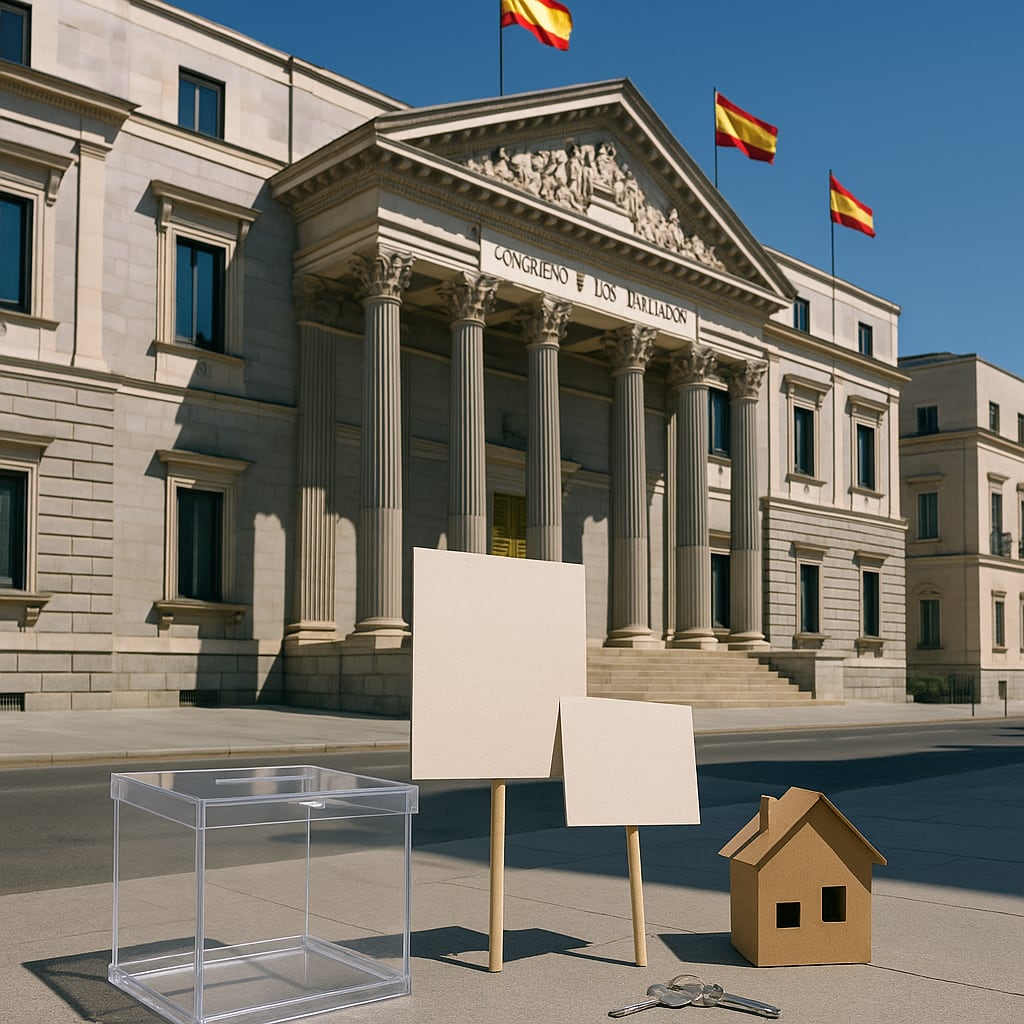
Spain’s Prime Minister Pedro Sánchez calls snap general election for November 29 after housing measures defeated
Narrative Snapshot
Across outlets there is broad alignment that the announcement follows a parliamentary defeat on emergency housing measures and coincides with mounting street protests over affordability. The Guardian, CBC, and the Bangkok Post link the snap election directly to last week’s legislative setback on housing relief, while Al Jazeera and the South China Morning Post foreground nationwide protests and public outrage after the televised eviction of an 87-year-old in Madrid.
A second strand of coverage centers on political strategy and timing. The BBC characterizes the move as a deliberate calculation rather than a reflex, and France 24 cites an analyst arguing Sánchez chose “the best moment in a sea of troubles,” potentially benefiting from mobilized left-leaning voters amid the protests. Deutsche Welle adds the decision marks a reversal from Sánchez’s prior insistence on serving the full term to 2027, underscoring the magnitude of the shift.
Some reports stress institutional mechanics and executive intent. CGTN details that Sánchez informed the head of state and would convene an extraordinary cabinet meeting to dissolve parliament, echoing Telesur’s outline of the constitutional path under Article 115, with a Royal Decree to be published in the official gazette. In parallel, several outlets emphasize message framing: CGTN and Telesur quote Sánchez’s call for a “much larger progressive majority,” while Corriere della Sera highlights his appeal to choose between “advancing” or “yielding to the far-right,” and Haaretz situates the contest within Europe’s broader rightward drift.
What Happened
Pedro Sánchez announced from the Moncloa Palace that Spain will hold a snap general election on November 29, following the rejection of his minority government’s housing measures in parliament amid widespread protests over affordability (Clarin; CGTN; CBC; Bangkok Post; Al Jazeera). Multiple outlets report that right-wing parties helped sink the emergency package last week (The Guardian; Bangkok Post), with CGTN noting the defeat of two government housing decrees. Sánchez said he had informed the head of state and would call an extraordinary cabinet meeting to dissolve parliament in line with legal timelines (CGTN). Telesur describes the constitutional process: the prime minister proposes dissolution, the Council of Ministers deliberates, the King decrees, and the Royal Decree is typically published in the Official State Gazette the next day. Deutsche Welle points out that Sánchez had previously maintained he would complete the term scheduled to run to 2027.
Why It Matters
The decision tests the durability of one of Europe’s remaining left-leaning governments at a moment when far-right parties are gaining ground regionally, as Haaretz notes. Domestically, it is a referendum on governance under a fragmented parliament that just rejected the government’s signature housing initiatives, as reported by CBC and others. Sánchez’s stated aim to secure a “much larger progressive majority” to “overcome vested interests” and press “new social advances” frames the contest as one about legislative capacity for structural reforms, including on housing (CGTN; Telesur). France 24’s analysis that the timing could capture protest-driven mobilization underscores how social contention is feeding back into electoral politics. The move also spotlights Spain’s constitutional tools for resetting executive-legislative deadlock—dissolution and early elections under Article 115—putting institutional flexibility, rather than incremental bargaining, at the center of the response.
Diverging Narratives
Outlets differ in emphasis between immediate cause, political calculation, and regional stakes. The Guardian, CBC, and the Bangkok Post place causal weight on the legislative defeat and parliamentary dynamics, with the Guardian attributing the failure to right-wing opposition. By contrast, the BBC frames the call as a carefully calibrated maneuver, and France 24’s cited analyst argues the timing is advantageous given protest mobilization on the left. Deutsche Welle underscores a reputational pivot, highlighting Sánchez’s earlier insistence on serving through 2027.
There is also variance in how the race is positioned ideologically. CGTN and Telesur amplify Sánchez’s own rationale to pursue a larger progressive majority to address housing and broader social goals, while Corriere della Sera notes his stark electoral framing against the far right. Haaretz widens the lens, presenting the election as potentially ending one of Europe’s few left-leaning governments amid far-right gains, a regional context absent from several other reports. Finally, Telesur and CGTN detail the constitutional sequencing—cabinet deliberation, royal decree, and publication in the BOE—where many outlets leave procedures implicit.
What Happens Next
Immediate steps hinge on the formal dissolution process. CGTN reports Sánchez has informed the head of state and will convene an extraordinary cabinet meeting; Telesur notes the Council of Ministers deliberates and the King decrees dissolution, with the Royal Decree typically published in the official gazette the following day. Analysts should watch for the decree’s publication schedule and any procedural clarifications.
Campaign dynamics will center on whether Sánchez’s bid for a “much larger progressive majority” materializes (CGTN; Telesur). If left-of-center mobilization observed around the housing protests translates into votes, as the France 24 analysis suggests, it would bolster legislative bandwidth on housing measures. If not, Haaretz’s framing points to the possibility of a shift away from one of Europe’s remaining left-leaning governments amid regional far-right momentum. Coverage of continuing protests (Al Jazeera; CBC; SCMP; Telesur) will be a key indicator of salience, as will party responses to the failed housing package identified by the Guardian and Bangkok Post.