
Hormuz Control Disputed as Iran Vows to Seal ‘Illegal’ Routes While US Cites Normalized Oil Flows
Narrative Snapshot
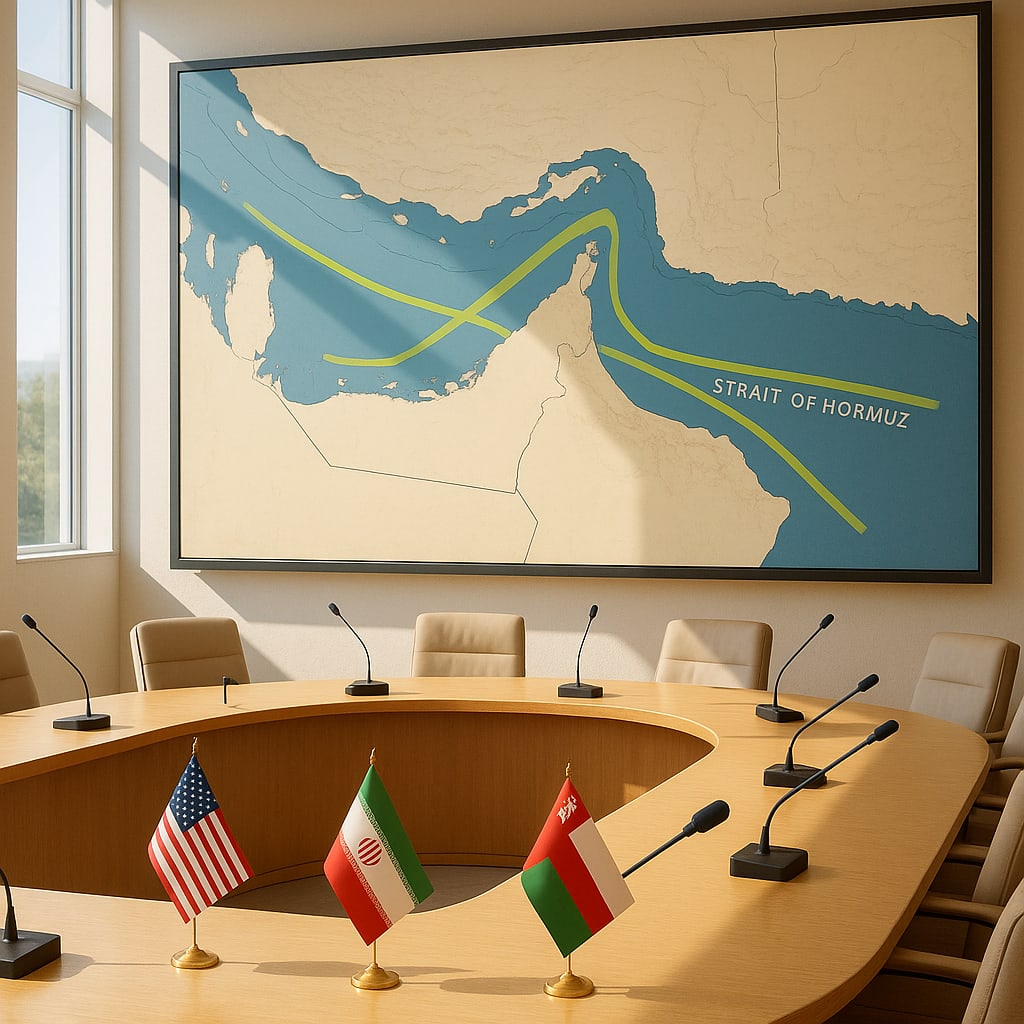
Iranian and Iran-aligned outlets emphasize assertion of control and conditional closure. IRNA reports a senior IRGC advisor stating the Strait is closed and will remain so until Tehran’s “legitimate” demands are met, with full control by Iranian forces. Telesur amplifies Gen. Mohammad-Reza Naqdi’s pledge to shut “unauthorized” passages created by blasting rocky channels used by small boats to move oil to tankers; RT similarly frames this as Iran threatening to block “illegal” routes along Oman’s coast.
US officials and some international outlets foreground the opposite claim: that the waterway is open and Iran has lost leverage. The Hindu quotes Senator Marco Rubio saying oil flows are near pre-conflict levels and that Iran has “lost complete control,” while Middle East Eye cites CENTCOM asserting the United States and partners “clearly control the strait” and that traffic is flowing.
Security-focused reporting presents a mixed operational picture. Middle East Eye, citing the US-led JMIC, says attacks, attempted attacks, and harassment in Hormuz hit their highest weekly level since the war began, indicating persistent IRGC presence and pressure even as Washington claims normalized transits. TASS, while relaying IRGC intent to interdict “illegal” oil traffic, downplays its scale as “extremely small,” and separately carries a TV claim that Washington has deprioritized Hormuz after assessing Iran “lost control.”
Economic and governance angles widen the stakes beyond military signaling. Middle East Eye cites the ICC’s warning that disruptions risk an 80 percent grain price spike and a 2.7 million-ton fertilizer shortfall, with a UN/IMO-backed proposal to temporarily transfer navigation management to the UN Secretary-General reportedly impeded by US–Iran tensions. Parallel to the rhetoric, TASS reports Iran and Oman agreed on the coordinates of safe corridors and plan to submit them to an international body, signaling a technical track amid competing narratives. RT connects renewed Saudi-Houthi fighting around Bab el-Mandeb to Hormuz disruptions, underscoring pressure on alternate chokepoints.
What Happened
On 7 October, IRNA quoted an IRGC advisor declaring the Strait of Hormuz closed under full Iranian control until Tehran’s demands are met, and Telesur and RT reported Gen. Mohammad-Reza Naqdi’s pledge to close “unauthorized” routes carved through rock and used by small craft to transfer oil to tankers. TASS said the IRGC plans to block illegal oil routes but assessed such volumes as “extremely small.” In contrast, The Hindu quoted US Senator Marco Rubio that the strait is open with oil flows near pre-conflict levels, while Middle East Eye cited CENTCOM asserting US and partner control and ongoing traffic. Middle East Eye also reported, via the US-led JMIC, that tanker attacks and harassment in Hormuz reached the highest weekly level since the war began. Separately, TASS reported Iran and Oman agreed on safe-corridor coordinates for submission to an international body. The ICC, via Middle East Eye, warned of severe food-security impacts if disruptions persist, and Telesur reported the US is sending a third carrier strike group to the region.
Why It Matters
Conflicting claims over Hormuz control intersect with efforts to institutionalize safe passage and manage systemic market risk. The ICC’s engagement with the UN and IMO on a temporary navigation mechanism suggests appetite for multilateral oversight, yet Middle East Eye notes US–Iran tensions have blocked progress—an indicator of the limits of crisis governance when great-power and regional rivalries harden. TASS’s report of Iran–Oman agreement on corridor coordinates points to a potentially stabilizing technical channel that could complement or substitute for broader diplomatic deadlock TASS describes in US–Iran mediation.
Operationally, the US naval buildup reported by Telesur signals intent to deter interdictions and sustain transits, while JMIC-tracked incidents cited by Middle East Eye reflect enduring IRGC coercive capacity despite US assertions of control. Economic stakes are not confined to energy; the ICC’s warnings on grain and fertilizer highlight cross-commodity exposure. RT’s linkage to Bab el-Mandeb amid Yemen’s escalation underscores that alternative maritime routes are also vulnerable, magnifying the strategic premium on predictable navigation regimes in both chokepoints.
Diverging Narratives
Tehran’s position, as carried by IRNA and Telesur, is that the Strait is closed under Iranian control and will remain so until demands are met, with imminent moves to seal “illegal” passages used for oil transfers. RT echoes this framing while adding price context—Brent around $101 versus roughly $72 pre-conflict—consistent with prolonged disruption. TASS both relays IRGC intent to block illicit flows and minimizes their scale as “extremely small,” creating a nuance between asserting control and acknowledging limited throughput via smuggling.
Washington’s line, cited by The Hindu and Middle East Eye, is that traffic is flowing and that Iran has “lost complete control,” with CENTCOM asserting US and partner control of the strait. Middle East Eye’s report that the JMIC recorded the highest weekly level of tanker attacks and harassment since the war began complicates claims of restored normalcy, pointing to continued IRGC capacity to impose risk without a declared closure. Iranian military officials push back on US assertions, with Middle East Eye quoting an IRGC Navy deputy who argues markets would reflect any genuine reopening and claims “full oversight” from the Gulf to the Gulf of Oman. Parallel to these competing frames, TASS cites a TV report that Washington has deprioritized Hormuz after judging Iran lost control, while also noting Iran–Oman progress on safe corridors—suggesting that operational risk, political signaling, and technical deconfliction are proceeding on separate tracks.
What Happens Next
Three decision points will shape trajectories. First, IRGC enforcement against “illegal” routes: if Naqdi’s pledge to close rocky passages is executed, watch for JMIC-reported incidents involving small craft near Oman’s coast and announced closures of specific channels, as flagged by Telesur and RT. Second, US and partner sustainment of transits: CENTCOM’s claim of control and Telesur’s report of a third carrier strike group imply forthcoming escort or presence operations; incident rates and announced convoying practices will indicate whether traffic remains steady or faces renewed friction. Third, institutional management: TASS reports Iran and Oman will submit agreed safe-corridor coordinates to an international body; observable movement at the UN/IMO level, or on the ICC-backed proposal for temporary UN navigation management cited by Middle East Eye, would signal a governance turn. Cross-theater indicators—Saudi-Houthi dynamics around Bab el-Mandeb per RT—and market metrics cited by RT and the ICC will test claims of normalization versus ongoing disruption.