
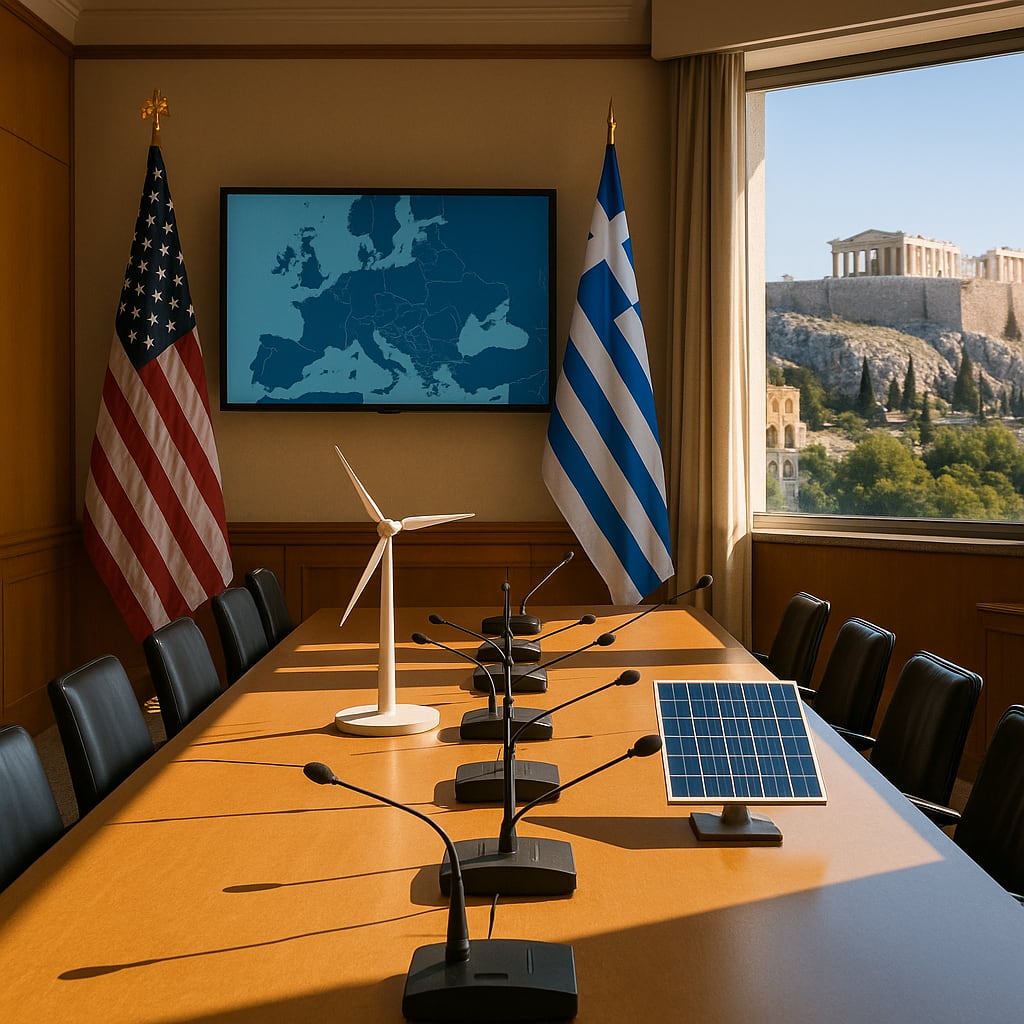
Rubio in Athens calls for Western renewal, urges Europe to ‘awaken’
Narrative Snapshot
Across outlets, there is broad agreement that Marco Rubio used Athens as a stage to press a civilizational case for revitalizing the West, but coverage diverges on framing and stakes. U.S. and European reporting emphasizes the rhetoric of awakening and inheritance: Fox News previews a speech rooted in an “inheritance stretching from Athens and Rome to Christendom to the founding of the American Republic,” while Le Monde highlights Rubio’s call for Europe to emerge from its “torpor” and his praise for Greece’s role on migration and counterterrorism. The New York Times underscores the most assertive formulation, noting Rubio’s appeal to an earlier ethos of “exploration and conquest” to remain “at the head of the world.”
Other outlets anchor the speech in policy context. The Bangkok Post situates the visit within a U.S.–Greece “strategic dialogue” on regional and energy security, and Le Monde describes “unprecedented” bilateral alliance and energy cooperation. By contrast, IRNA’s coverage centers local contestation, reporting anti-war rallies in Athens and Thessaloniki against U.S. policy and the expansion of military cooperation as Rubio visited.
Interpretive lenses diverge sharply on ideology. The Guardian reads the address as a classically inflected defense of Donald Trump’s “America first” approach, whereas RT casts it as a denunciation of “globalism” and “open borders,” quoting Rubio on nationalism having become a “dirty word” and on the West having “outsourced our industry” and let militaries “wither.” TASS abstracts the message into a strategic inflection point, relaying Rubio’s view that the collective West is “at a crossroads” that will determine its standing over the next decade.
What Happened
U.S. Secretary of State Marco Rubio arrived in Athens for a speech set against the Acropolis, delivered from the Pnyx hill, and for a U.S.–Greece strategic dialogue on regional and energy security, according to the State Department account cited by the Bangkok Post and Fox News. Fox reported the address was scheduled for 11:30 a.m. ET, 6:30 p.m. local time, and previewed remarks calling Americans and Europeans to a “great renewal of the Western spirit.” The Hindu and the Toronto Star said Rubio intended to invoke qualities he linked to Greek origins—curiosity, courage, ambition, and exploration—as core Western values. Clarin reported he urged Europe to “awaken” by strengthening defense and reviving its economy. Le Monde noted praise for Greece as a U.S. ally on migration and terrorist threats. The New York Times highlighted his appeal to an earlier ethos of exploration and conquest, while TASS quoted him framing the West as at a crossroads. IRNA reported protests in Athens and Thessaloniki against U.S. policies and expanded military cooperation during the visit.
Why It Matters
The speech and visit concentrate several ongoing policy tracks: transatlantic security posture, intra-NATO burden sharing, and energy coordination. The Bangkok Post’s reference to a strategic dialogue on regional and energy security and Le Monde’s description of “unprecedented” U.S.–Greece alliance and energy cooperation point to Athens’ growing role in U.S. regional strategy, including migration and counterterrorism cooperation cited by Le Monde. Clarin’s account that Washington is encouraging Europe to increase defense spending and revive its economy situates the rhetoric within a persistent U.S. push on allied capability and resilience.
The messaging also targets contested European policy arenas. RT highlights Rubio’s attacks on “open borders,” deindustrialization, and weakened militaries, linking U.S. expectations to EU debates on sovereignty, migration, and industrial capacity, while the New York Times’ focus on “dominance” and “conquest” foregrounds a maximalist language of primacy. IRNA’s coverage of street protests underscores domestic constraints in host countries that can shape the pace and form of expanded military cooperation.
Diverging Narratives
U.S. and European mainstream outlets largely agree on the central thrust—Rubio’s call for Western renewal—while differing in emphasis and evaluation. Fox News elevates the civilizational through line from ancient Greece to the American founding, depicting a unifying appeal to Americans and Europeans. The Hindu and the Toronto Star similarly foreground intellectual and moral virtues—curiosity, courage, ambition—without the sharper policy edges. Le Monde and the Bangkok Post anchor the message in tangible U.S.–Greece cooperation, notably energy and security dialogues, presenting the speech as both symbolism and policy signaling.
Critical readings accent the ideological content and domestic U.S. politics. The Guardian frames the address as an “apologia” for Trump’s “America first” doctrine and notes campaign-style staging beneath the Parthenon. The New York Times highlights Rubio’s invocation of “exploration and conquest” and the aim to keep the West “at the head of the world,” underscoring a language of dominance. RT casts the speech as an attack on “globalism” and “open borders,” quoting lines about shame in national history, outsourcing, and decayed militaries. Outside the podium, IRNA’s report of protests in Athens and Thessaloniki foregrounds opposition to U.S. policy and the expansion of military cooperation, illustrating that local political dynamics shadow the strategic agenda. TASS abstracts the moment into a strategic fork, emphasizing Rubio’s “crossroads” framing over rhetorical flourishes.
What Happens Next
Two decision tracks emerge from the reporting. First, the U.S.–Greece strategic dialogue on regional and energy security, flagged by the Bangkok Post and set against Le Monde’s depiction of unprecedented cooperation, creates an immediate test of whether rhetoric yields concrete steps. Analysts should watch for joint statements or agreements that deepen energy ties or security arrangements, and for Greek political reactions in light of the protests reported by IRNA.
Second, Rubio’s broader call—via Clarin and Fox—pressing Europe to increase defense effort and revive economic strength meets live debates on migration, industrial policy, and sovereignty, which RT’s coverage links to border control and reindustrialization themes. Indicators include European responses to the “awaken” appeal reported by multiple outlets, any movement on defense commitments, and how Greece’s role on migration and counterterrorism, highlighted by Le Monde, is operationalized in follow-on cooperation. TASS’s “crossroads” framing suggests that public positions by European leaders in coming months will signal which path is being chosen.