
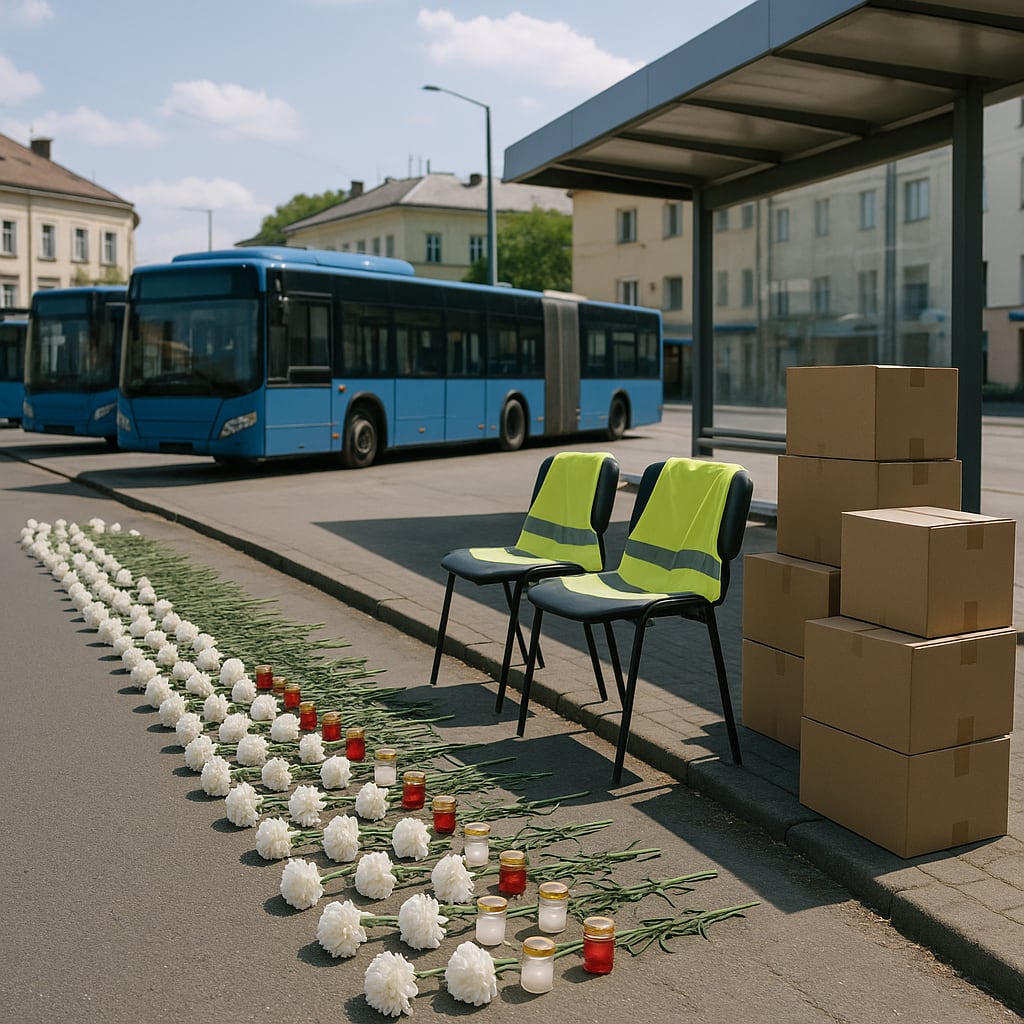
Ukrainian officials report 30–33 killed after reported Russian strike on buses in Kramatorsk
Narrative Snapshot
Across outlets, later updates converge on a high civilian toll and the involvement of city buses in a frontline hub. Ukrainian, British, North American, and several European reports cite 30 dead with 18 wounded, or 33 dead with 18 wounded, attributing the figures to local authorities in Donetsk region and national officials. This is reflected in the Guardian, France 24, NBC News, the New York Times, Ukrinform, CBC News, and Clarin. Early dispatches from Italian and Brazilian outlets put the toll at 12 dead and 14 injured, indicating a rapidly evolving count through the news cycle, also noted by ANSA’s initial alert.
Descriptions of the strike’s mechanics and immediate setting diverge. Corriere della Sera reports drones; NBC News and the South China Morning Post describe a bomb; most others use “strike” without specifying the munition. Coverage alternates between “two buses,” a “crowded bus,” a “commuter bus,” and a “bus stop,” with police cited by the South China Morning Post saying the blast struck a street where two city buses were operating, and President Volodymyr Zelensky calling it a bus stop. The mayor’s claim that there was no military target, carried by Le Monde, anchors multiple accounts that emphasize civilian exposure and the city’s suspension of public transport, also reported by the Guardian and the Hindu.
Many situate the incident within an intensifying pattern of nationwide attacks. RFE/RL and the New York Times link it to lethal strikes the previous day, and France 24 frames it as part of a pre-winter surge, citing UN figures that civilian deaths as of August 2026 exceeded the total for 2025. Italian coverage in La Repubblica highlights official calls for remaining residents to leave Kramatorsk, complementing a Kyiv Independent report a week earlier that a passenger bus in the city was struck by an FPV drone, underscoring persistent risks to public transport in this theatre.
What Happened
On October 8, in Kramatorsk near the eastern front line, Ukrainian authorities said a Russian strike hit public buses, producing one of the year’s deadliest single incidents for civilians. Later tallies from regional prosecutors and the governor’s office cited 30 dead and 18 wounded, while Ukrainian state outlet Ukrinform and several international outlets updated the toll to 33 dead and 18 wounded. Earlier reports from Corriere della Sera, Folha de S.Paulo, and ANSA put the toll at 12 dead and 14 injured as officials continued to assess the scene. Accounts variously described two buses operating on a street, a bus stop, and a commuter bus. The Donetsk regional governor’s office suspended public transport, and the city’s mayor said there was no military target. Ukrainian officials accused Russia of deliberately targeting civilians. Some victims remained unidentified due to the severity of injuries. The strike followed a day in which 22–25 civilians were reported killed elsewhere in Ukraine.
Why It Matters
Several outlets connect the incident to a broader pattern of intensifying Russian attacks ahead of winter, raising questions about civilian protection in contested urban areas and the capacity of local authorities to maintain essential services. France 24 cites UN data indicating more civilians killed by August 2026 than in all of 2025, suggesting a deteriorating trajectory that will shape humanitarian planning, monitoring mandates, and potential accountability efforts. The suspension of public transport in Kramatorsk and appeals for residents to leave, reported by the Guardian, the Hindu, Le Monde, and La Repubblica, illustrate governance trade-offs under sustained threat. At the international political level, Zelensky’s pledge of a response and his call, reported by ANSA, for actors not to do business with Russia intersect with ongoing debates over economic pressure tools. ANSA also relays U.S. Senator Marco Rubio’s warning that the war may spread, situating the strike within a risk framework that foreign capitals weigh as they calibrate assistance and containment strategies.
Diverging Narratives
The casualty picture evolves across the reporting window: Italian and Brazilian outlets initially cite 12 dead and 14 injured, while later Ukrainian, British, North American, and Asian coverage settles around 30 dead and 18 injured or 33 dead and 18 injured. This progression reflects real-time updates rather than a stable discrepancy, but it shapes how different audiences understand the severity at the moment of publication. There is also ambiguity about the means of attack: Corriere della Sera attributes it to drones; NBC News and the South China Morning Post to a bomb; and many use generic terms such as “strike” or “attack,” leaving the munition type unresolved in open reporting. Outlets differ on the immediate target description—two passenger buses, a crowded or commuter bus, a bus stop, or a street where buses were operating—while multiple sources underscore that public transport was suspended and that authorities framed the location as civilian. Intent is framed assertively by Ukrainian officials and several international outlets, with the BBC, Bangkok Post, and South China Morning Post relaying accusations of deliberate targeting of civilians, and Le Monde quoting the mayor that no military target was present. None of the cited reports include a Russian account of the incident, limiting direct comparison of competing claims.
What Happens Next
Ukrainian leadership has pledged a response, as reported by La Repubblica and France 24, making forthcoming official statements and observable shifts in operational tempo salient indicators of how Kyiv will calibrate retaliation or deterrence messaging. At the municipal and regional levels, authorities have suspended public transport and urged residents to leave, according to the Guardian, the Hindu, Le Monde, and La Repubblica; analysts should watch for decisions on sustained service shutdowns, evacuation facilitation, and any changes in civilian movement guidance. Ukrinform reports that some victims remain unidentified, so updated casualty and identification data will inform both humanitarian needs and evidentiary records. Internationally, France 24’s citation of UN civilian casualty trends suggests further monitoring outputs could influence diplomatic positioning; ANSA’s reporting on Zelensky’s appeal to curtail business with Russia and Senator Rubio’s warning about conflict spread points to potential policy signaling in Western capitals that may emerge in subsequent statements or measures.