
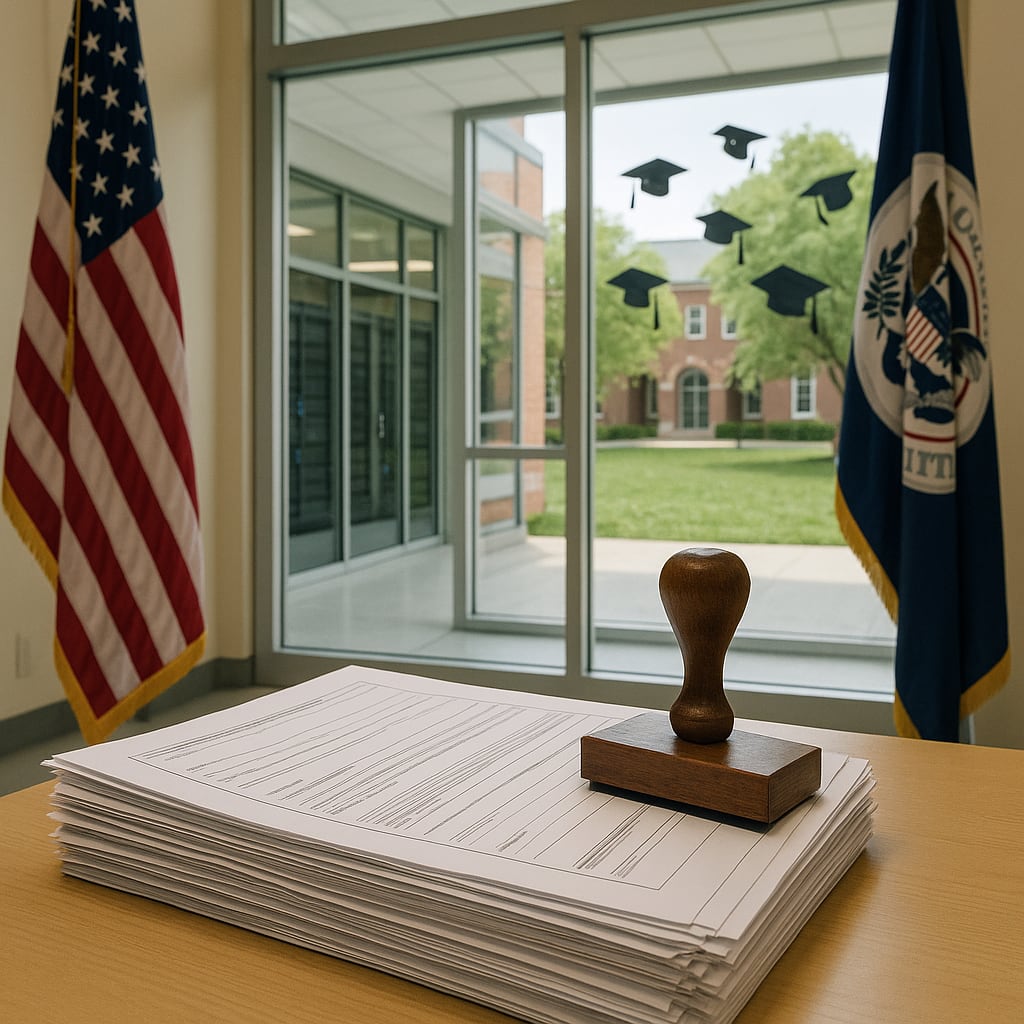
US suspends Microsoft, Adobe and several major IT outsourcers from PERM green card filings; opens probes into nine universities
Narrative Snapshot
Across outlets, there is consensus that Microsoft and Adobe were abruptly barred from filing employment-based green card applications and that the announcement came directly from Vice President JD Vance alongside senior labor officials. Coverage diverges on emphasis. US and European outlets center alleged abuse of the H‑1B pathway and labor-market testing rules, with the Guardian and Deutsche Welle foregrounding the link to high‑skilled visas and New York Times noting Vance’s move against companies and universities. Asian and Latin American outlets situate the actions within broader geopolitical and political frames: South China Morning Post highlights an explicit push to “hire more Americans” and a parallel J‑1 investigation focused on China, while CGTN casts the measures as part of a wider effort to curtail foreign‑born pathways to residency. Indian and Japan-based coverage accent the exposure of India-linked IT outsourcers, with the Hindu listing six major firms and Japan Times underscoring those India ties.
Several outlets also stress the political staging. Toronto Star and Japan Times report the timing hours before President Donald Trump planned to honor Microsoft CEO Satya Nadella at a high‑profile summit, producing a striking juxtaposition of punitive immigration enforcement and celebratory recognition of a flagship tech executive.
What Happened
Vice President JD Vance announced that the Trump administration suspended Microsoft and Adobe from filing applications in the US permanent labor certification (PERM) process, which underpins most employment‑based green cards, and moved against additional large IT services firms. The Hindu reports that, according to Secretary of Labour Keith Sonderling, Cognizant, Infosys, Tata, Wipro, HCL and Capgemini would also be suspended. Vance framed the action as a response to alleged fraud and part of a push to prioritize hiring Americans, with South China Morning Post noting PERM’s requirement that employers advertise jobs to US workers. The Guardian reports Vance accused Microsoft of abusing the H‑1B system; CGTN quotes him contrasting Microsoft layoffs with extensive H‑1B use and green card filings, and cites Labor Department data identifying Microsoft as the largest PERM filer. In parallel, SCMP and Folha de S.Paulo report investigations into nine US universities over alleged J‑1 visa fraud, with SCMP noting a particular focus on Chinese scholars.
Why It Matters
The measures touch multiple pillars of the US skilled‑immigration architecture at once: PERM‑based employment green cards, H‑1B‑linked pathways highlighted by the Guardian, and J‑1 exchange programs now under investigation per SCMP and Folha de S.Paulo. By targeting the largest corporate users—CGTN notes Microsoft is the top PERM filer—and moving simultaneously on nine “elite” universities (Folha), the administration signals a readiness to enforce across both private‑sector and academic channels central to US innovation and research pipelines. SCMP frames the stated policy objective as steering companies to “hire more Americans,” while CGTN presents the actions within a broader effort to reduce foreign‑born pathways to residence and citizenship. The India‑linked IT services exposure flagged by the Hindu and Japan Times embeds the move in the cross‑border services and talent relationship most relevant to the US tech labor market, while SCMP’s focus on Chinese scholars in the J‑1 probe introduces an additional geopolitical vector in higher education and research exchanges.
Diverging Narratives
Outlets align on the fact pattern but emphasize different causal frames and constituencies. Administration statements, captured by SCMP and CGTN, stress fraud prevention and protection of American jobs; the Guardian conveys a narrower frame of alleged H‑1B abuse tied to green‑card sponsorships. CGTN broadens the lens, describing the step as part of a sustained effort since taking office to reduce the number of foreign‑born people and “curtail their pathway to residence and citizenship,” and underscores the scale by calling it “the broadest strike yet” against skilled‑worker immigration programs. Indian and Japan-based reporting concentrates on which firms are hit: the Hindu’s naming of Cognizant, Infosys, Tata, Wipro, HCL and Capgemini suggests an enforcement perimeter extending beyond US Big Tech, while Japan Times highlights “India links” among affected firms. On academia, Al Jazeera characterizes the J‑1 angle as universities allegedly exploiting international students to cut wage costs, whereas SCMP stresses investigative focus on Chinese scholars and the Chinese government. Politically, Toronto Star and Japan Times draw attention to the timing relative to a planned presidential honor for Microsoft’s CEO, a juxtaposition absent from US hard‑news write‑ups but relevant to how the action is read in allied capitals watching US tech and immigration signaling.
What Happens Next
Three decision points emerge from the reporting. First, scope and implementation of suspensions: the Hindu indicates additional IT services firms beyond Microsoft and Adobe are included; analysts should watch for formal Labor Department notices naming entities and clarifying duration and conditions for reinstatement. Second, the university investigations: SCMP and Folha de S.Paulo report probes into nine institutions, with SCMP noting a focus on Chinese scholars; subsequent disclosures on J‑1 compliance findings and any referrals will signal whether this remains a targeted action or widens. Third, political signaling around tech: Toronto Star and Japan Times note the planned ceremony honoring Microsoft’s CEO hours after the announcement; whether and how that proceeds will indicate the administration’s balancing of enforcement rhetoric with industry engagement. Substantively, SCMP’s emphasis on stronger recruitment obligations suggests attention to any updated guidance or audit activity around PERM’s advertising and labor‑market tests.