
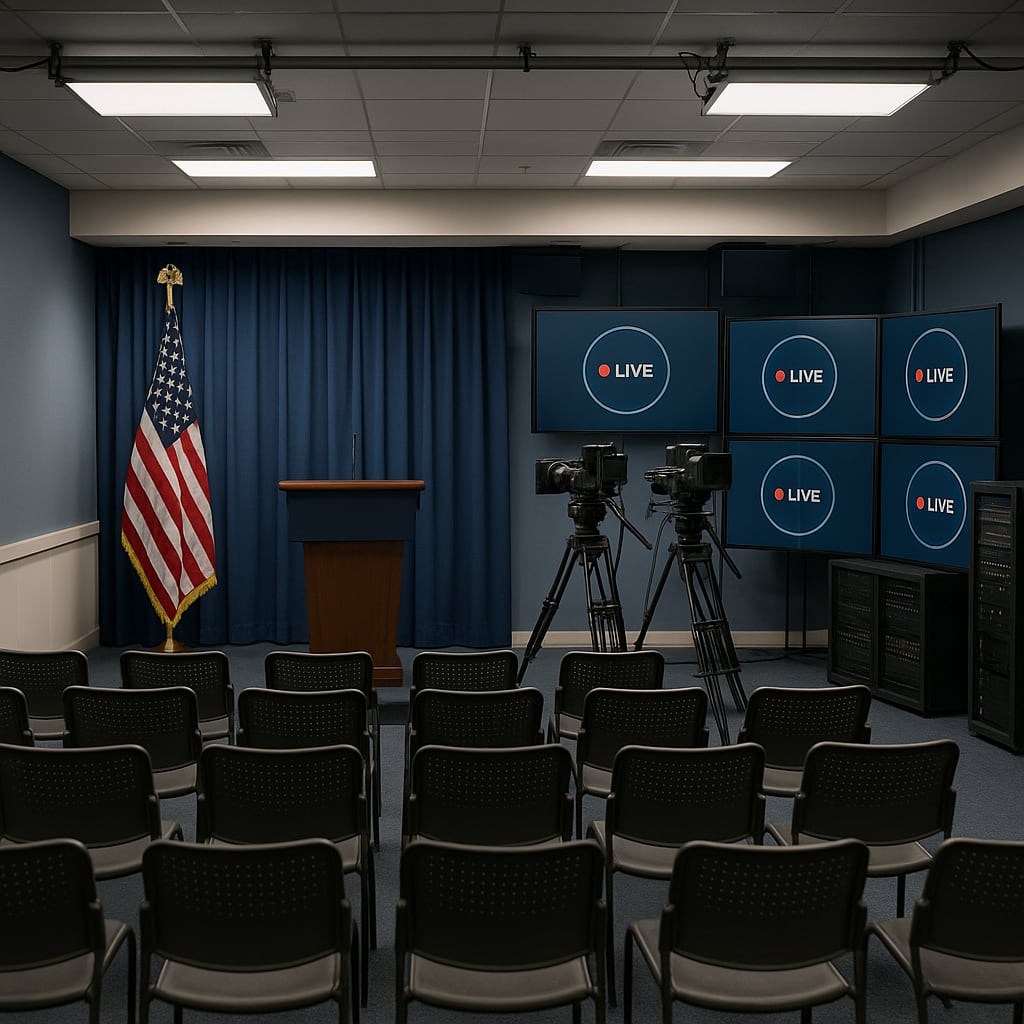
Pentagon to livestream firing-squad execution of Fort Hood shooter on Dec. 3
Narrative Snapshot
Across Anglophone, European, and Latin American outlets, coverage converges on the unprecedented nature of broadcasting a U.S. execution and the historical rarity of a military firing squad. British, German, French, Thai, and Israeli reports emphasize the first U.S. military execution since 1961 and the first military firing-squad execution since the mid-1940s, situating the announcement within a longer arc of U.S. military justice and capital punishment practice (BBC News; Deutsche Welle; France24; Bangkok Post; Haaretz).
International human rights framing is prominent in French- and Spanish-language coverage, which centers the Office of the UN High Commissioner for Human Rights’ assessment that livestreaming is tantamount to a public execution and would breach the absolute prohibition of torture (Le Monde; France24; Clarín, 9 Oct). Canadian reporting adds historical context, noting that U.S. executions have been private and often opaque for roughly nine decades, marking the Pentagon’s plan as a sharp break with modern practice (Toronto Star).
U.S. domestic coverage diverges in emphasis. Fox News foregrounds official confirmation that the execution will be streamed, highlights survivor perspectives, and notes that President Donald Trump approved use of an Army firing squad upon the Defense Secretary’s recommendation, with Pentagon messaging that “details will follow.” The Guardian compiles a bipartisan set of condemnations by U.S. lawmakers, with comparisons to practices of terrorist groups and authoritarian governments, and objections that publicity “glorifies” violence.
A parallel thread links the announcement to current method-of-execution turbulence. Several outlets anchor the timing to a botched lethal injection in Tennessee last week and report that Texas proceeded with a separate execution despite concerns about the same drug, underscoring the backdrop of renewed debate over execution methods and transparency (Haaretz; Fox News, 8 Oct).
What Happened
U.S. Defense Secretary Pete Hegseth said the military will ensure the public can watch the firing-squad execution of Nidal Hasan, the former Army psychiatrist who killed 13 people at Fort Hood in 2009. Multiple outlets report the execution is scheduled for December 3, 2026, at Fort Hood, Texas, and will be the first U.S. military execution since 1961 and the first military firing-squad execution since 1945 (BBC News; Deutsche Welle; France24; Haaretz; Corriere della Sera; La Repubblica; Bangkok Post). Fox News cites a Pentagon confirmation that it will be livestreamed, with logistical “details to follow,” and reports that President Donald Trump approved the firing squad after Hegseth’s recommendation. The UN human rights office called livestreaming tantamount to a public execution and a breach of the absolute prohibition of torture (Le Monde; France24; Clarín, 9 Oct). Some operational specifics, including access and selection of the firing squad, remain unspecified (Telesur English).
Why It Matters
The Pentagon’s plan tests the boundary between state transparency and the international norm against public executions. The Office of the UN High Commissioner for Human Rights characterizes livestreaming as violating the absolute prohibition of torture, placing a U.S. military proceeding in direct tension with a core human rights standard (Le Monde; France24; Clarín, 9 Oct). For policymakers, this creates friction with multilateral partners and UN mechanisms that monitor compliance.
Domestically, the broadcast marks a departure from nearly a century of increasingly secretive execution practices in the United States, potentially setting a precedent for how the state stages and communicates capital punishment (Toronto Star). It also intersects with a live policy debate over execution methods: outlets link the timing to a botched lethal injection in Tennessee and note Texas proceeded with another execution despite related drug concerns (Haaretz; Fox News, 8 Oct). Together, these dynamics could shape institutional choices on method, transparency, and civil-military messaging around the death penalty.
Diverging Narratives
Pentagon-aligned statements emphasize accessibility and consequence. Hegseth pledged that people will be able to watch and, per Telesur English, justified public access so that the gravity of such acts is known (BBC News; Telesur English). Fox News’ framing amplifies confirmation of the stream, the scheduled date and location, and victim-survivor perspectives, alongside the note that “details will follow.”
Human rights and civil liberties framings view the broadcast as unlawful and demeaning. The UN human rights office called livestreaming equivalent to a public execution and a breach of the torture prohibition (France24; Le Monde; Clarín, 9 Oct). The Guardian collects bipartisan U.S. criticism likening the plan to practices of terrorist groups and repressive states, rejecting the spectacle regardless of positions on the death penalty.
Historical and procedural lenses add further contrast. Canadian coverage highlights a break from nine decades of private executions (Toronto Star), while several international outlets stress the rarity of a military firing squad since World War II and a military execution since 1961 (Deutsche Welle; Haaretz; Bangkok Post). Practical uncertainties persist: outlets note that the Pentagon has not specified how the public will access the stream or how the squad will be composed (Fox News; Telesur English), leaving operational questions open even as the date is set.
What Happens Next
Implementation choices now sit with the Pentagon. A War Department official told Fox News that the execution will be livestreamed and that details are forthcoming; Telesur English reports access mechanisms and firing-squad composition remain unspecified. Analysts should watch for how the Pentagon defines “public” access—platform, credentialing, geoblocking, and any in-person attendance at Fort Hood—as indicators of whether the department narrows or maintains its broad pledge.
International and domestic pushback will test whether policy is adjusted. The UN human rights office has framed livestreaming as a breach of the torture prohibition (France24; Le Monde), and The Guardian reports bipartisan U.S. criticism. Monitoring for any subsequent Pentagon clarification, moderation of the format, or reaffirmation in response to these objections will be key.
Method-of-execution debates bear on the wider landscape. Haaretz links the timing to a botched Tennessee lethal injection, and Fox News reports Texas proceeded with another execution despite drug concerns. Watch for further official references to lethal injection failures to justify method and transparency choices around the December 3 proceeding.